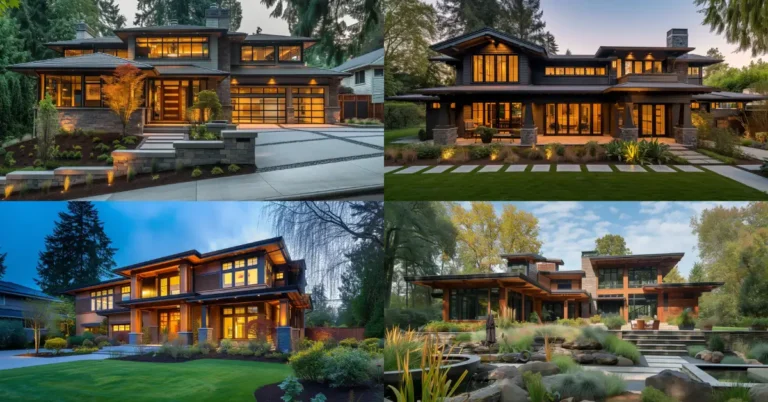

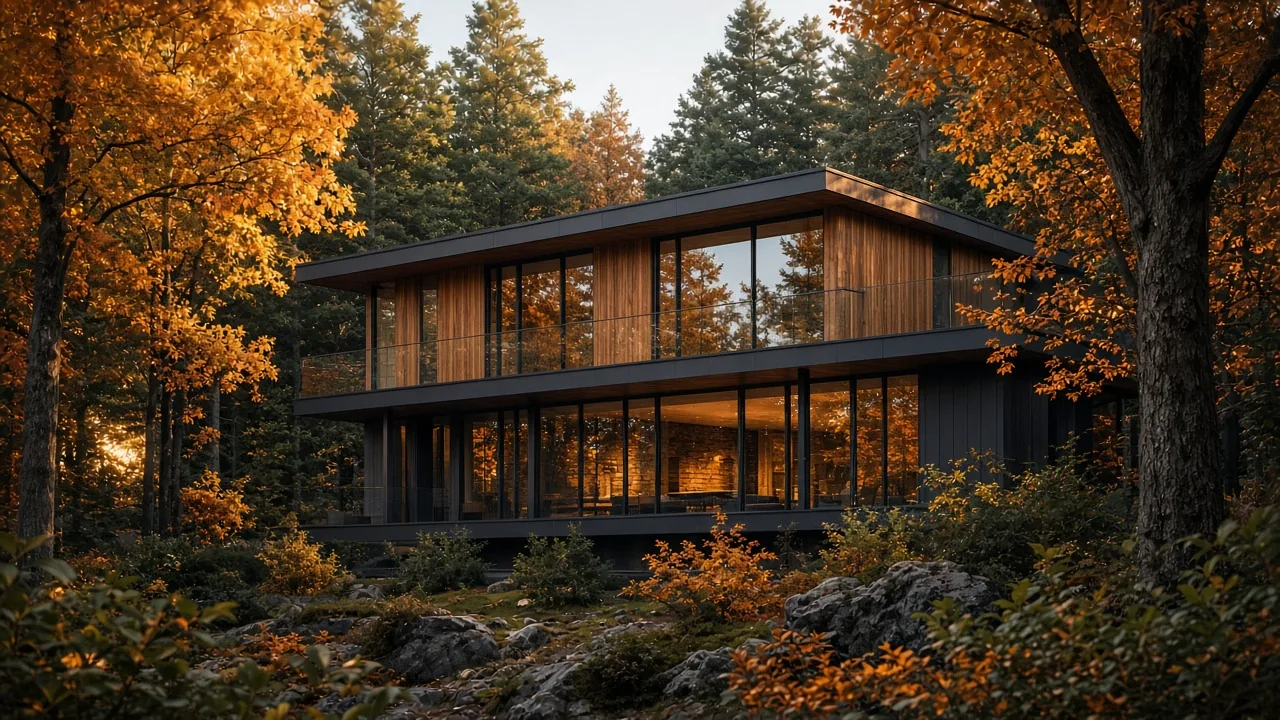
I keep running into the same argument about a 70s contemporary house: people call it dated, then they walk inside and go quiet. The good ones never felt like costume sets. They felt like someone finally stopped apologizing for wood, glass, and big horizontal moves.
Last fall I spent a weekend with friends near Madison in a cedar-and-glass place from 1974. No open-concept gimmicks, no marble-for-Instagram. Just rooms that knew what they were for. That visit is still my reference when someone asks me what “70s contemporary” actually means in 2026.
If you like related house eras, I already wrote through the sharper geometry of an 80s contemporary house and the quieter beams-and-glass logic of a contemporary modern Tudor. The 70s lane sits between those: softer edges, more timber, more indoor-outdoor honesty.
How the Shell Sets the Mood
Before furniture catalogs take over, look at the envelope. Roof overhangs, window rhythm, and how the house meets the trees tell you more than any sofa ever will.
Forest Edge Facade
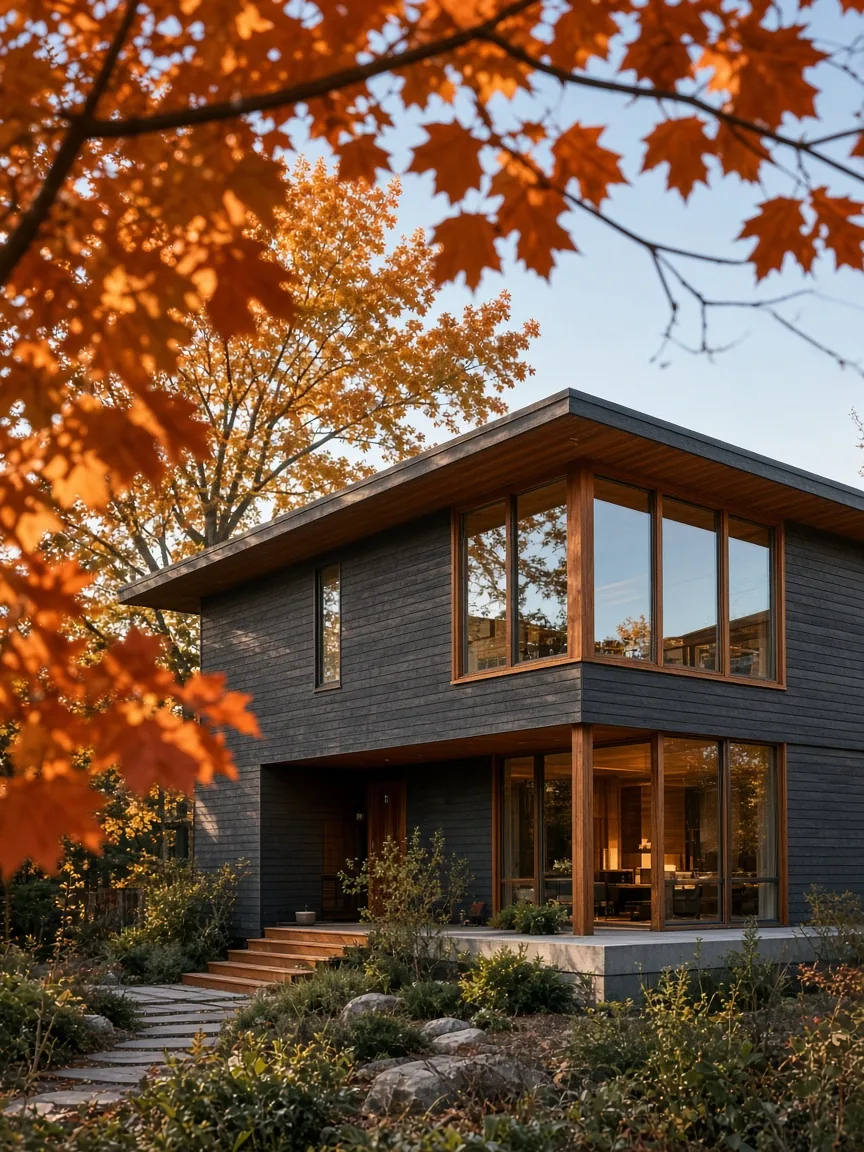
I want the first impression to be calm, not loud branding. Charcoal siding with warm teak trim against autumn maples does that without trying. The overhang keeps the glass from feeling like a storefront, which is the trap of a lot of newer “forest modern” builds.
When I sketch a 70s contemporary house for clients who fear dark exteriors, I show them this kind of frame: dark body, warm wood, soft leaf color in front. The house recedes. The site does the talking.
Black Deck Living
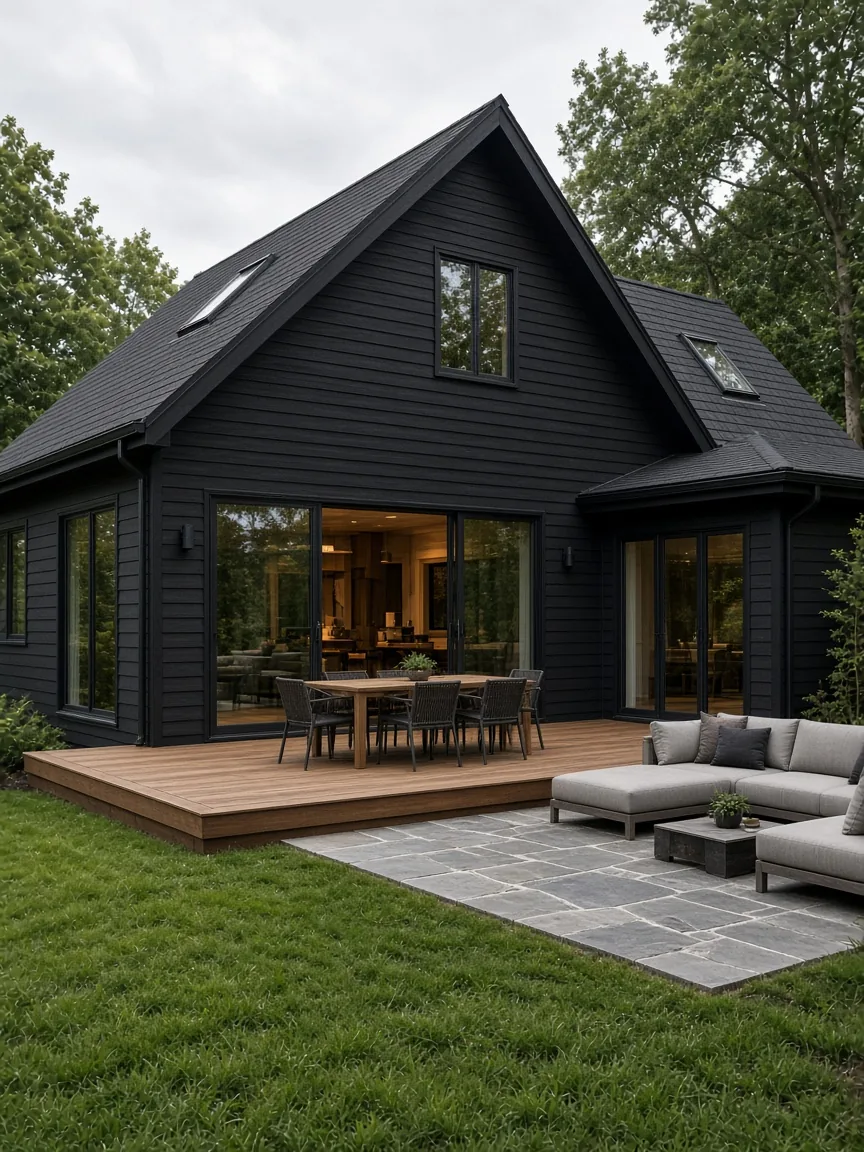
The back elevation is where these houses either commit or fail. Black horizontal siding, multi-gable roof, and a deck that actually holds a long table: that is the social plan. I have eaten outdoors here in my head a dozen times already.
Notice the patio sectional is simple. No outdoor kitchen theater. Just space to sit after rain, which is how Midwestern weekends actually work. The 70s contemporary house gets this: outdoor rooms as extension, not as a second living-room set.
Rooms That Hold People
Interiors from this era work when they keep material honesty and refuse tiny accent walls. Glass to trees, timber above, furniture that sits low.
Glass Wall Living
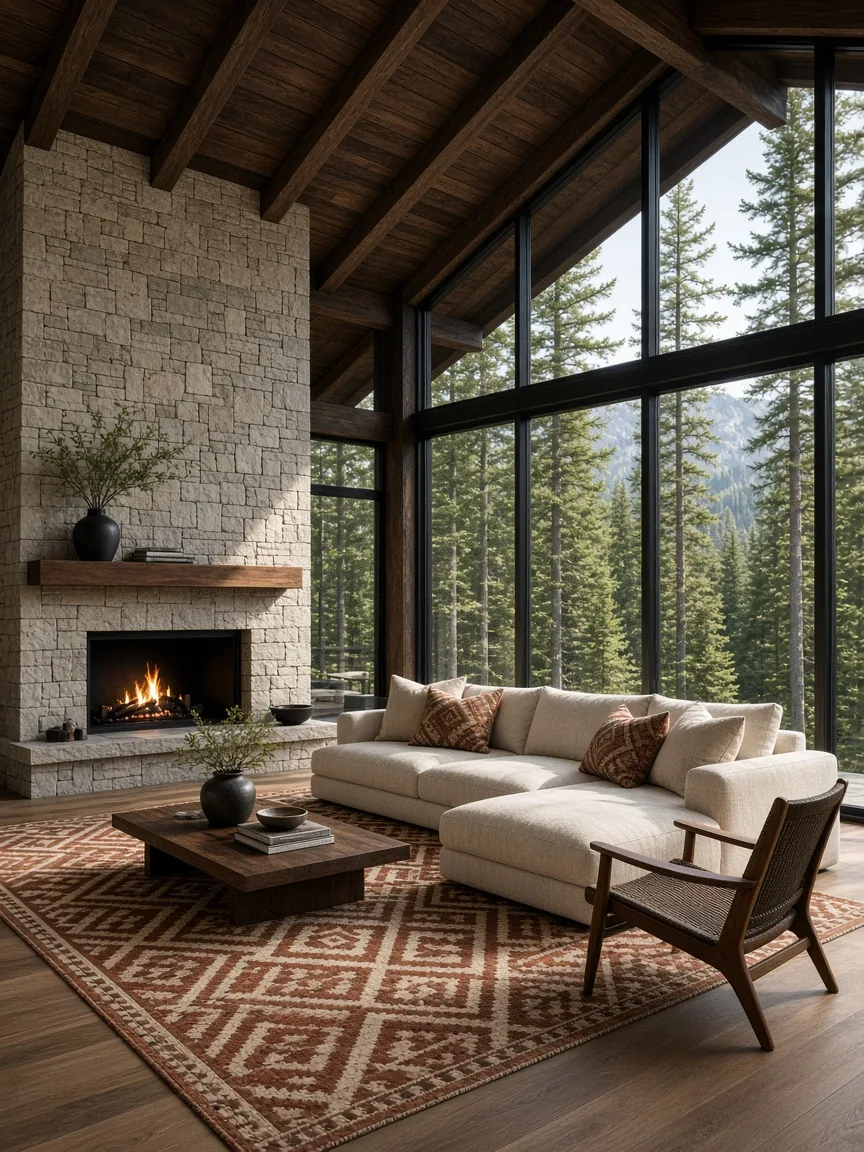
This is the room I argue for when someone wants “open” but still needs edges. Post-and-beam ceiling, black-framed glass, a low sectional that does not fight the view. I sat in a similar room last October with a cup of too-strong coffee and watched fog lift off the pines.
The fireplace wall is quiet on purpose. If every surface shouts, the forest window loses. In a 70s contemporary house, the view is not decoration. It is the main furniture.
Sculptural Lounge Corner
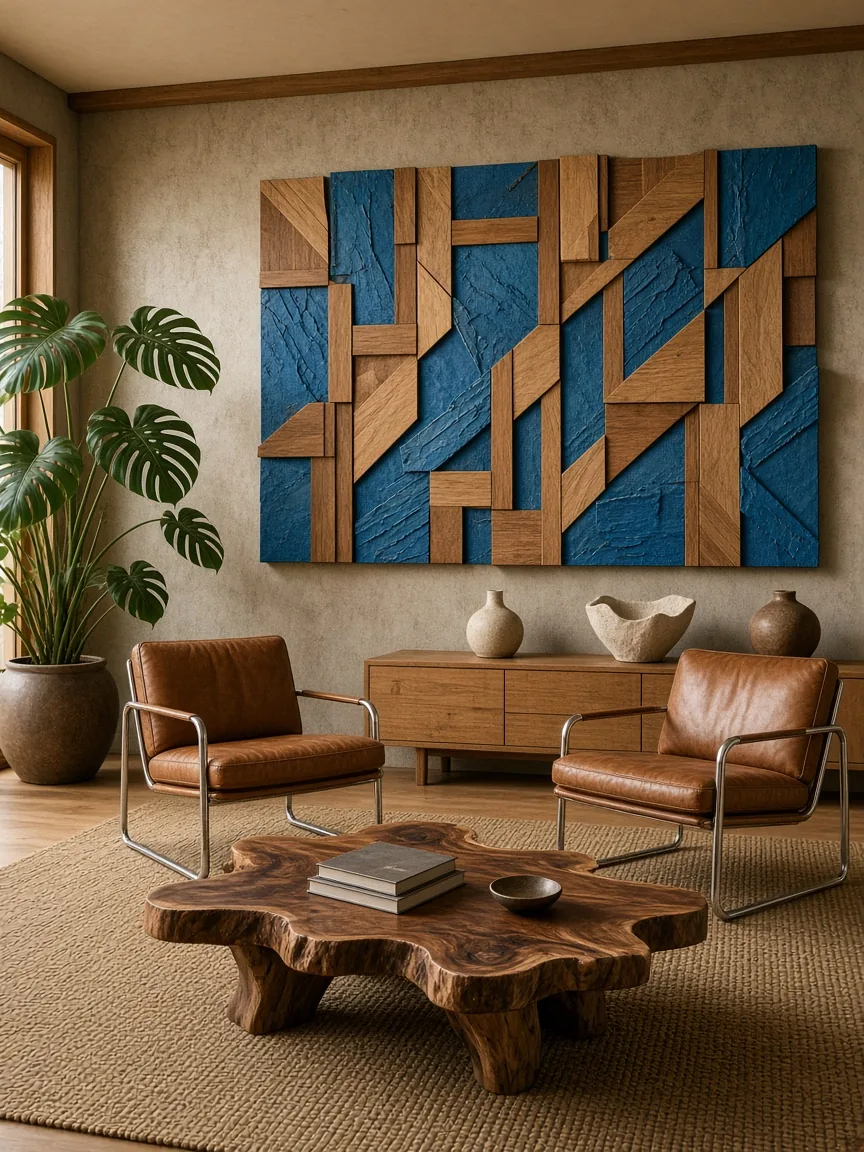
Here the 70s confidence shows up as sculpture and leather instead of beige nothing. Cognac chairs, live-edge table, a mural that actually occupies the wall. I would keep the mask and vessels. I would lose anything that looks like hotel art.
Friends always ask if this reads “dated.” My answer: dated is chrome-and-mirrored disco. This reads collected. That difference matters when you are renovating instead of flipping.
Terracotta Chair Moment
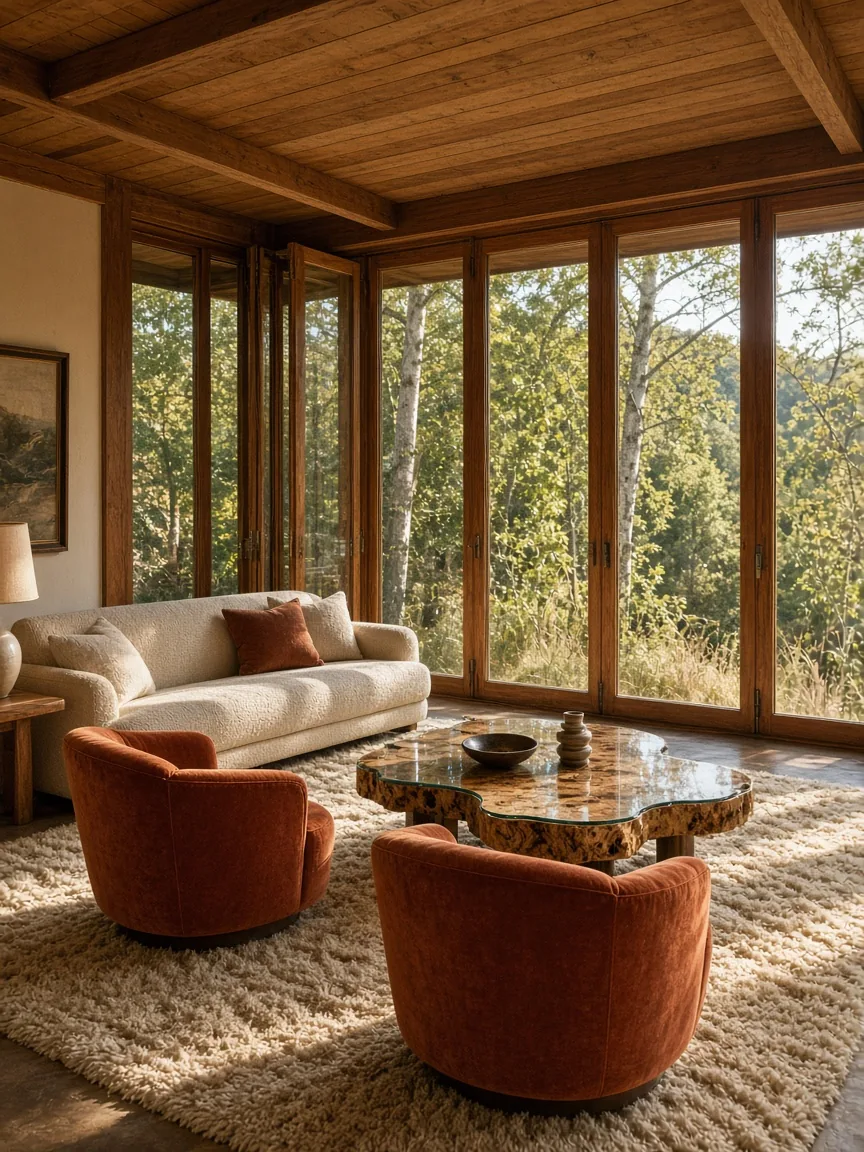
Sun across terracotta velvet is the emotional core of a soft remodel. Oatmeal sofa, shag underfoot, timber bifolds to the hillside. I would keep the chairs even if a contractor calls them “too much.” Too much is the point of color when everything else is wood and glass.
I once advised a couple in Oak Park to buy two strong chairs before any rug. They did. The rest of the room suddenly had a reason to exist. Same logic here.
Daily Rooms, Not Showrooms
Kitchens and dining zones from this language should feel used. Walnut, tile, cane, a chandelier with opinions.
Walnut Kitchen Dining
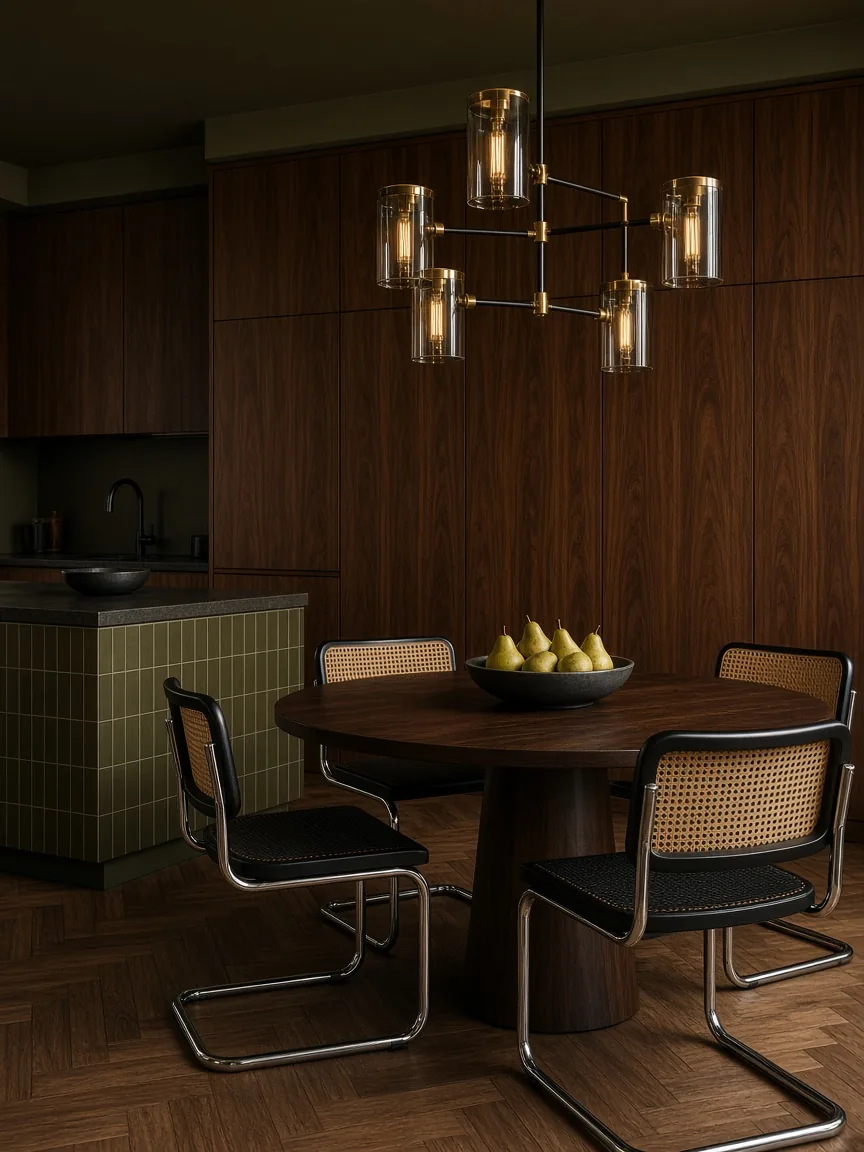
Floor-to-ceiling walnut, olive-tiled island, Cesca chairs around a round table: that is dinner energy. The chandelier is geometric without becoming a science project. I would cook here on a Tuesday, not only for guests.
If you are connecting this kitchen mood to cabinetry choices, my notes on contemporary kitchen cabinets go deeper on finishes and handles. Here I care more about the room reading as one volume.
What I Would Keep in a Remodel
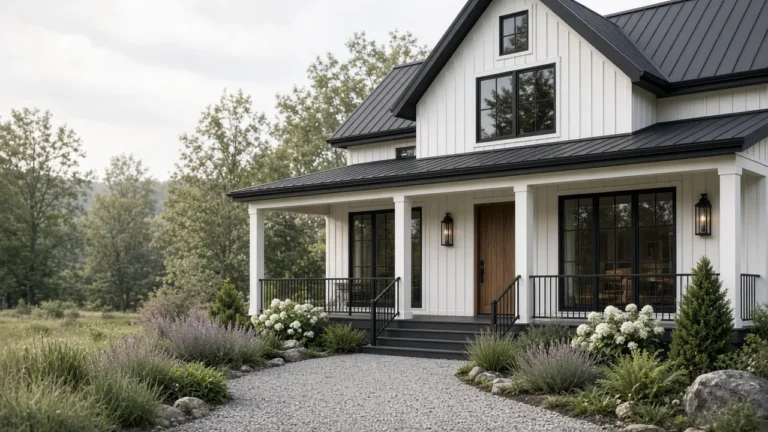
Keep the overhangs, the big glass, and the honest timber. Replace failing windows with thermally better glass in the same rhythm. Do not “farmhouse” the exterior with white shiplap cosplay.
Inside, keep low furniture, one strong color family, and surfaces that age. Skip open shelving that turns into clutter galleries. A 70s contemporary house rewards restraint more than novelty paint.
Landscaping should frame, not decorate. Tall trees already do half the work. Soften the deck edge, keep lawn simple, let the black facade sit quiet against green.
Budget the boring upgrades first: insulation at the roof edge, flashing at every horizontal joint, and HVAC that can handle glass load. Pretty furniture on a leaking envelope is just expensive denial. I learned that the hard way on a consulting job where the owners wanted velvet chairs before they fixed the skylight wells.
Circulation matters too. These plans often put the living volume on the view side and service rooms toward the street. Keep that logic. Do not punch a giant foyer that steals the forest room. Guests can find the coat hook without a hotel lobby.
If you inherit orange carpet or a mirrored wet bar, edit with patience. Remove one layer at a time and live with the house for a season. The 70s contemporary house reveals which quirks are character and which are just deferred maintenance.
FAQ
What defines a 70s contemporary house?
Horizontal massing, deep roof overhangs, large glass, and warm wood or cedar cladding. Interiors often mix post-and-beam ceilings with low furniture and indoor-outdoor rooms.
Is a 70s contemporary house the same as mid-century modern?
Related, not identical. Mid-century often means earlier postwar modernism. 70s contemporary leans heavier into cedar, bigger glazing, and softer, more residential detailing.
What colors work best inside?
Warm woods, cream textiles, one saturated accent (terracotta, olive, cognac), and dark frames on glass. Avoid rainbow accent walls that fight the architecture.
Should I paint a dark exterior light?
Not by default. Dark siding with warm trim often suits the era better. Lighten only if solar gain or neighborhood rules force it, and keep the wood accents.