
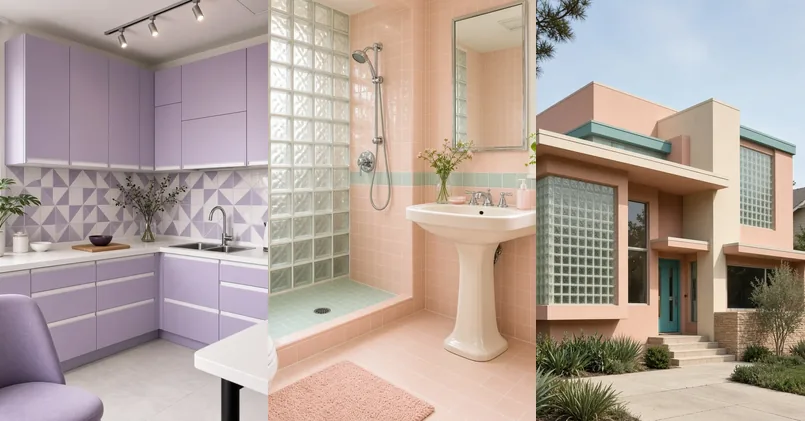
An 80s contemporary house is not a costume party in pastel paint. The best ones still read as architecture: geometry, glass, and a willingness to let rooms feel theatrical without becoming a museum of gadgets.
I grew up noticing these houses on the edges of suburbs where somebody’s parents had money and taste that aged unevenly. Some exteriors still look sharp. Some kitchens look like a time capsule you should not revive wholesale.
This is my filter for what still works from that decade, and what to borrow carefully if you are renovating or buying.
The Exterior Still Makes The Argument
Pastel Geometric Facade
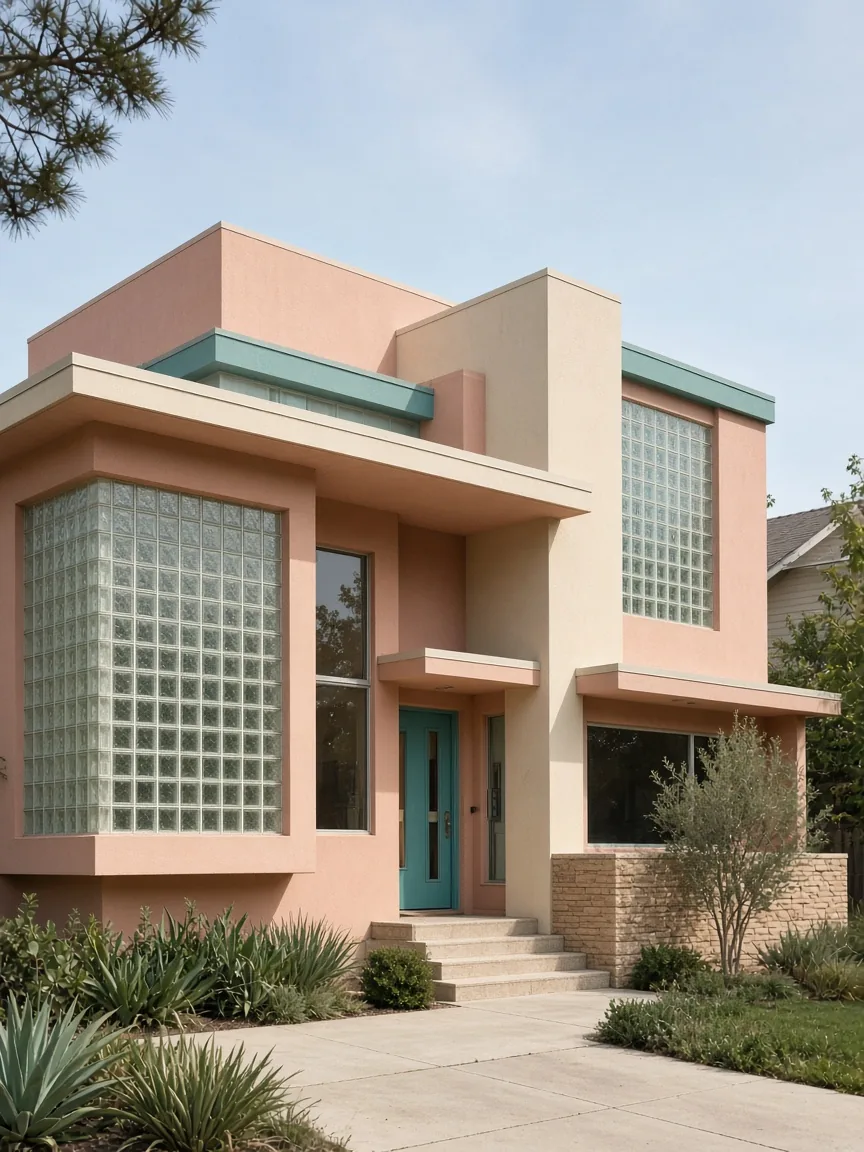
Peach and teal accents on a geometric facade only work if the massing is strong. Weak volume plus loud color is costume.
Glass block as a vertical strip still feels contemporary when the rest of the elevation stays calm.
I would keep landscaping simpler than the house. Busy planting fights postmodern geometry.
Pool Patio Geometry
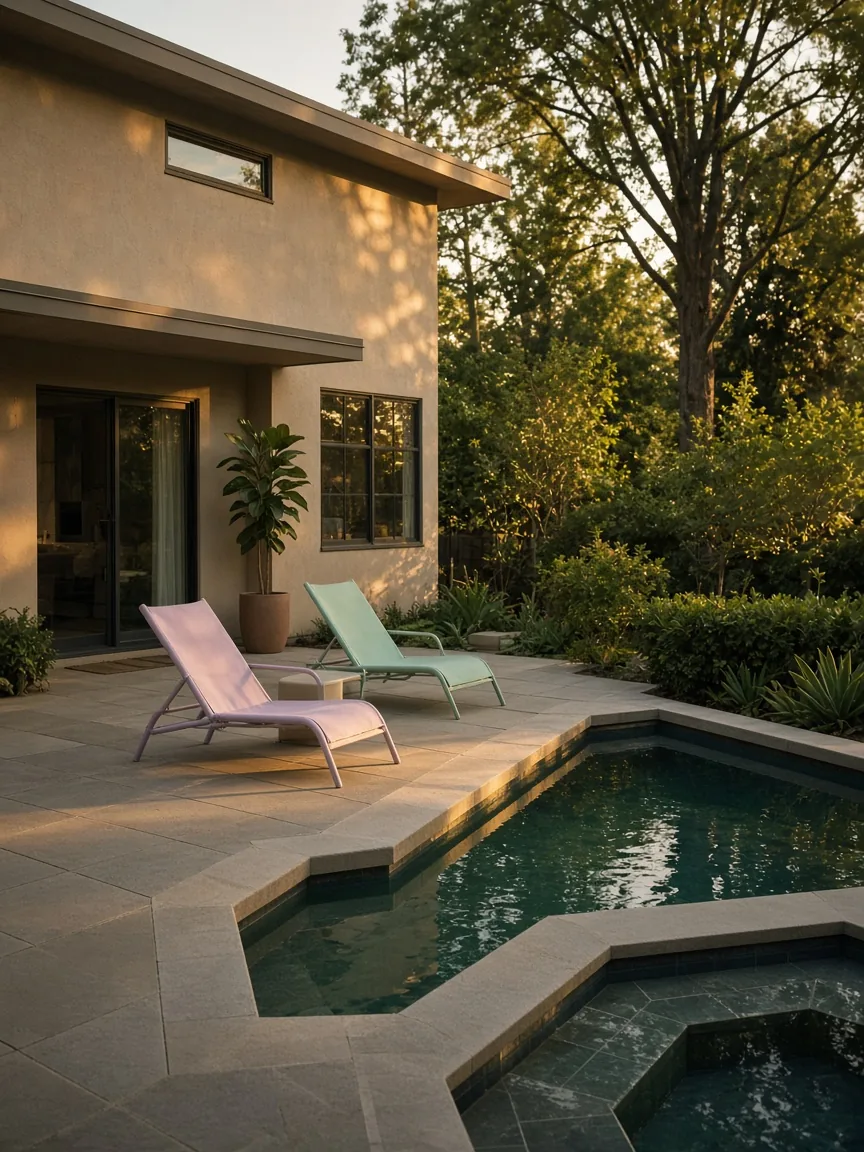
Angular pool edges and stucco walls are peak 80s outdoor drama. Pale lounge chairs keep it from tipping into resort kitsch.
Golden hour makes these houses look intentional. Midday glare can make pastel stucco look tired, so plan shade.
If you rebuild a patio, prioritize drainage and slip resistance over perfect period matching.
Rooms That Defined The Decade
Sunken Conversation Pit
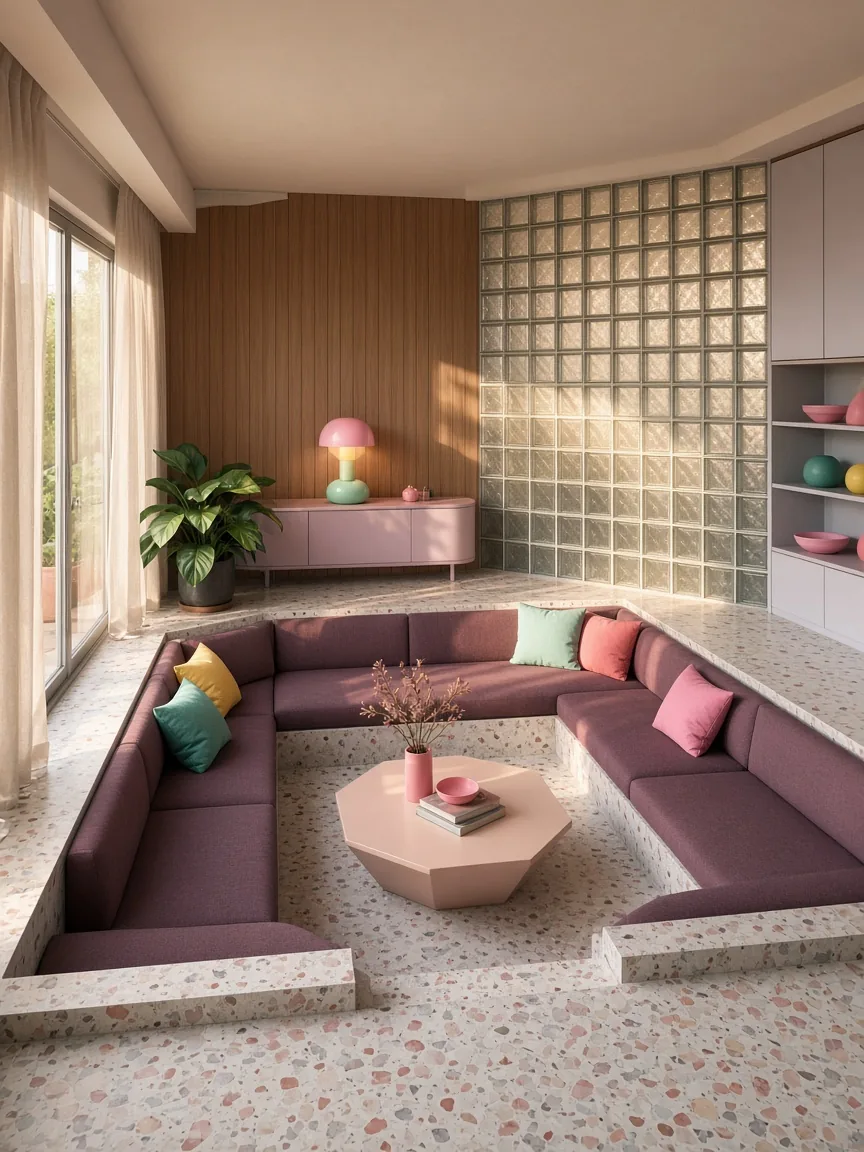
A sunken living room is the 80s contemporary house move people still photograph. It creates intimacy without walls.
Glass block behind the pit softens light and gives privacy without curtains everywhere.
Accessibility matters now. If you keep a pit, plan a clear step edge and lighting so nobody misreads the floor at night.
Skylight Atrium Stair
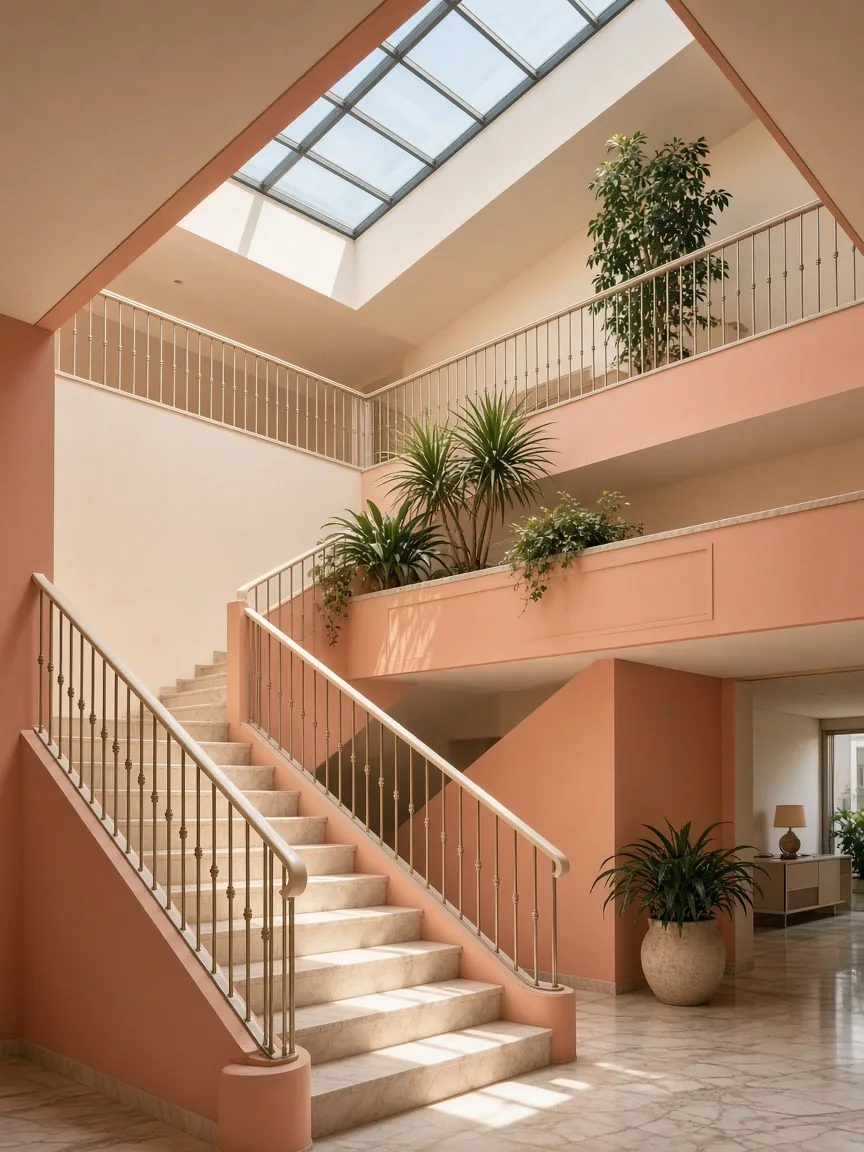
Open atrium stairs with a skylight still feel generous. Indoor plant ledges help the volume feel lived in.
Peach and cream keep the drama soft. Neon everything would turn it into a set.
Railings need modern safety codes. Period style, current dimensions.
Kitchen, Bath, Bedroom
Lavender Laminate Kitchen
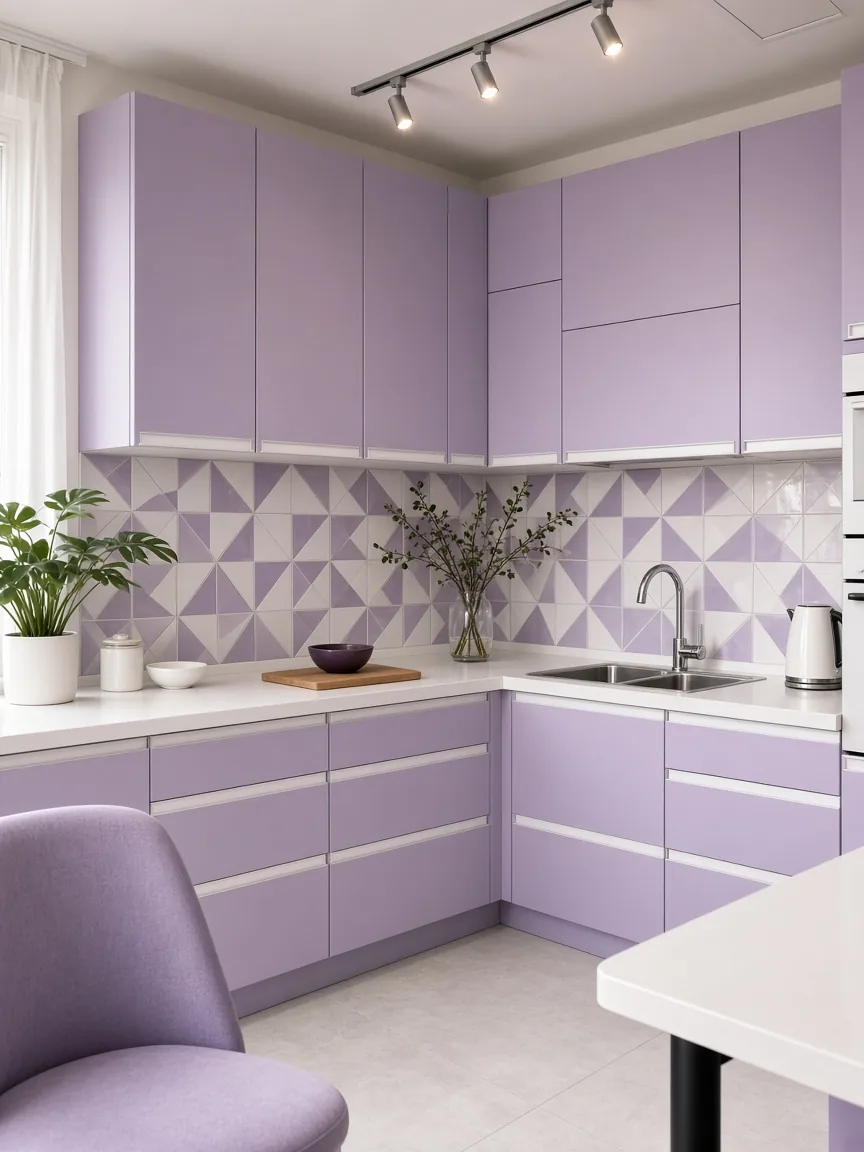
Lavender laminate is a hard sell today, but the lesson is color courage plus clean geometry. Update materials, keep the boldness selective.
Track lighting above work zones was practical then and still is, if the fixtures are current LEDs.
I would swap laminate for painted or wood fronts and keep one 80s color as an accent, not the whole room.
Lacquer Mirror Bedroom
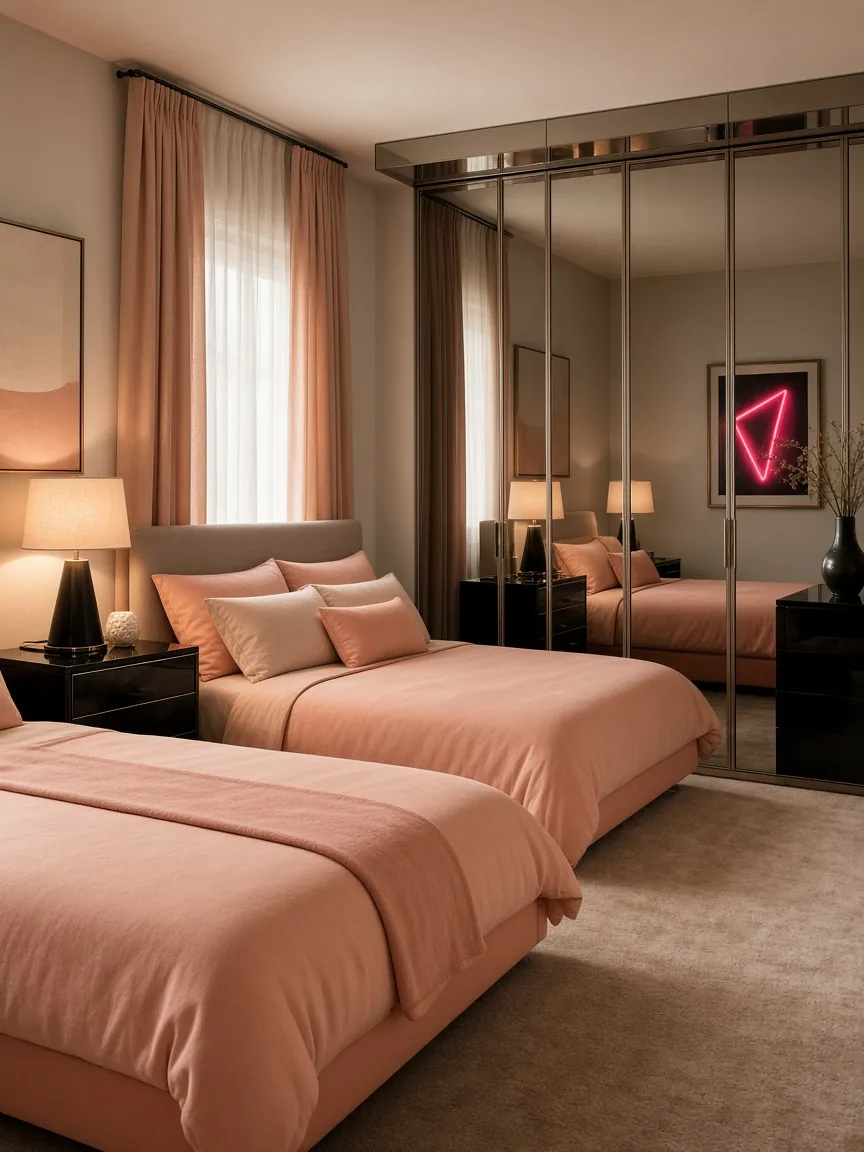
Mirrored closets and lacquer nightstands are classic 80s gloss. They make small rooms feel larger and also show every fingerprint.
Peach bedding softens the shine. A neon art accent only works as one small hit.
If privacy matters, swap full mirrors for partial panels. Full-wall mirrors can feel like a hotel from a decade you did not ask for.
Glass Block Bath
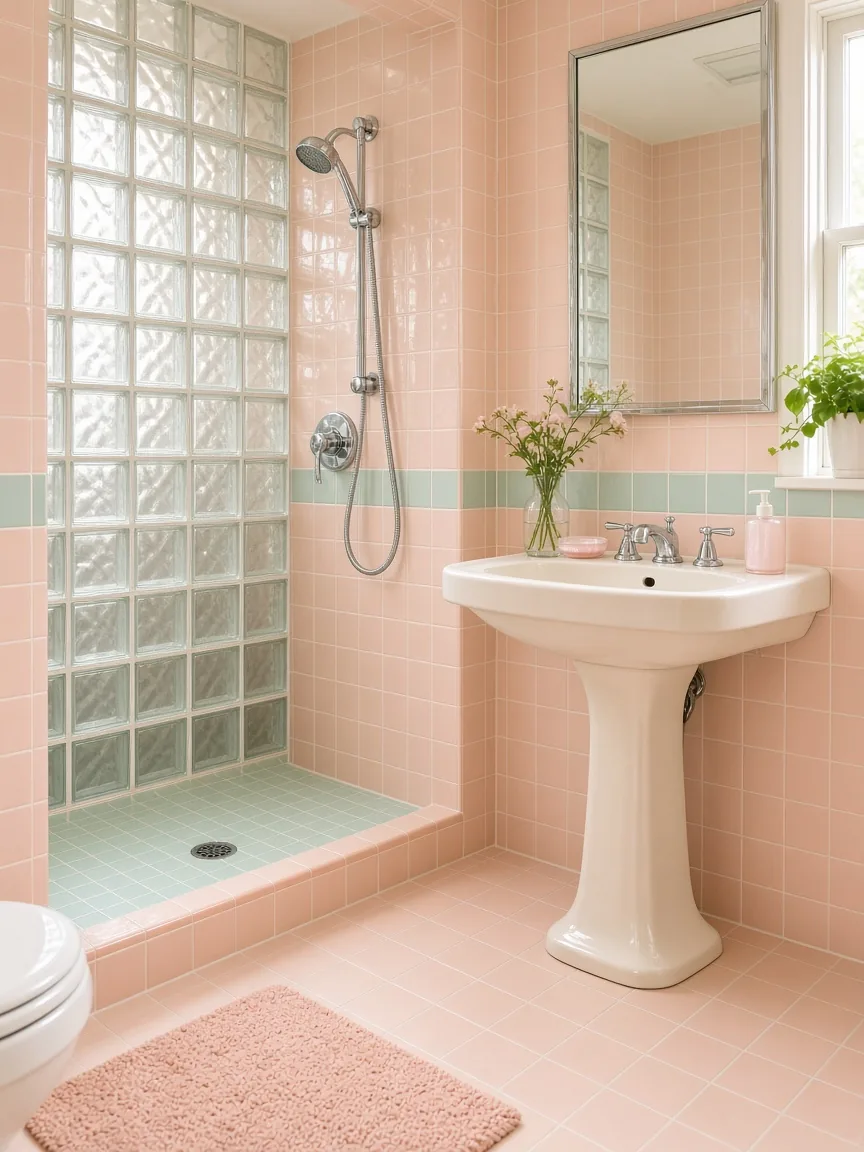
Glass block showers still beat frosted plastic panels for character. Pastel tile should be edited, not restored inch for inch.
Chrome fixtures are fine if silhouettes stay simple. Ornate revival hardware fights the contemporary part of 80s contemporary.
Ventilation first. Pretty baths that stay damp age badly.
What I Would Keep Versus Skip
Keep: strong geometric massing, generous glazing, sunken or stepped living zones if the floor plan allows, skylights that bring light deep into the plan.
Skip: every laminate color at once, mirrored everything, lighting that only spotlights dust, and landscaping that tries to recreate a Miami video set in a Midwestern lot.
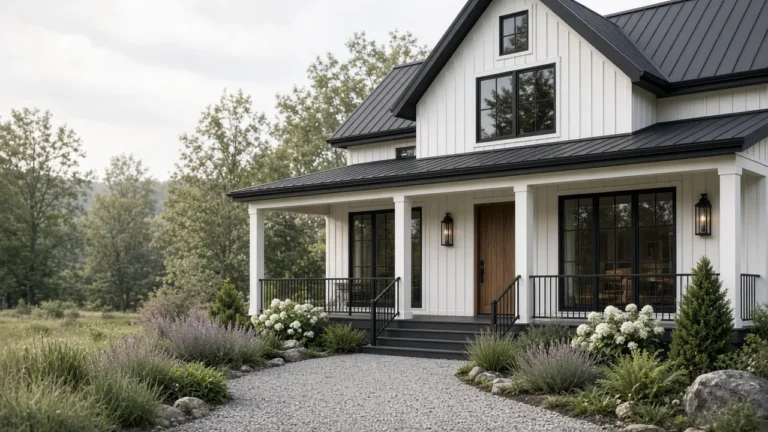
If your taste leans more farmhouse-clean than postmodern, neighboring posts like contemporary farmhouse show a quieter path. For furniture inside either shell, contemporary furniture design keeps the interiors from turning into a theme.
An 80s contemporary house earns a second life when you treat it as architecture with a date stamp, not a novelty. Edit hard. Keep the geometry. Update the surfaces.
Budget for the unsexy work first: roof, windows, HVAC. A pastel facade on a leaky envelope is just an expensive mood. Once the shell is honest, the design choices get easier and cheaper.
I also walk the neighborhood before falling for one house. Some 80s contemporary streets still feel coherent. Others are a patchwork of later additions that fight the original geometry. Context tells you how hard the renovation will fight back.
Inside, choose furniture that can bridge decades. Clean contemporary pieces sit better in these volumes than heavy traditional sets or full period revival kits. The house already has a date. Your sofa does not need another one stamped on it.
If you are deciding between renovation and moving on, score the plan: light quality, room sizes, and whether the weird 80s moments feel charming or punishing. Charm can be edited. Punishing floor plans usually stay punishing.
FAQ
What is an 80s contemporary house?
A late-twentieth-century house style with geometric massing, large glass, and often postmodern color or material accents. It sits between late modern and playful postmodern residential design.
Are 80s contemporary houses still desirable?
Yes when the structure and windows are sound. Buyers often renovate kitchens and baths while keeping strong exterior geometry.
What features should I keep?
Good massing, skylights, generous glazing, and distinctive volume like atriums or sunken living areas if they still function safely.
What should I update first?
Roof, windows, insulation, and wet rooms. Style updates matter less than dryness and energy performance.
How do I avoid a costume look?
Limit period colors to accents, simplify landscaping, and choose furniture with clean contemporary lines instead of full Memphis revival.
Are sunken living rooms practical today?
They can be, if steps are well lit and clearly edged. Some owners fill them in for accessibility. Keep them only if the daily use still feels natural.