
I stopped using souvenir postcards as my mental map of contemporary Japanese art the first time I walked a Tokyo gallery week and saw ink scrolls arguing with neon. Tradition was not a costume. It was raw material.
That week I kept a notebook of interruptions: a quiet woodblock mood next to a loud portrait with spiral makeup, then a room of installation light that made everyone whisper. The field holds all of that without needing one house style.
For neighboring conversations, I already wrote through contemporary Chinese art and contemporary Korean art where those posts exist in your reading list, plus the broader map of famous contemporary artists.
Memory Forms That Still Work
Print language remains a living tool. Scale, pigment, and quiet drama still teach the eye.
Buddha At Monument Scale
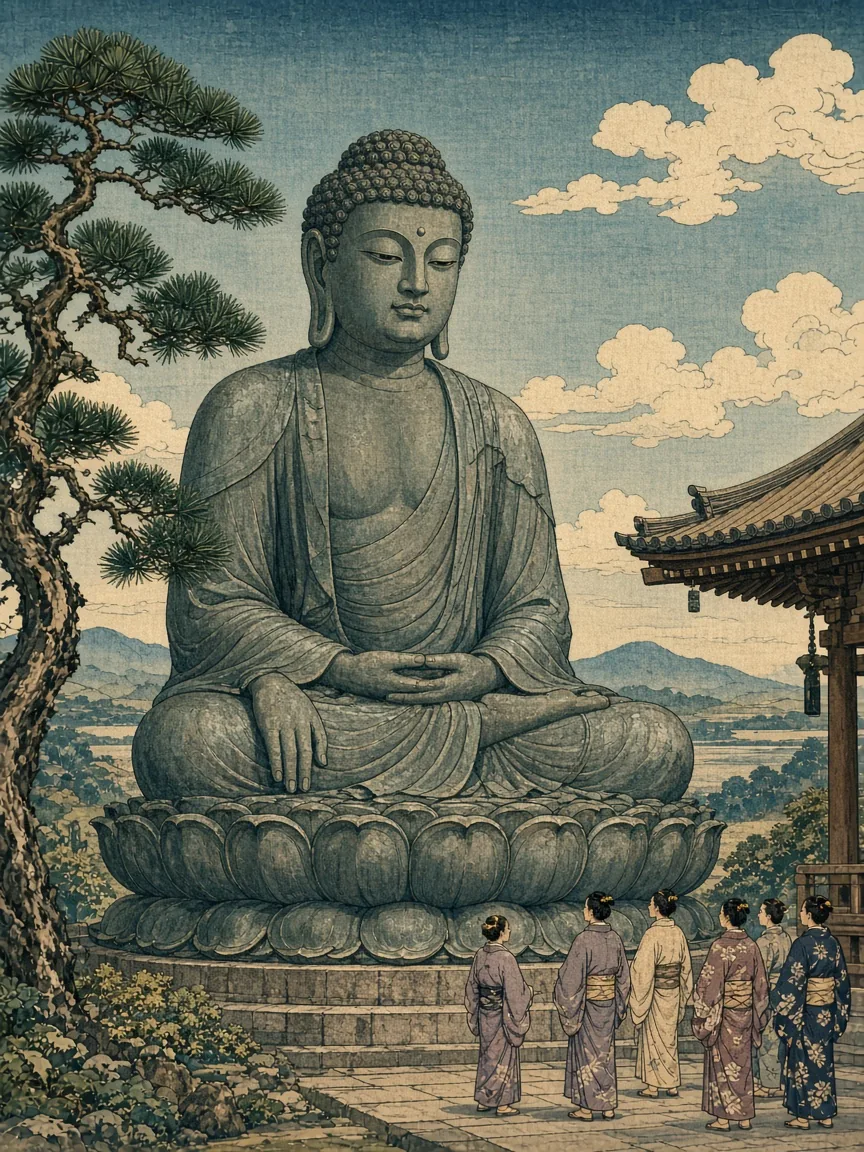
A teal bronze Buddha rendered like a woodblock still stops me. Tiny figures at the base make the scale honest. Contemporary Japanese art does not have to abandon sacred iconography to feel current. It has to refuse kitsch.
I saw a similar print mood in a Brooklyn print fair and bought a small study for my hallway. Guests slow down there. That is the test.
Portrait As Pattern System
Faces become design systems when pattern takes over skin, cloth, and background together.
Spiral Portrait Heat
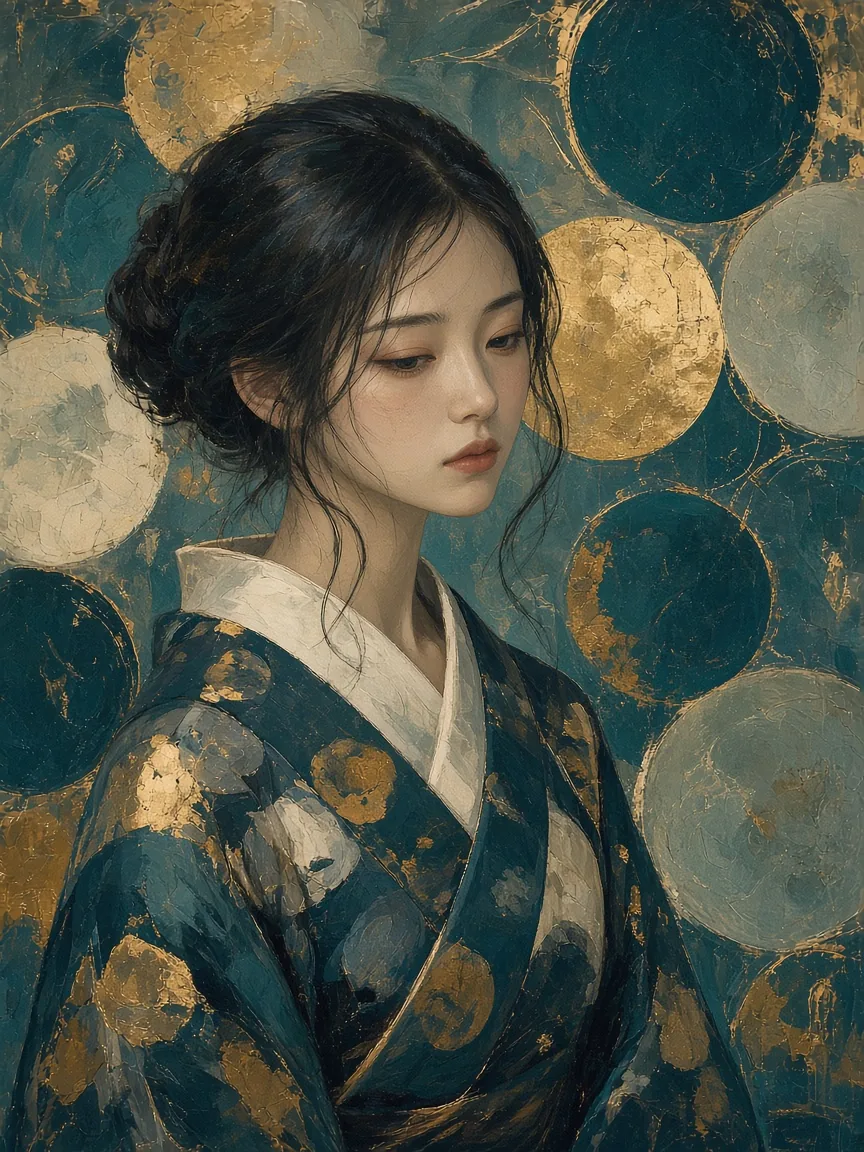
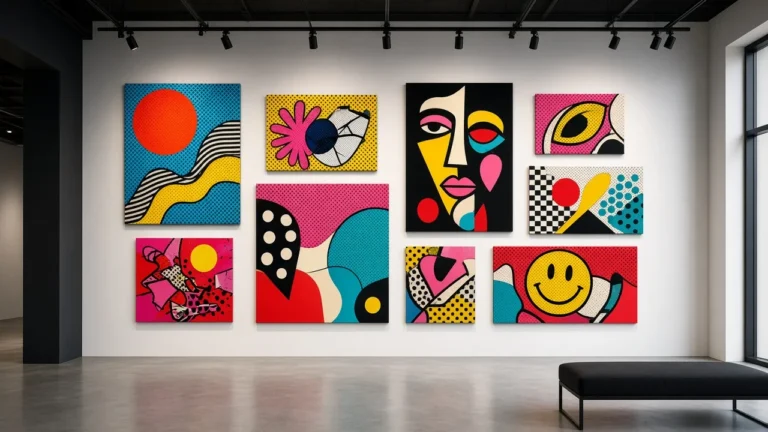
Blue kimono swirls against orange concentric circles feel like graphic novel energy with painterly patience. Gender play and ornament sit in the same frame. I like work that lets decoration carry argument instead of apologizing for beauty.
Collectors sometimes call this decorative as a dismissal. I call it compositional courage.
Three Figures In Mist
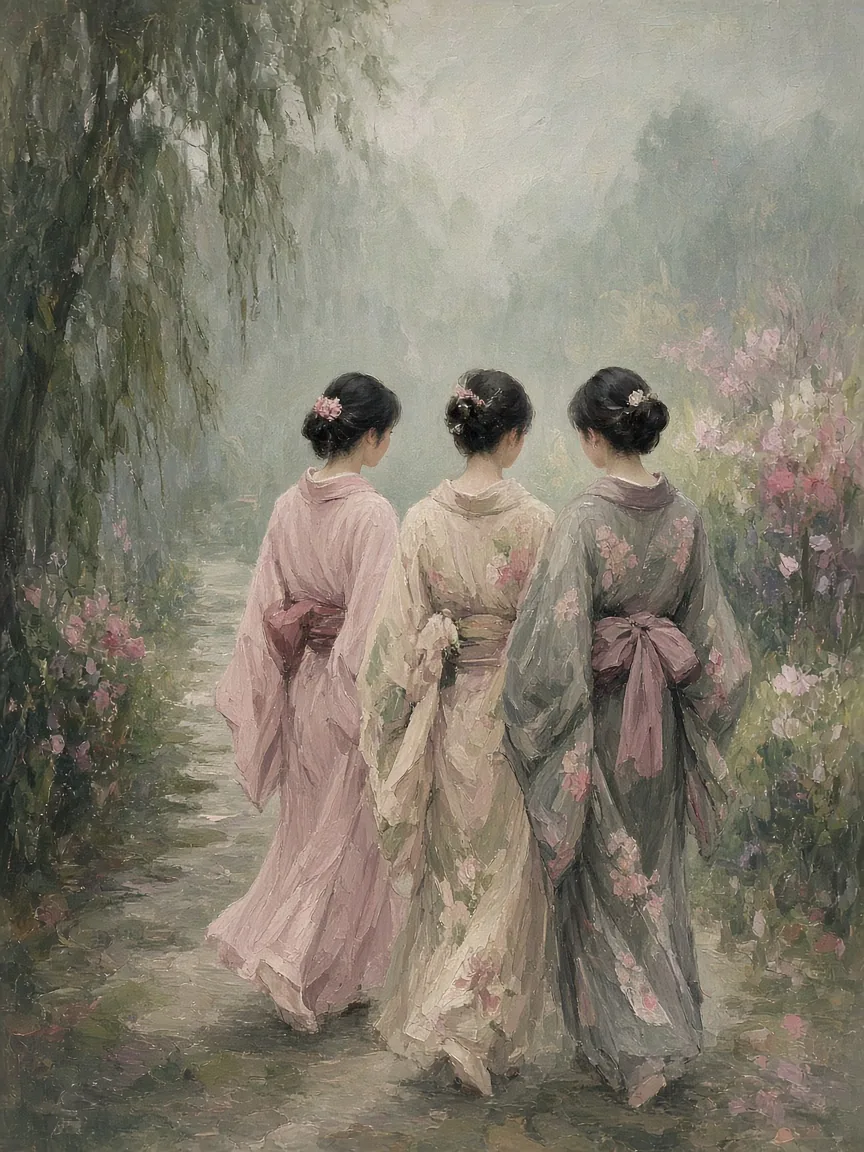
Three women in soft kimono tones on a misty path keep impressionist blur without losing cultural specificity. The scene feels walked, not posed for export. Contemporary Japanese art earns trust when atmosphere is earned by looking, not by stereotype.
I would hang this near a reading chair. It asks for slower mornings.
Galleries And Expanding Mediums
Ink Meets Neon Room
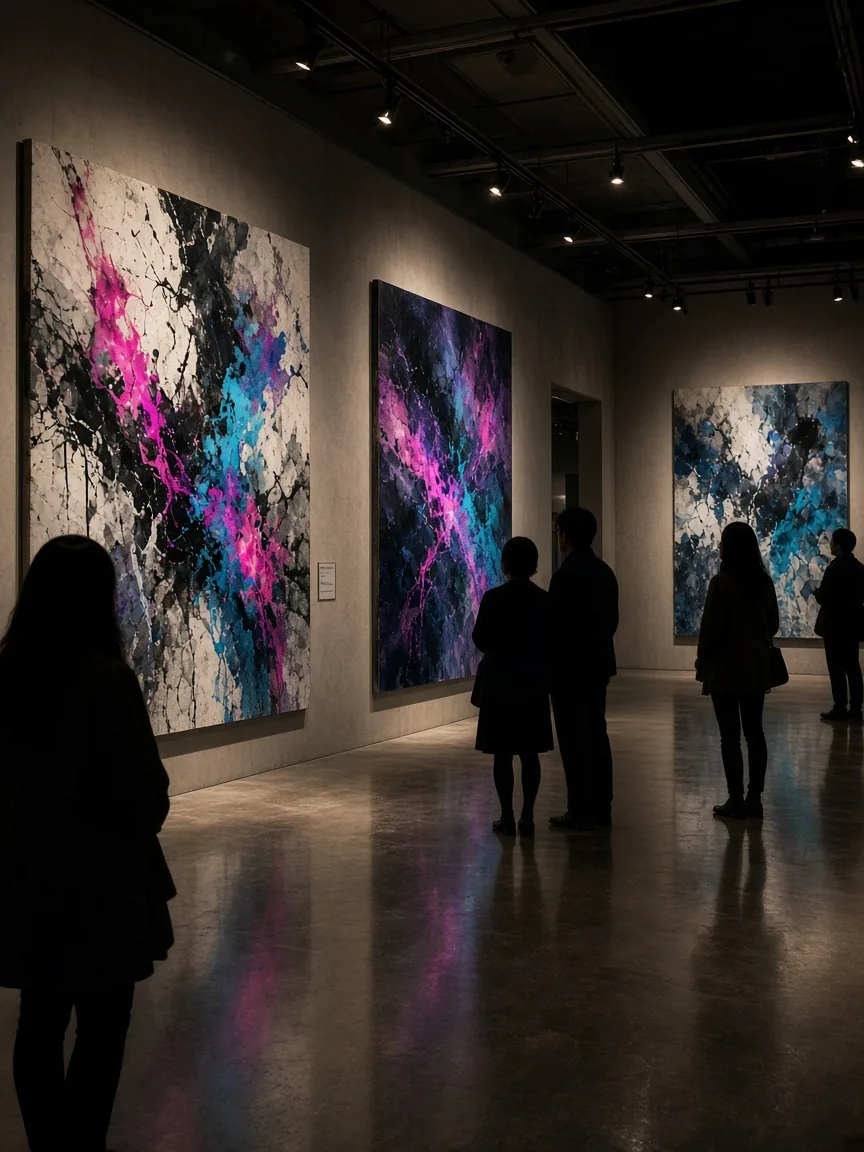
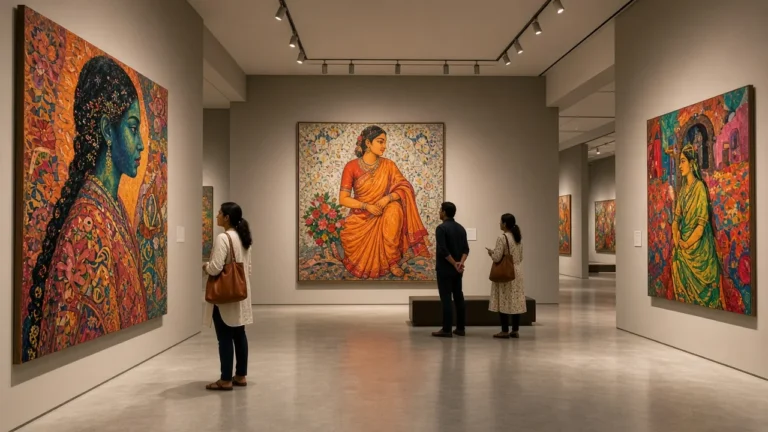
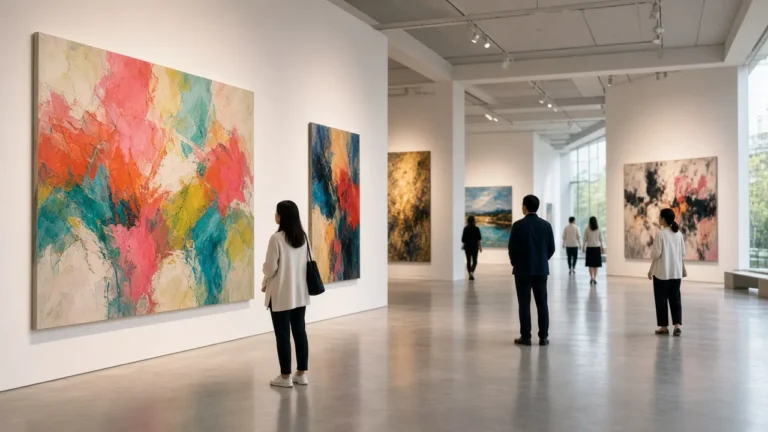
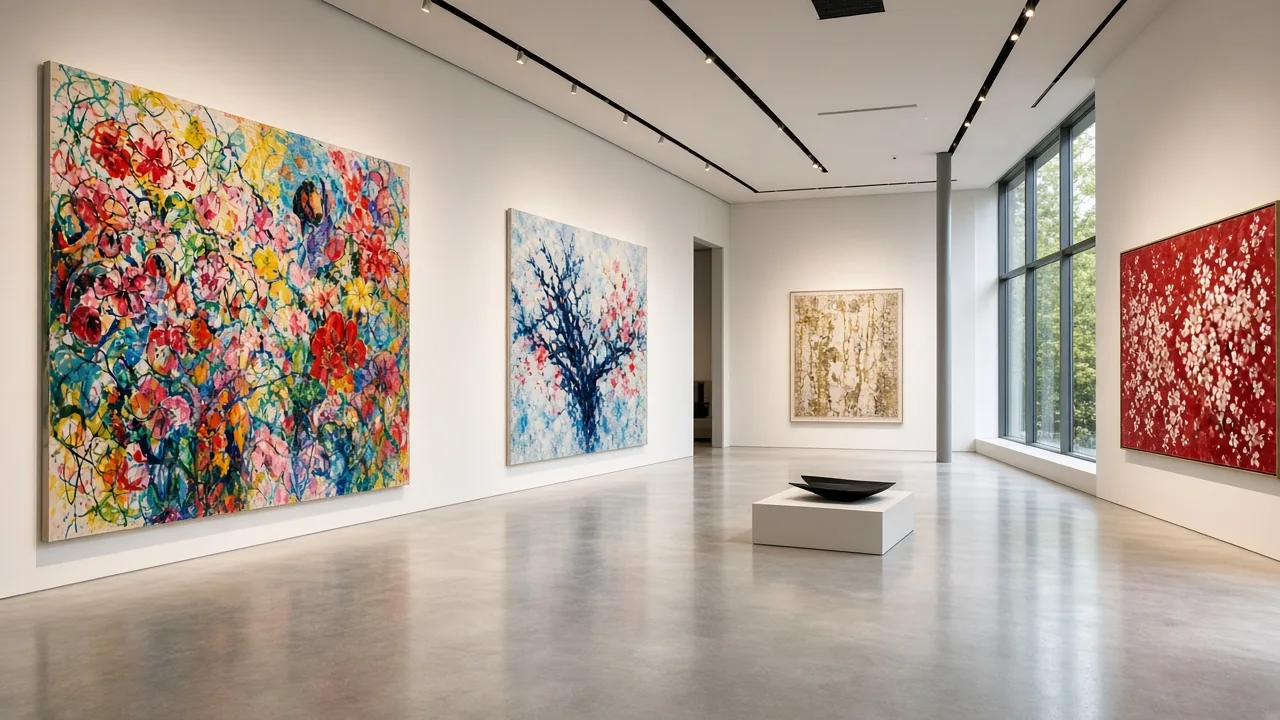
A concrete gallery with ink-and-neon canvases is where the medium expansion becomes physical. Spotlights, reflections, soft visitor silhouettes. Video, installation, and painting share air without a forced hierarchy.
When friends ask where to start looking, I say: one museum survey, one commercial gallery show, one artist talk. Then ignore auction headlines for a month.
How I Read The Field Now
I watch for craft memory under the spectacle. If a piece only shouts geopolitics without material intelligence, I get bored. If it only looks pretty without risk, I get bored faster.
Diaspora studios matter as much as Tokyo fair weeks. Work travels through screens before crates. That changes who gets seen and who gets paid. Stay skeptical of single-city narratives about contemporary Japanese art.
Support living artists with ticket money, editions when you can afford them, and careful sharing that credits the maker. Screenshots without names are how attention gets stolen.
My private metric remains simple: does the work change how I walk out of the building? If yes, keep looking. If not, keep looking anyway, just elsewhere.
Collectors should buy walls they can live with, not only names that photograph well at fairs. A quieter print that you face every morning often teaches more than a loud canvas bought for status. Contemporary Japanese art rewards that kind of domestic honesty.
Educators can help by pairing historical prints with living artists in the same lesson. Students grasp continuity faster when the lineage is visible, not when tradition is treated as a closed museum drawer.
I also watch fashion and design crossovers carefully. Collaboration can be sharp. It can also flatten craft into mood boards. Ask whether the artist kept authorship when the brand arrived.
Last note from my notebook: leave room for humor. Not every serious room needs solemn lighting. A wry portrait can carry as much intelligence as a tragic installation.
Travel tip: if you only have one afternoon in a city, skip the gift shop first and walk the permanent collection slowly. Contemporary Japanese art makes more sense when you have seen what it is arguing with upstairs in the older galleries.
FAQ
What is contemporary Japanese art?
Art from roughly the postwar period to now that engages present Japanese life and global exchange across painting, print, sculpture, video, and installation.
Is it only anime-influenced?
No. Pop visual culture appears, but so do ink traditions, photography, ceramics, and quiet conceptual work. Reduce it to anime and you miss the field.
Where should beginners start looking?
Visit one museum collection, one temporary exhibition, and one smaller gallery. Read artist interviews before buying anything.
How does tradition show up?
Through materials, composition habits, and subject memory reinvented for present questions, not through costume nostalgia alone.