
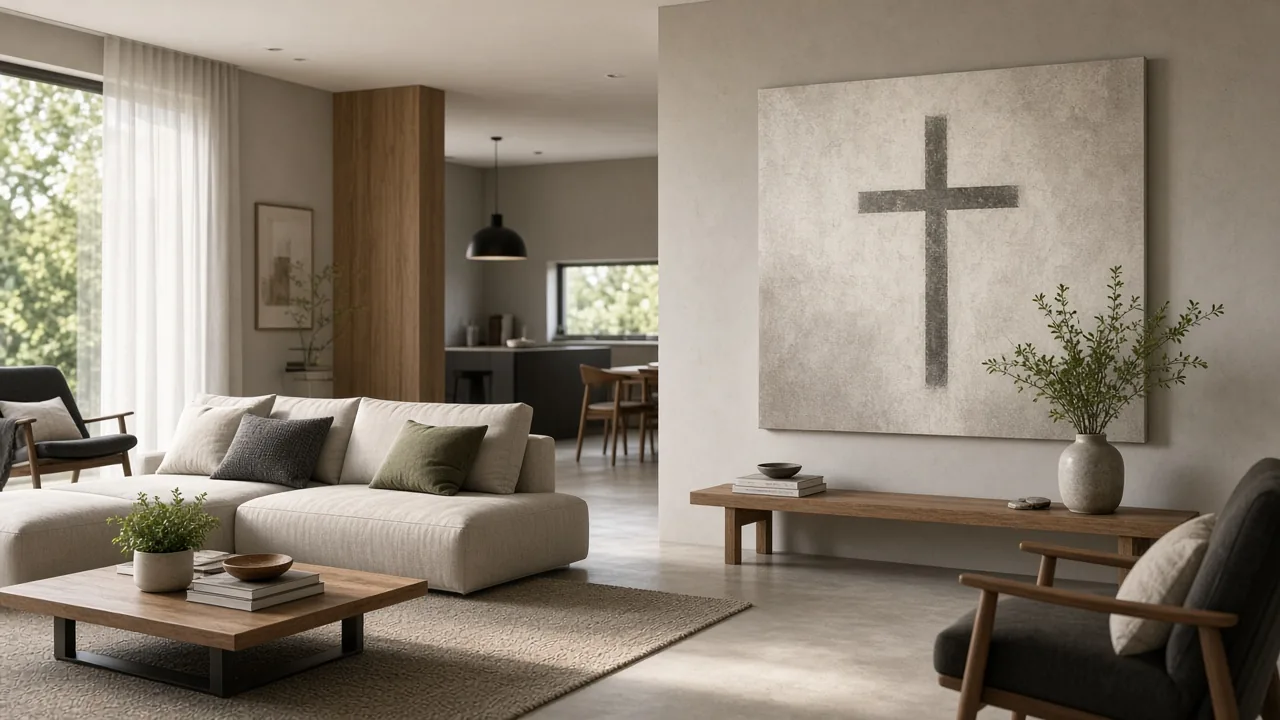
I do not treat contemporary Christian art as souvenir faith. The pieces that hold me update old stories with present materials, doubt included.
A rainy afternoon in a friend’s apartment changed my bias: a Last Supper canvas above an ordinary sofa, kids’ shoes nearby, no chapel hush. Sacred image in daily air. That is still my preferred test.
Music neighbors this conversation. If you care about sound as much as image, my notes on contemporary Christian music artists and best contemporary Christian music albums track the same modernizing impulse.
Sacred Images In Living Rooms
Wall art is where belief becomes domestic design. That can be shallow. It can also be honest about where people actually pray and argue.
Supper Above The Sofa
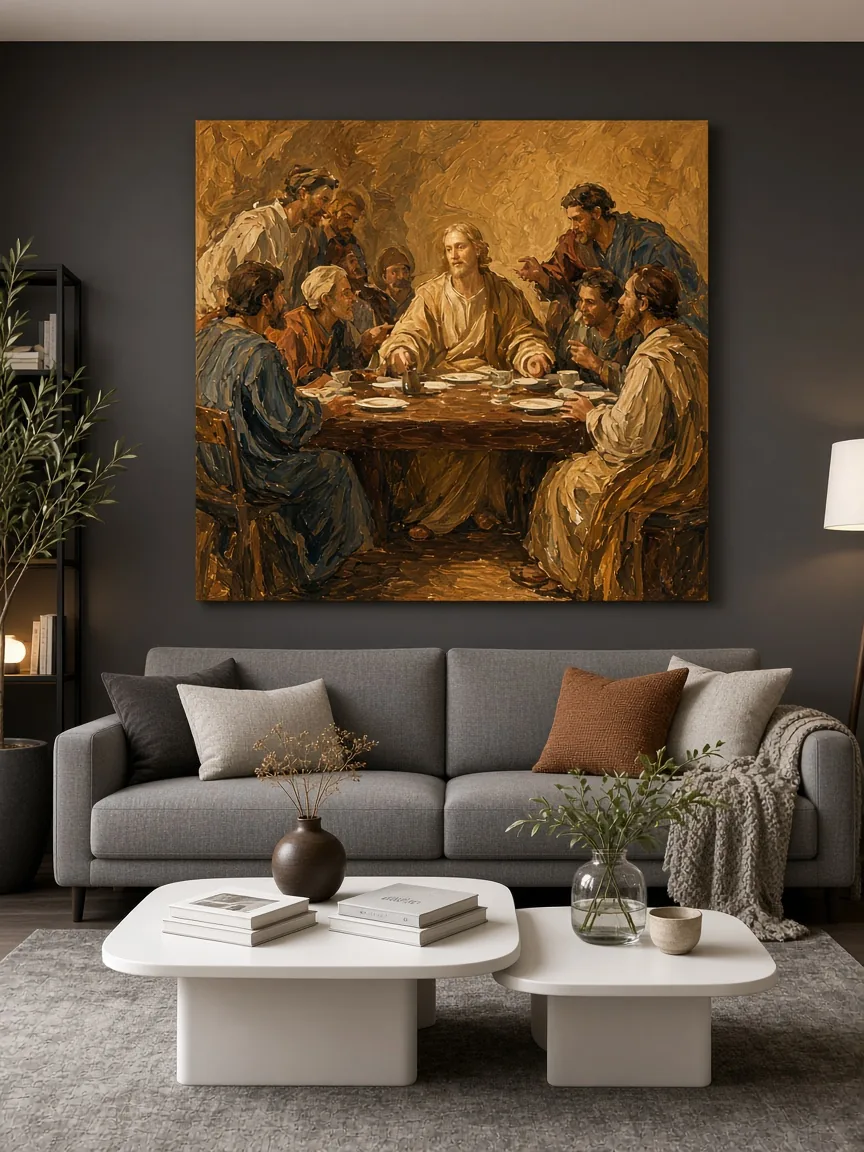
A warm Last Supper painting over a gray sofa refuses museum distance. Bread, shadows, disciples in earth tones: devotion as furniture-scale commitment. I like that more than tiny polite crosses in hallways.
Contemporary Christian art earns its place when the room still functions. Guests sit. Kids spill. The image stays.
Geometric Nativity
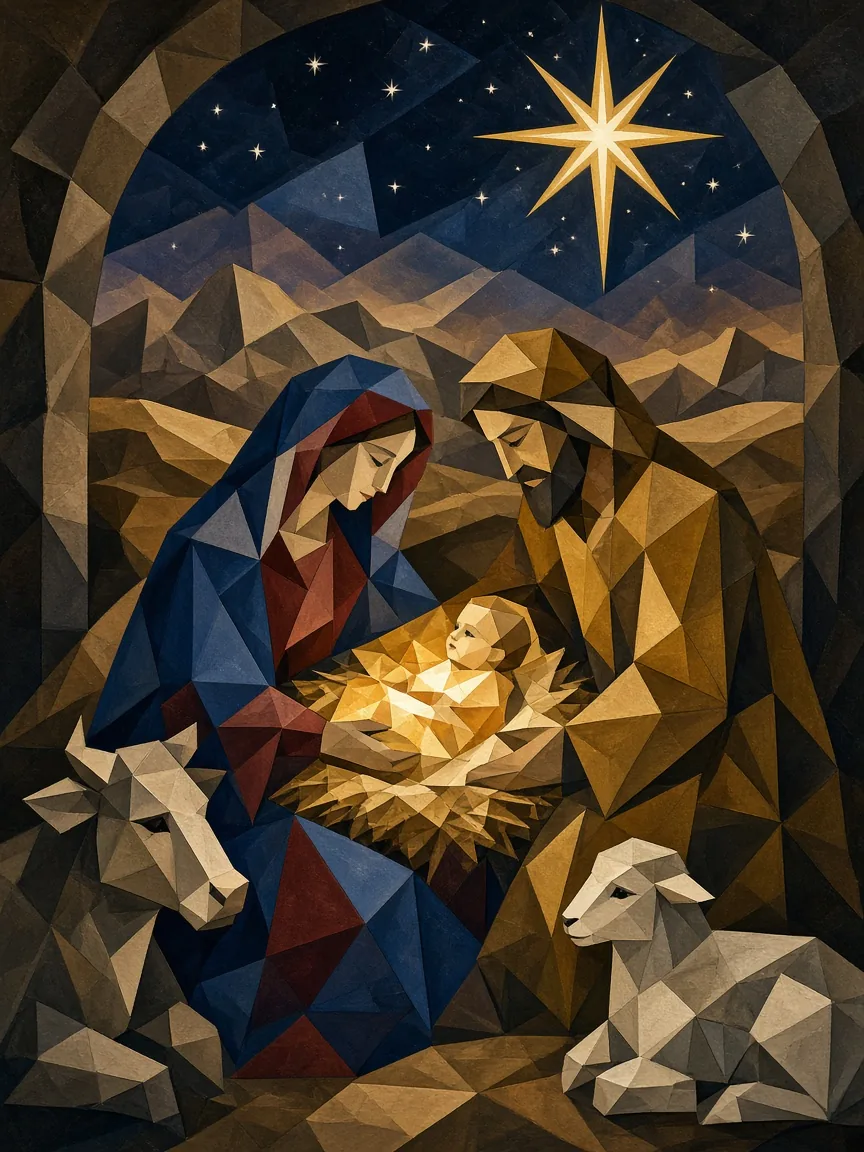
Cubist planes and a glowing infant keep the nativity from becoming Christmas packaging. Mary’s red, Joseph’s mustard, the hard star: theology as design problem. I hung a print like this one December and left it up until March.
Geometry helps me look again. Familiar story, unfamiliar edges.
Symbols That Argue With The Age
The best new Christian images talk to waste, war, and distraction without turning into billboards.
Cross Of Living Color
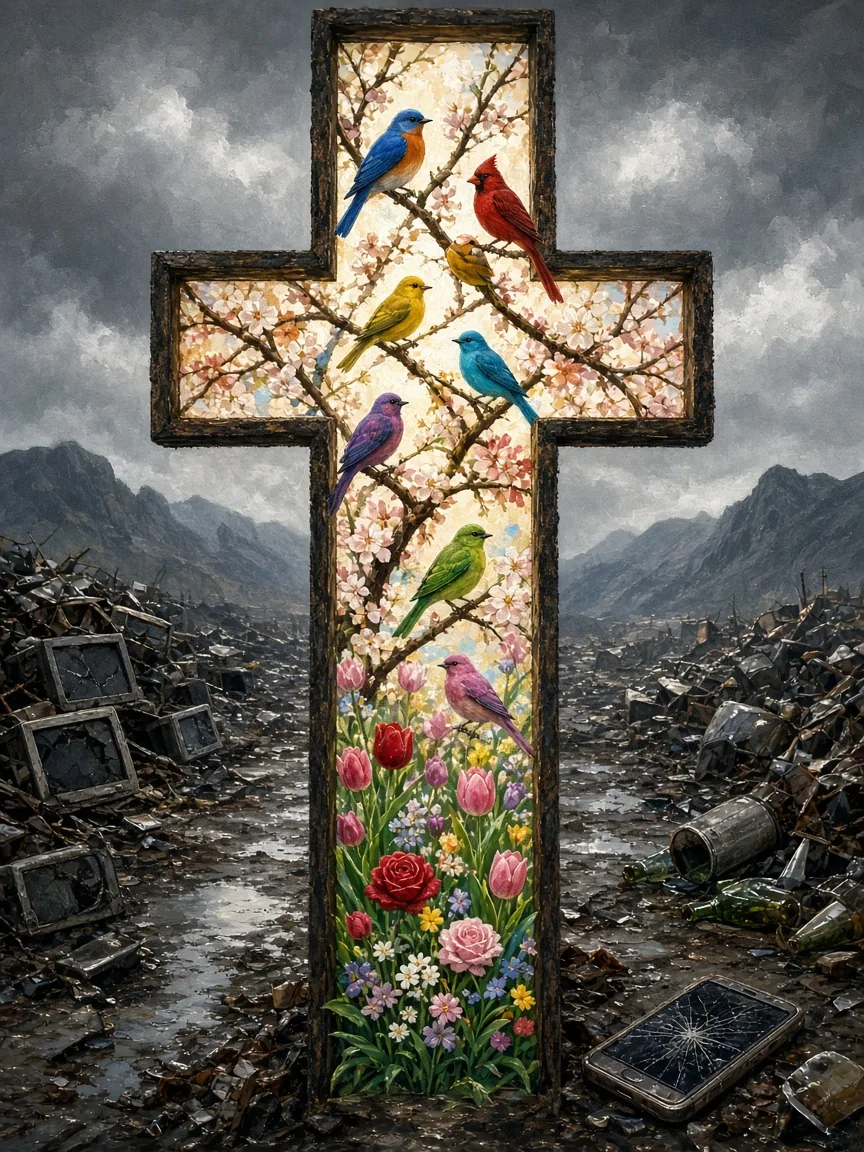
A cross filled with birds and flowers against scrap electronics is the sharpest sermon some walls can hold. Hope as portal, not as escape fantasy. I showed this idea to a skeptical friend and watched him go quiet for a full minute.
That silence is what I want from contemporary Christian art: interruption, not slogans.
Net And Shore Light
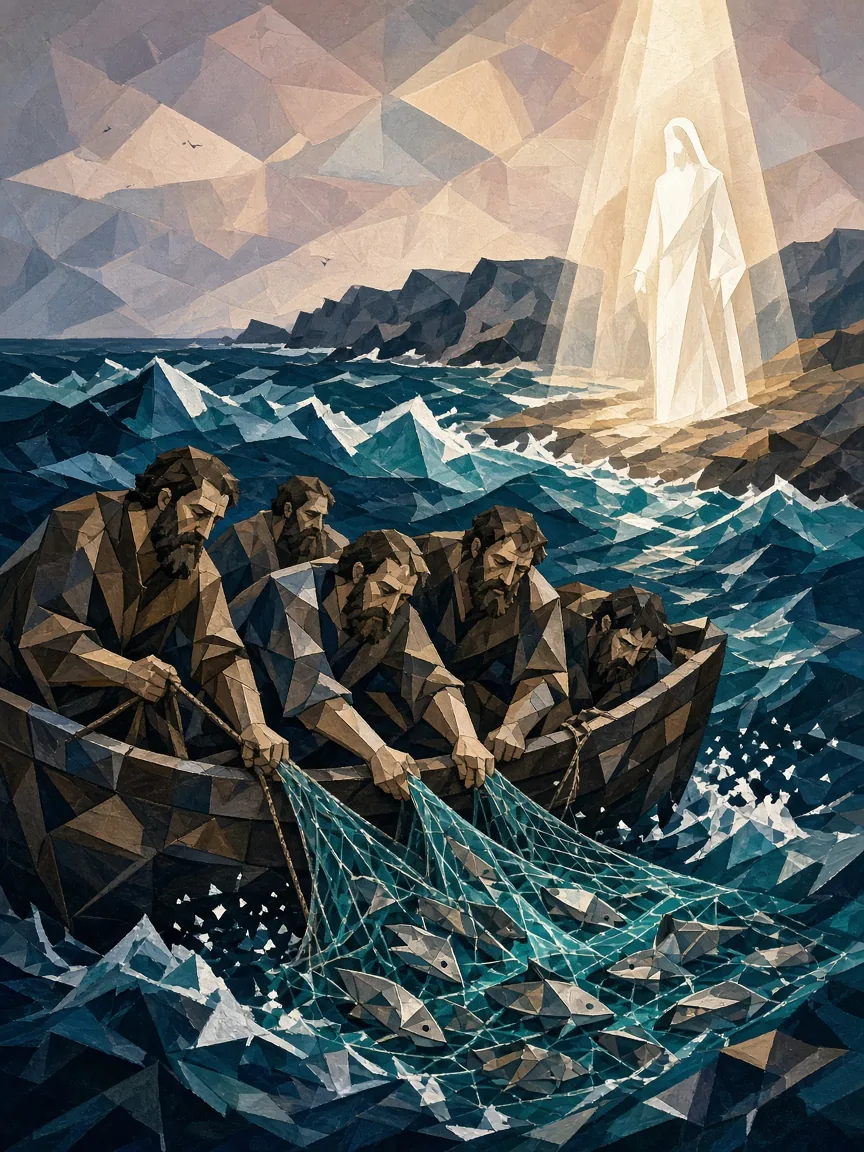
Apostles hauling a turquoise net while a white figure glows on shore: vocation story in cool blues. The cubist water feels modern without abandoning the miracle. I read this as work first, spectacle second.
If your faith life feels abstract, images of labor help. Nets are heavy. So is care.
Collections And Continuity
Salon Of Sacred Works
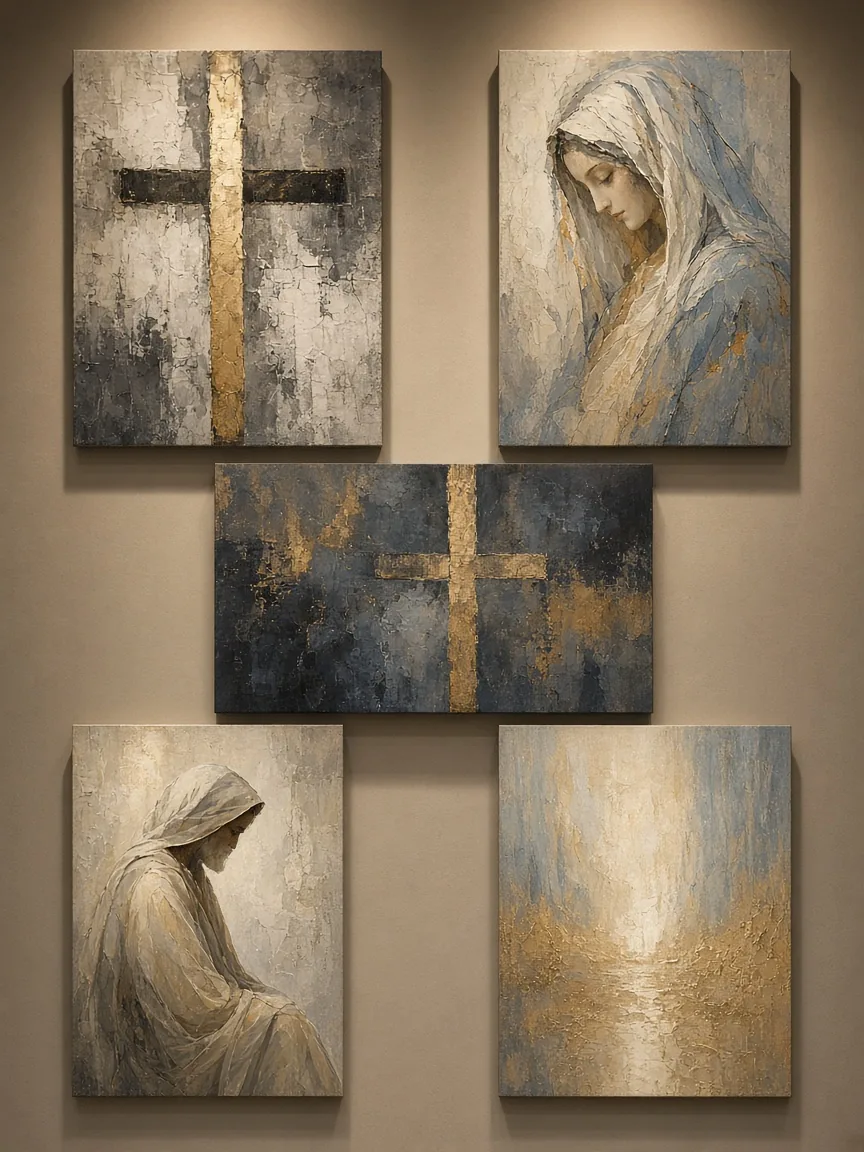
A salon wall of mixed sacred pieces feels like inheritance in progress: abstract crosses, soft figures, gold scraps of older language. Families pass belief through objects as much as through speeches.
I would rather inherit one honest painting than five trendy plaques. Contemporary Christian art should survive taste cycles.
For a wider cultural frame beyond church interiors, neighboring essays on contemporary Black art show how sacred and social histories often share a wall.
I am wary of art that only flatters belief. Comfort has a place in devotion, but contemporary Christian art gets thin when it never risks grief, doubt, or social anger. The gospel stories themselves are not soft focus.
Craft still matters. Cheap prints with glowing stock angels teach the eye to expect less. Pay for better materials when you can. A well-made piece becomes part of household liturgy in the ordinary sense: you see it while washing dishes and somehow remember to be kinder.
If you commission work, give artists room to interpret. Dictating every halo color turns collaboration into product design. The best commissions I have seen started with a text and a question, not a Pinterest board of mandatory poses.
Churches can help by funding residencies instead of only ordering matching sets for the fellowship hall. Contemporary Christian art grows when institutions risk unfinished experiments, not only when they buy safe landscapes with a discreet cross in the corner.
At home, rotate seasonally if you need to. Lent and Advent can change which image sits above the table. The rest of the year, keep one steady piece that does not depend on the calendar to mean something.
I keep returning to one test when a piece feels sticky-sweet: would I still respect it if the artist removed every familiar symbol and left only the emotional architecture? If the answer is no, the work was leaning on labels. Contemporary Christian art should survive that removal test more often than it does.