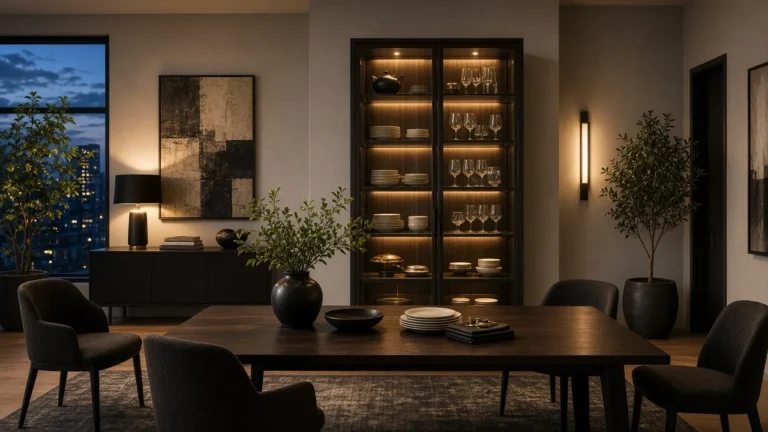

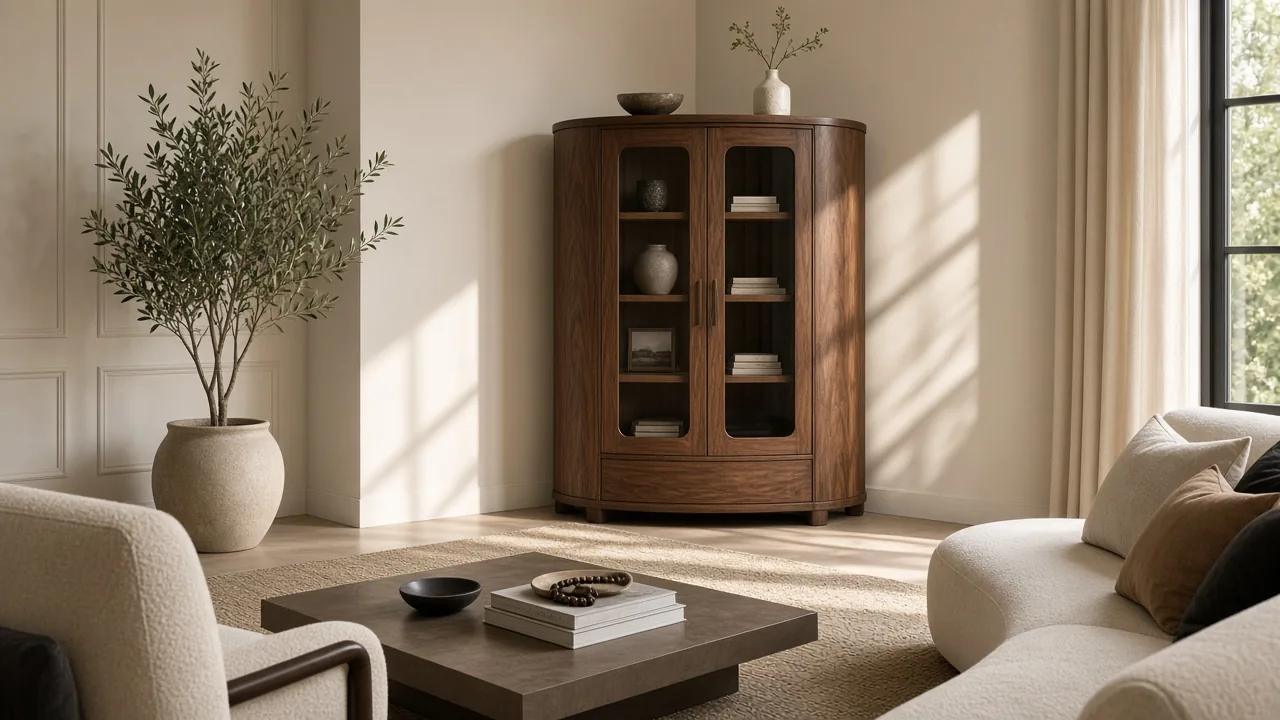
A contemporary corner cabinet sounds like a boring shopping category until you live with a dead corner that swallows dust and bad decisions. I have moved enough apartments in Brooklyn to treat corners as real square footage. The right cabinet does not apologize for the awkward angle. It turns it into storage you actually use.
This is not a catalog of every Lazy Susan hinge on the internet. It is how I think about materials, room roles, and the difference between a statement piece and a silent workhorse. If you came here for a 2025 trend stamp, you can skip that. Good corners do not expire with the calendar.
What Makes a Corner Cabinet Contemporary
Contemporary, for me, means clean geometry, honest materials, and hardware that disappears until you need it. Soft-close hinges. Thin reveals. Legs that lift the box off the floor so the room still breathes. It can be warm wood or lacquered white. It should not look like a traditional china cabinet that wandered into the wrong decade.
Engineered wood is fine when the veneer is tight and the edges are finished. Solid wood is better when humidity swings, but only if the maker knows how panels move. I care more about drawer glide quality than about whether the marketing copy says “artisan.” Cheap metal tracks that squeak will ruin a beautiful face every day.
Living Room as Quiet Architecture
Walnut That Holds Light
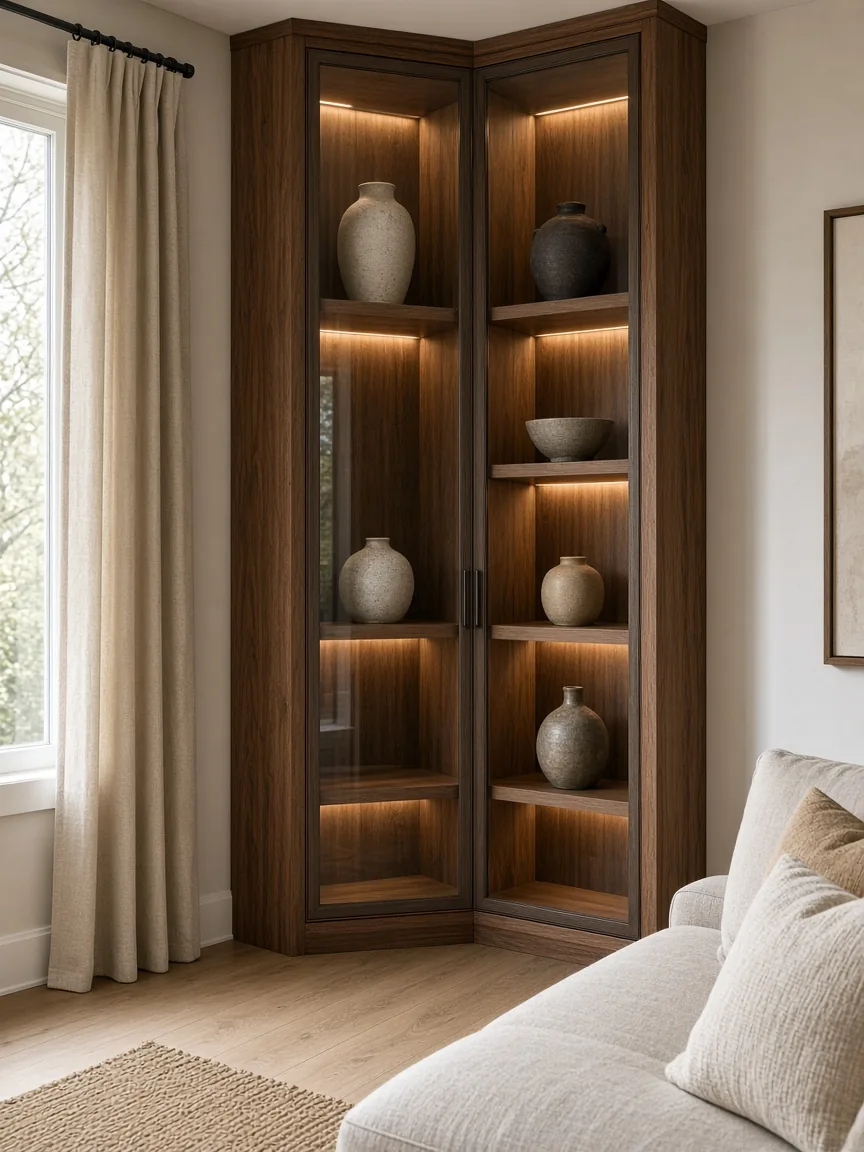
In a living room I want height and glass more than bulk. A tall walnut corner cabinet with lit shelves can replace a floor lamp’s job and a bookcase’s job at once. I put ceramics, a few books, and one object that is slightly too large so the cabinet does not feel like a thrift store. Closed lower doors hide the ugly: cables, board games, the printer you pretend you do not own.
If your sofa already dominates the room, keep the cabinet quieter. Match undertones rather than forcing contrast for Instagram. Contrast is easy. Calm is harder, and it photographs less often, which is usually a good sign for daily living.
Kitchen Corners That Actually Work
White Doors, Real Access
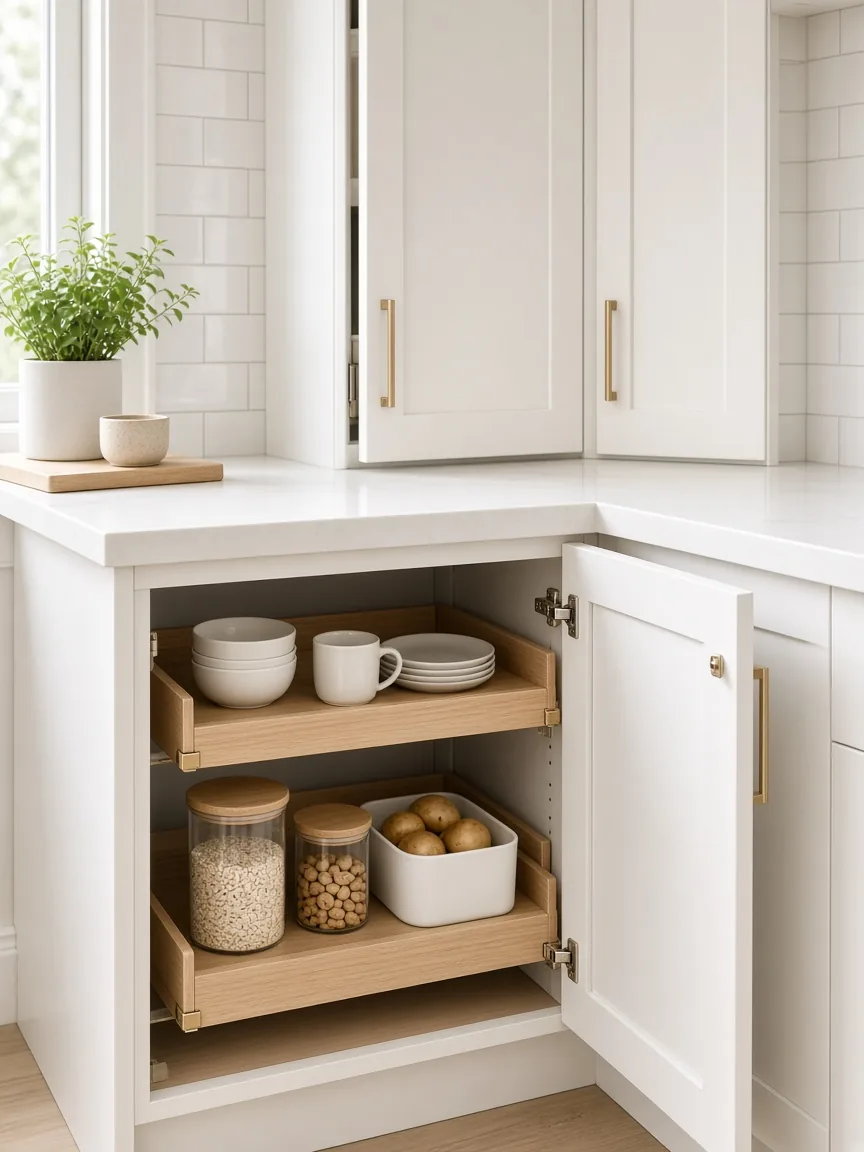
Kitchen corners fail when you cannot reach the back without a flashlight and a bad mood. Blind corners with no pull-out are storage theater. I prefer a contemporary corner cabinet with bi-fold or wide-angle doors, or a dedicated pull-out that brings the shelf to you. White finishes bounce light in small kitchens. Matte beats high gloss if you hate fingerprints.
Put daily dishes in the reachable zone. Park the rarely used platter in the dead depth if you must keep it. I would rather own fewer pieces than invent a mechanical carousel for nostalgia china. Related reading on this site when you are mapping rooms rather than shopping links: interior pieces under contemporary laundry room ideas show the same logic of light and storage discipline.
Entryways and Bathrooms
Black Metal Slimline
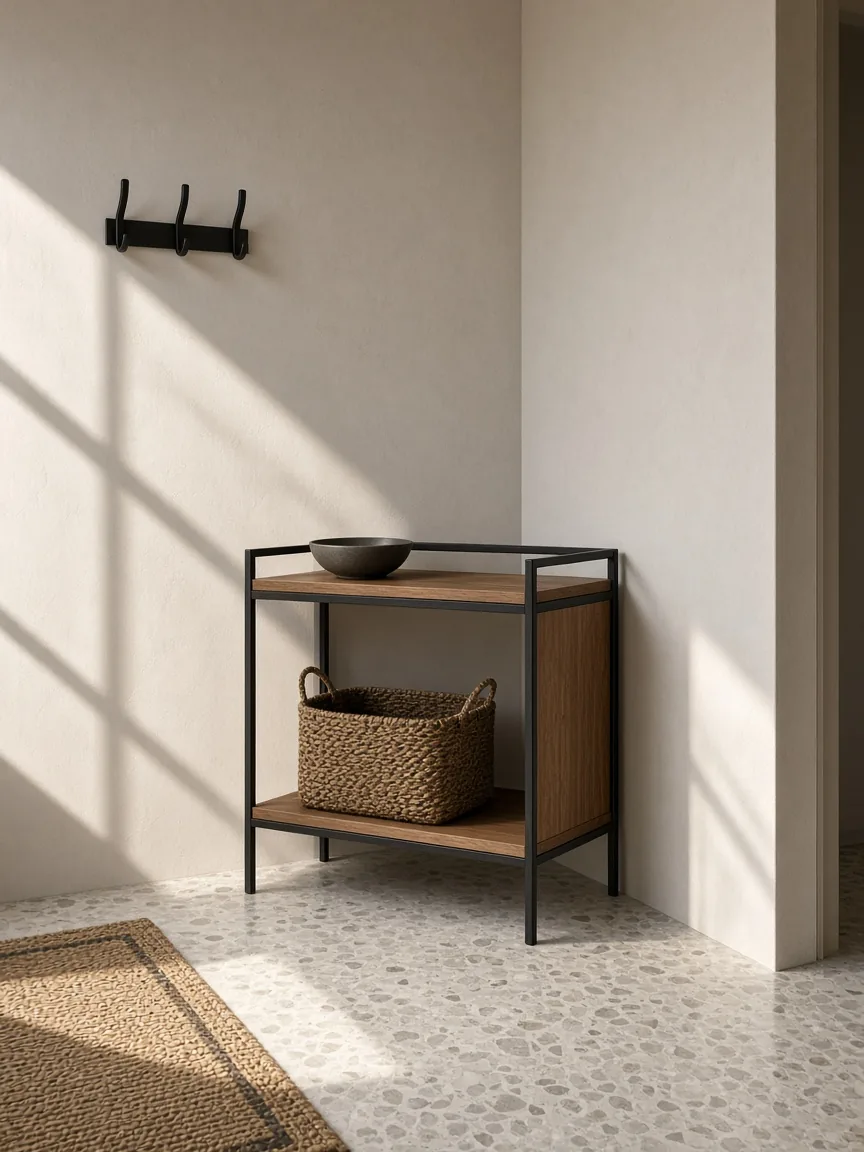
Entries need narrow footprints. A black metal frame with wood shelves keeps coats and keys from migrating onto the nearest chair. I like an open lower cubby for shoes you actually wear and a closed door for the ones you should donate. If the cabinet sits by the door, choose finishes that forgive scuffs. Matte powder coat ages better than piano lacquer in a hallway that sees wet umbrellas.
Oak Bath Calm
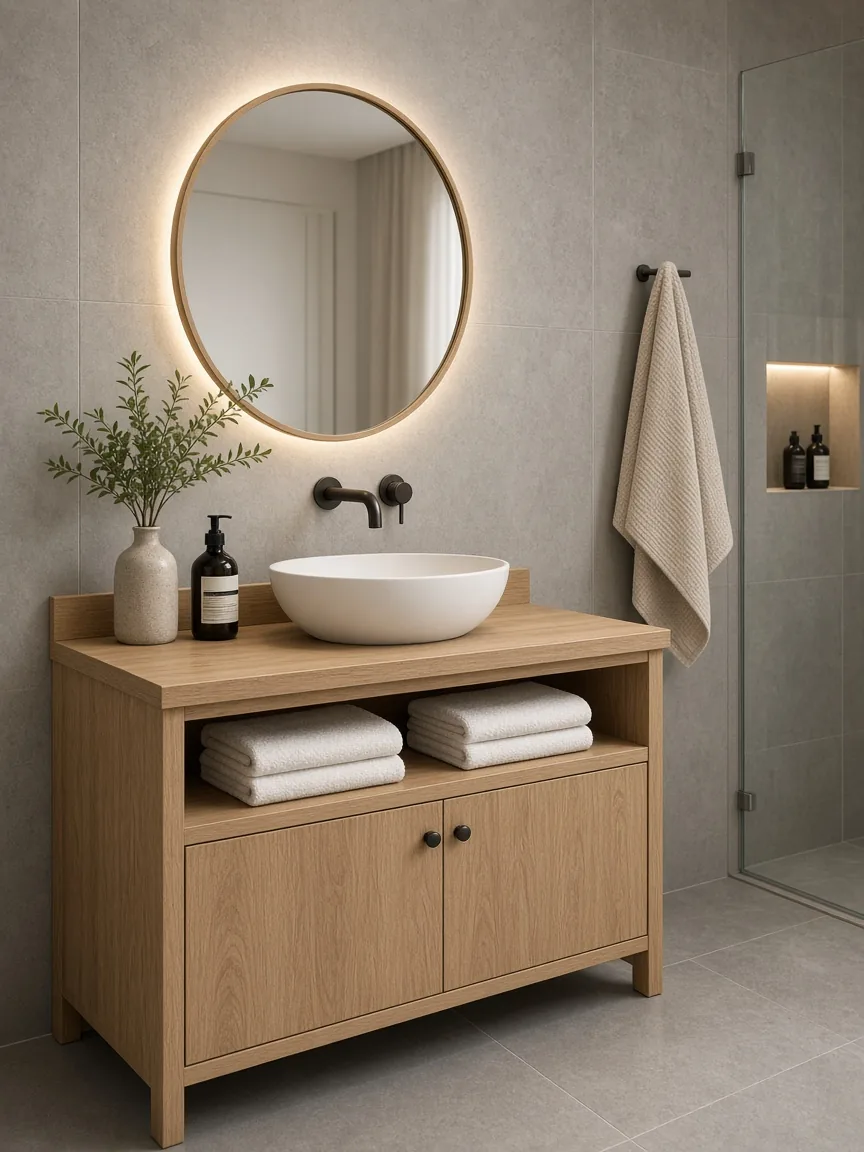
Bathroom corners ask for sealed wood or quality veneer over particle board that swells. A light oak corner vanity with a vessel sink can make a small bath feel designed rather than patched. Keep towels in the open shelf only if your ventilation is honest. Otherwise closed storage wins, and the pretty stack is for the photo you take once.
Styling Without the Prop Closet
Statement corners work when the cabinet itself is the sculpture: unusual height, strong grain, a single bold color. Minimal corners work when the lines are so clean you barely notice them until you need a mug. I avoid filling every shelf. Negative space is part of contemporary design, not a failure to shop.
Lighting changes everything. A small LED strip inside a glass cabinet turns evening into a gallery moment. Skip RGB gimmicks. Warm white, dimmable, hidden. If you also collect wall objects, a contemporary metal wall art piece above or beside the cabinet can finish the vertical line without adding another piece of furniture.
Seasonal styling is allowed if you can undo it in ten minutes. A winter candle cluster is fine. A permanent clutter of “vignettes” is how corners become storage for guilt. Edit quarterly. Keep one shelf slightly emptier than feels natural. Your eye needs a place to rest, especially in small apartments.
Kids and pets change the brief. Soft-close doors matter more. Glass doors may need film or locks. Open shelves become toy ledges unless you accept that. A contemporary corner cabinet can still look adult if the lower third is closed and durable. Design for the household you have, not the photoshoot household.
How I Decide Before Buying
Measure the corner twice, including baseboards and outlet locations. Check door swing against walkways. Ask what will live inside on a Tuesday, not what looks good empty. Spend on hinges and finishes you touch. Save on decorative molding you never notice. If a unit needs six people and a prayer to assemble, factor that into the price.
Quality shows in the quiet details: even gaps, aligned grain, shelves that do not bow under books. I would rather wait for one solid contemporary corner cabinet than buy two temporary ones that migrate to the curb. Rooms remember bad furniture longer than we admit.
I also think about future moves. A freestanding contemporary corner cabinet travels better than built-ins when leases end. Built-ins win when the architecture is yours and the corner is structurally weird. Renters should prefer freestanding with adjustable feet. Owners can invest in scribed panels that kiss the wall.
Budget framing that works for me: mid-range carcass, better hardware, and a finish I will not regret in five years. Ultra-cheap units cost more once you replace them. Ultra-custom units are wonderful when the room deserves them and painful when you are still deciding where the sofa goes.
For broader art-and-object context when your corner becomes a display zone, the tone in contemporary Mexican art is different, but the curation lesson is similar: fewer objects, stronger choices.
One more practical note on finishes: wipe-test samples in the actual room light before you commit. Showroom LEDs lie. Walnut can go orange, white lacquer can go blue, black metal can look purple. I take samples home and look at them at night with the lamps I already own. If the sample fails that test, the cabinet will fail it every evening.
Delivery and installation deserve a line in the budget. Corner units are awkward through stairwells. Measure the path, not just the corner. Soft pads under feet protect floors. A slight shim can fix a cabinet that rocks forever. These are unromantic details. They are also why a contemporary corner cabinet either becomes furniture you trust or furniture you resent.
When friends ask whether a corner cabinet is worth it versus a straight run of shelves, my answer is spatial. Shelves ignore the corner. The cabinet claims it. In small homes that claim is the difference between a room that feels finished and a room that feels like leftover geometry.
I will end the buying section with a bias I will not apologize for: buy once for the corner you have, not for the imaginary open-plan future. Rooms change. Corners stay. A contemporary corner cabinet that fits today will still earn rent after the sofa is replaced twice.
FAQ
What is a corner cabinet called?
People say corner cabinet, corner cupboard, or corner hutch depending on height and doors. Kitchen-specific versions get names like blind-corner cabinet or Lazy Susan cabinet when they include rotating hardware.
What works best in a dead corner?
Hardware that brings storage forward, doors that open wide, or a tall display cabinet that uses vertical space. Empty decorative corners look intentional for a week. Then they collect mail.
Are corner cabinets outdated?
Ornate traditional hutches can feel dated. Contemporary corner cabinets with clean lines and good proportions still solve a real spatial problem. The form is old. The detailing is what dates it.
How do I make one more useful?
Add pull-outs or wider hinges, light the interior, zone shelves by frequency of use, and edit what you store. A cabinet full of items you never touch is just a prettier closet of guilt.