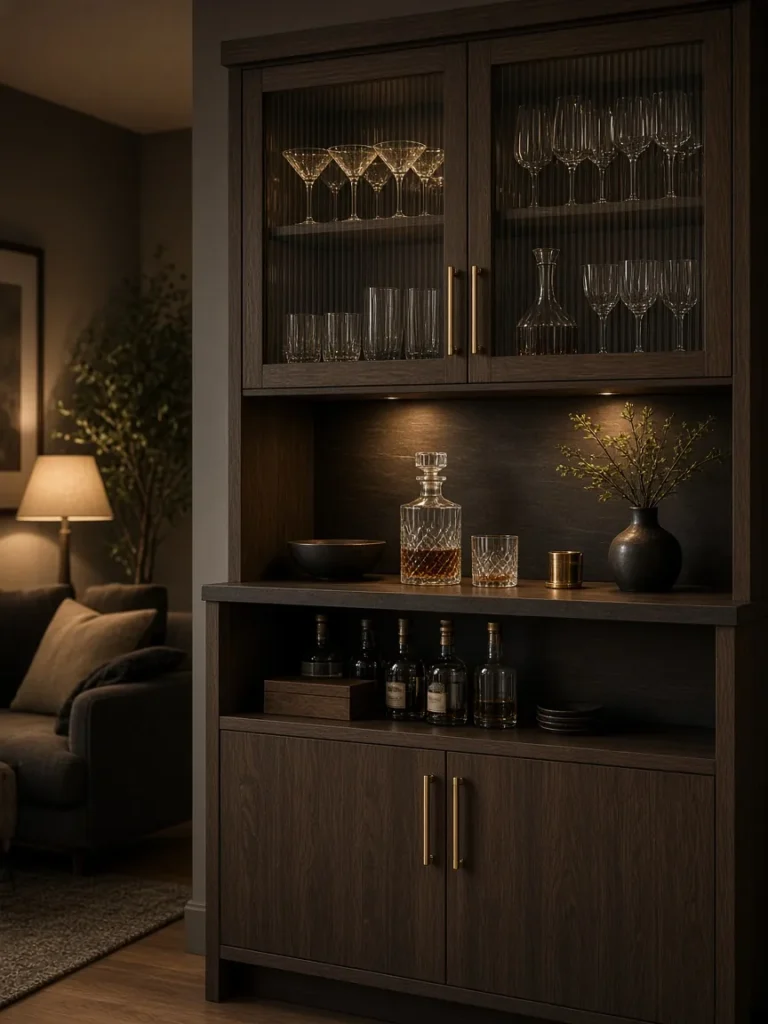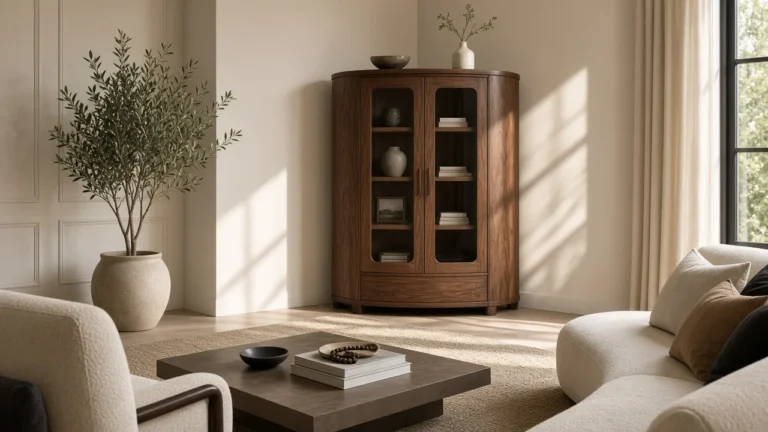

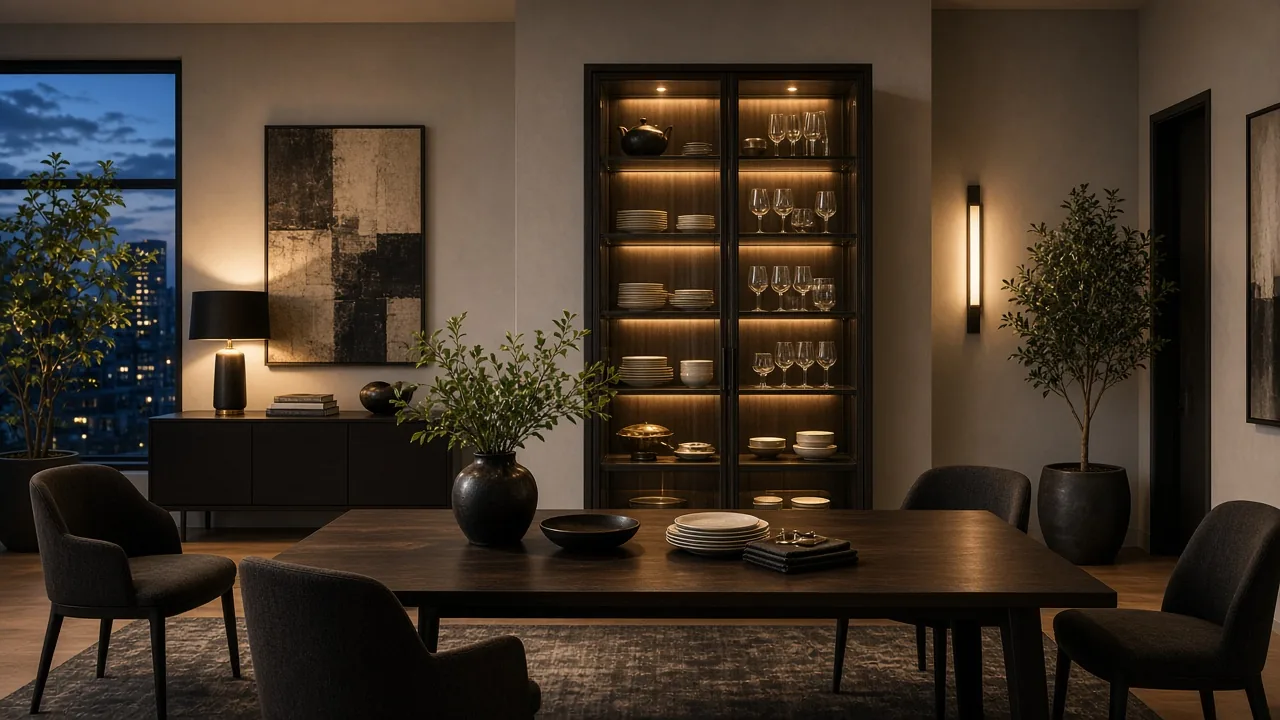
A contemporary china cabinet used to sound like furniture for people who still owned twelve place settings and a formal dining room they never entered. That stereotype is lazy. The better question is storage with a public face: glass, light, and objects you are willing to look at every day.
I care about why these pieces are back in contemporary interiors. Open shelving got messy. Closed boxes got boring. A china cabinet, updated, sits between display and discipline. No year stamp required.
What Counts as Contemporary
Contemporary china cabinets drop the heavy crown molding and the dark, crowded shelves of grandmother’s hutch. Lines get cleaner. Finishes go matte. Hardware gets quieter. Lighting moves inside the case. The job is still display plus storage, but the silhouette should not scream “heirloom prop.”
Materials matter. Walnut and oak read warm. Lacquered white or soft grey wash read lighter in small rooms. Black metal frames with glass feel closer to contemporary casegoods than to dining-room tradition. I’d argue the frame is the style signal more than whatever you put inside it.
Dining Room as the Default Stage
Glass Walnut Display
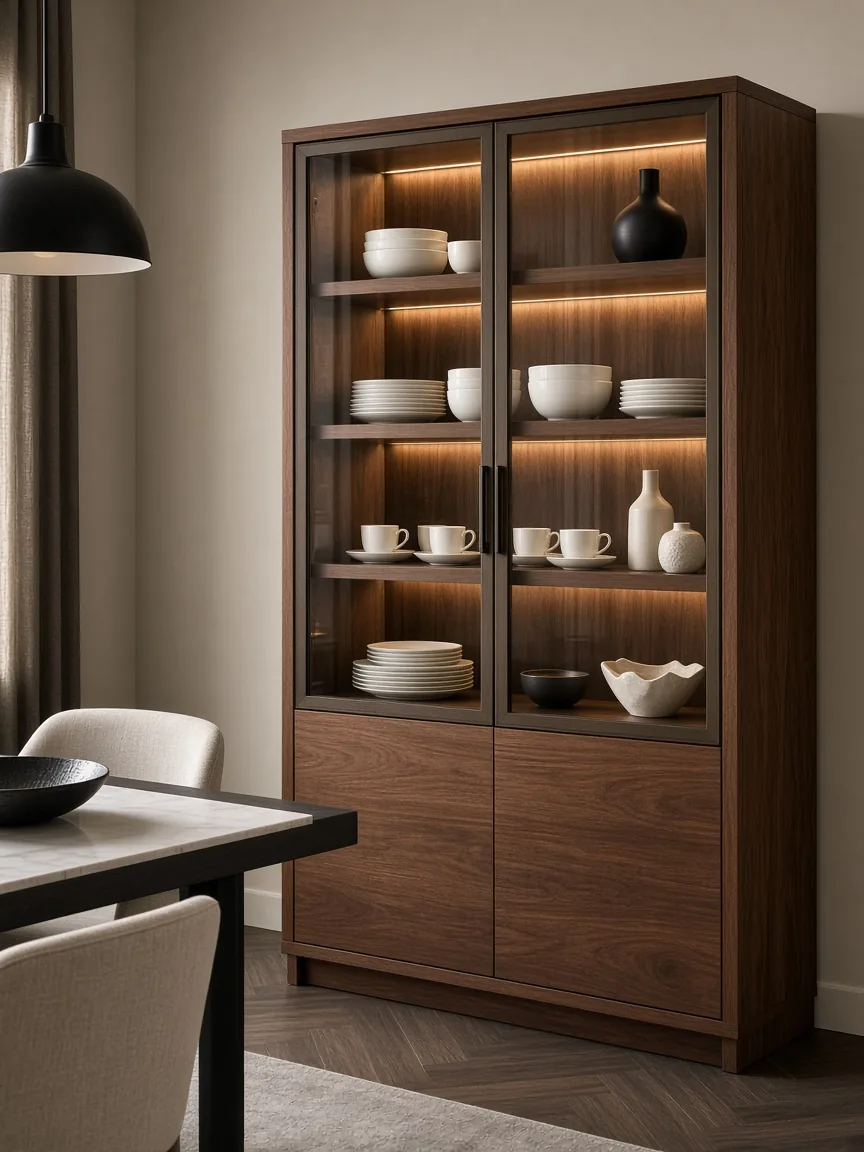
In a dining room, a tall glass contemporary china cabinet can replace both a buffet’s bulk and a wall of floating shelves. Warm LED strips turn plates into a quiet evening backdrop. Keep lower doors closed for the ugly useful stuff. Let the upper glass hold the pieces that earn light.
Arrangement tip: leave air. Crowded shelves look like thrift overflow. Group by color or height, then stop. Negative space is part of contemporary styling, not a failure to shop.
White Hutch Clarity
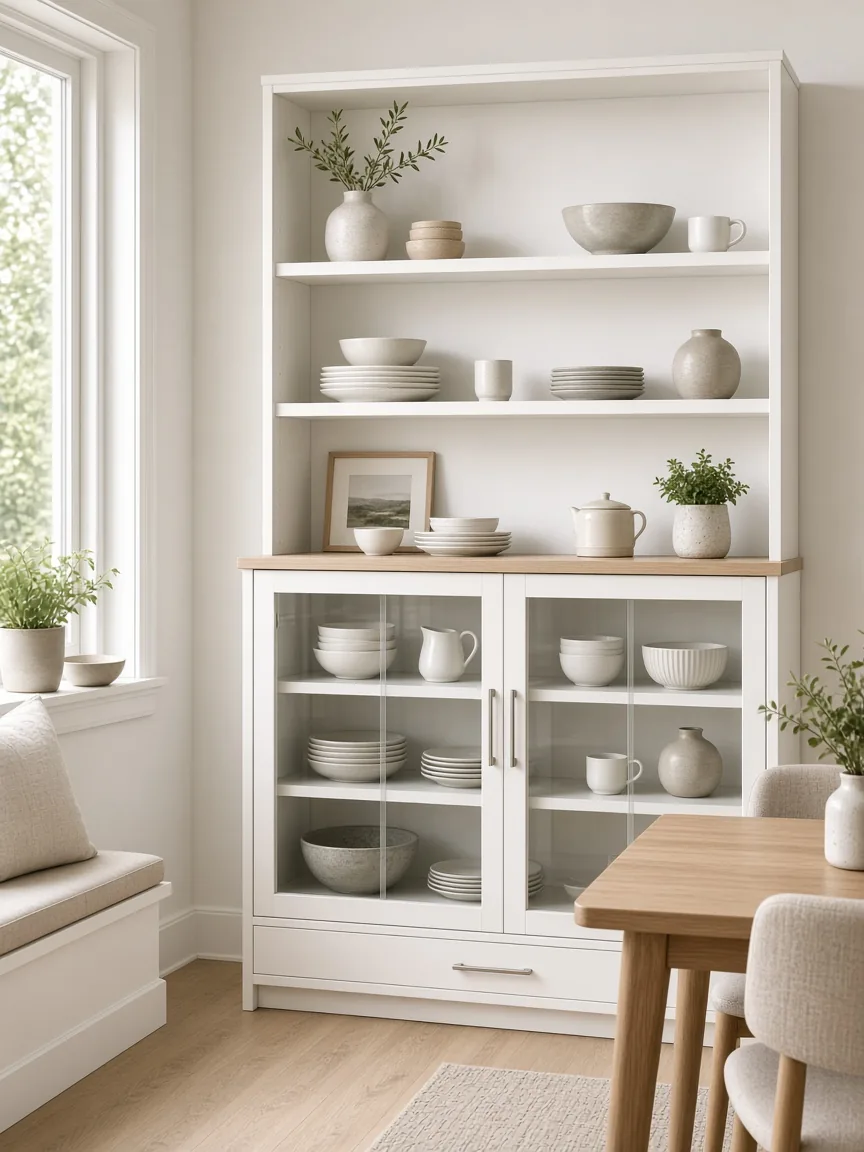
A white lacquer hutch with mixed open and glass sections brightens rooms that already fight for daylight. It also shows dust sooner, which is a feature if you actually want the cabinet to stay edited. Soft-close doors matter. Cheap hinges will punish you every week.
Beyond the Dining Room
Hallway Grey Hutch
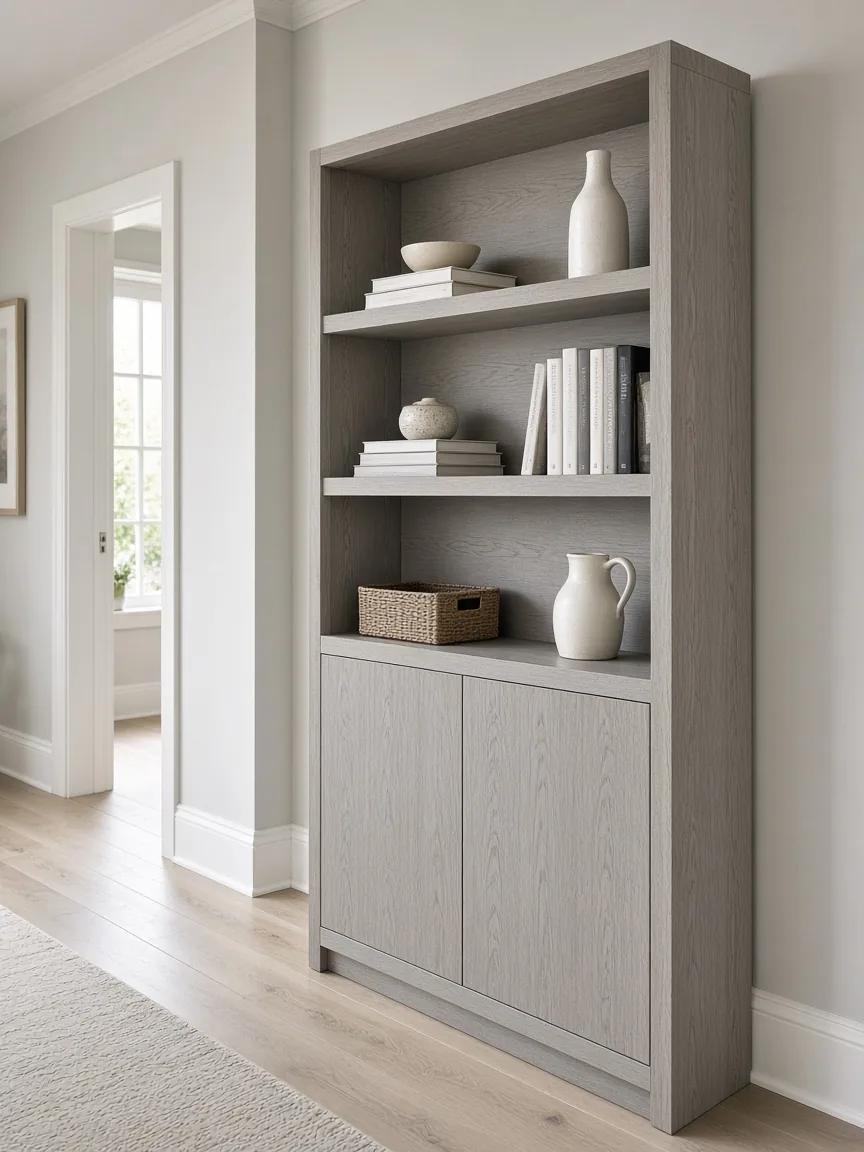
Hallways need slim footprints. A grey wash storage hutch can hold books, ceramics, and the household overflow that otherwise lands on chairs. Closed lower storage keeps the corridor calm. This is where a contemporary china cabinet stops being “for china” and becomes architecture for small plans.
Measure door swings and walkways twice. A beautiful cabinet that blocks circulation becomes furniture you resent. Same rule as corner pieces: see contemporary corner cabinet for the spatial discipline.
Black Glass Living

In living rooms, black metal and glass reads more bar cabinet than heirloom china. That is fine. Display glassware, a few objects, maybe books on lower shelves. Keep the TV wall from becoming the only vertical event in the room. A lit cabinet gives the eye a second place to land at night.
Function Before Collectibles
Storage capabilities should decide the buy: adjustable shelves, real depth for dinner plates, a drawer for cloth napkins if you use them, cable holes if you hide a charging station. Innovative additions like integrated lighting and soft-close hardware are worth money. Decorative molding that collects dust is not.
Styling collectibles works when you edit quarterly. Rotate pieces. Retire gifts you do not love. A contemporary china cabinet full of obligation objects is just a prettier attic. If you need art on the wall nearby, keep it calm so the cabinet remains the vertical focus. Interior pieces elsewhere on the site, including contemporary modern Tudor style house rooms, follow the same “fewer louder objects” bias.
Kitchen placements can work if humidity and grease are controlled. Prefer closed upper glass or put the cabinet outside the splash zone. Dining-adjacent niches are safer than the wall next to a busy range.
Kitchen Reality Check
Kitchen placement only works with distance from grease and steam. Put the contemporary china cabinet on a dining wall or in a pantry-adjacent niche, not beside a busy range. Glass looks romantic until it films over. Closed lower storage near the kitchen can hold small appliances you refuse to leave on the counter.
If your “china” is mostly everyday stoneware, display less of it. Keep a short stack of favorites in glass and park the bulk behind doors. The cabinet should look curated at 8 p.m., not like an inventory spreadsheet.
Are They Still in Style?
The heavy traditional china cabinet as a status prop feels dated. The contemporary china cabinet as lit display storage does not. Style here is less about owning porcelain and more about refusing visual chaos. People still use them. They just refuse to call everything china.
Budget: spend on glass quality, finish durability, and hinges. Save on decorative extras. Measure the path into the apartment before you fall in love with height. Delivery humiliation is a real cost.
Color finishes should match the room’s undertones. Warm walnut next to cool grey walls can look accidental. Sample in evening light. Showroom LEDs lie, the same way they lie for corner cabinets and dining tables.
If you leave with one rule, take this: buy a cabinet for what you will display next year, not for what you inherited and feel guilty about. Guilt makes ugly shelves. A contemporary china cabinet earns its floor space only when the contents survive an honest edit.
FAQ
Are china cabinets still in style?
Traditional heavy hutches less so. Clean contemporary china cabinets with glass, light, and simple lines still work in dining rooms and hallways.
How do you arrange a modern china cabinet?
Group by color or height, leave empty space, hide clutter behind lower doors, and use interior lighting if you have it.
Does anyone still use them?
Yes, as display storage for dishes, glassware, books, and objects. The use case broadened beyond formal china sets.
Cabinet versus cupboard?
A china cabinet usually emphasizes glazed display. A cupboard is a broader storage term and may be fully closed. Overlap is common in retail naming.