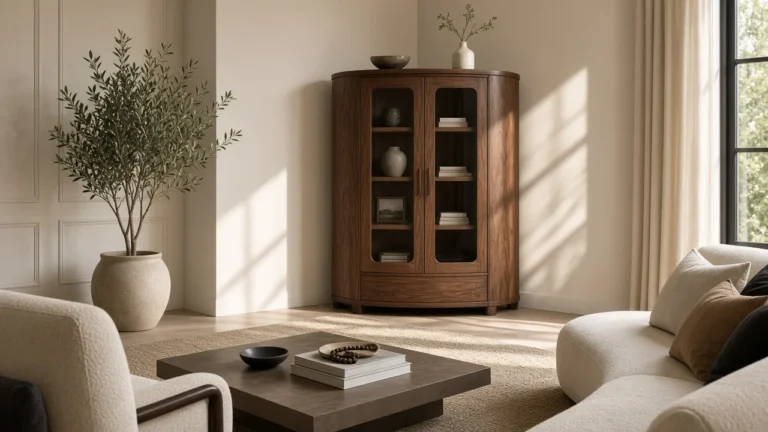

A contemporary bar cabinet should solve storage and atmosphere at the same time. If it only looks like a prop for cocktail photos, it fails the Tuesday test in my book.
I care about doors that close quietly, shelves that take real bottle heights, and lighting that makes glass look intentional instead of dusty. Chicago apartments rarely have a dedicated bar room, so the cabinet has to live politely next to a sofa or dining wall.
What Makes a Bar Cabinet Feel Contemporary
Clean geometry, restrained hardware, and materials that can handle condensation. Fluted glass, walnut, lacquer, marble, and black metal all work when the silhouette stays sharp. Ornate carving usually pushes the piece into a different era.
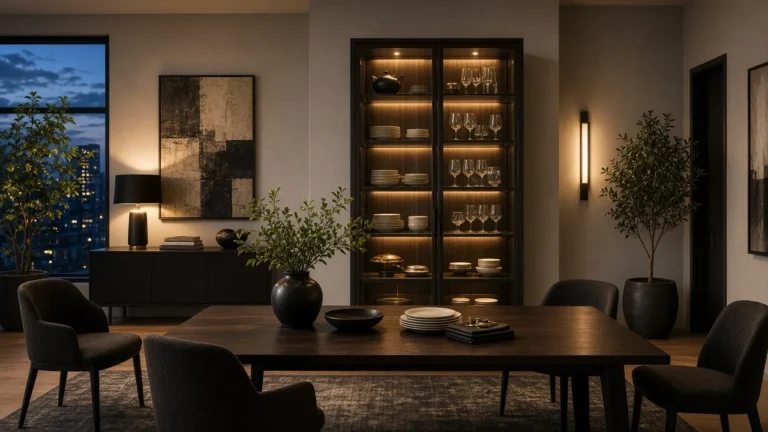
Think of it as furniture first. The bar function is a brief. Related storage logic shows up in contemporary cabinets and in dining-side pieces like a contemporary china cabinet.
Closed Storage With Presence
Fluted Glass Oak
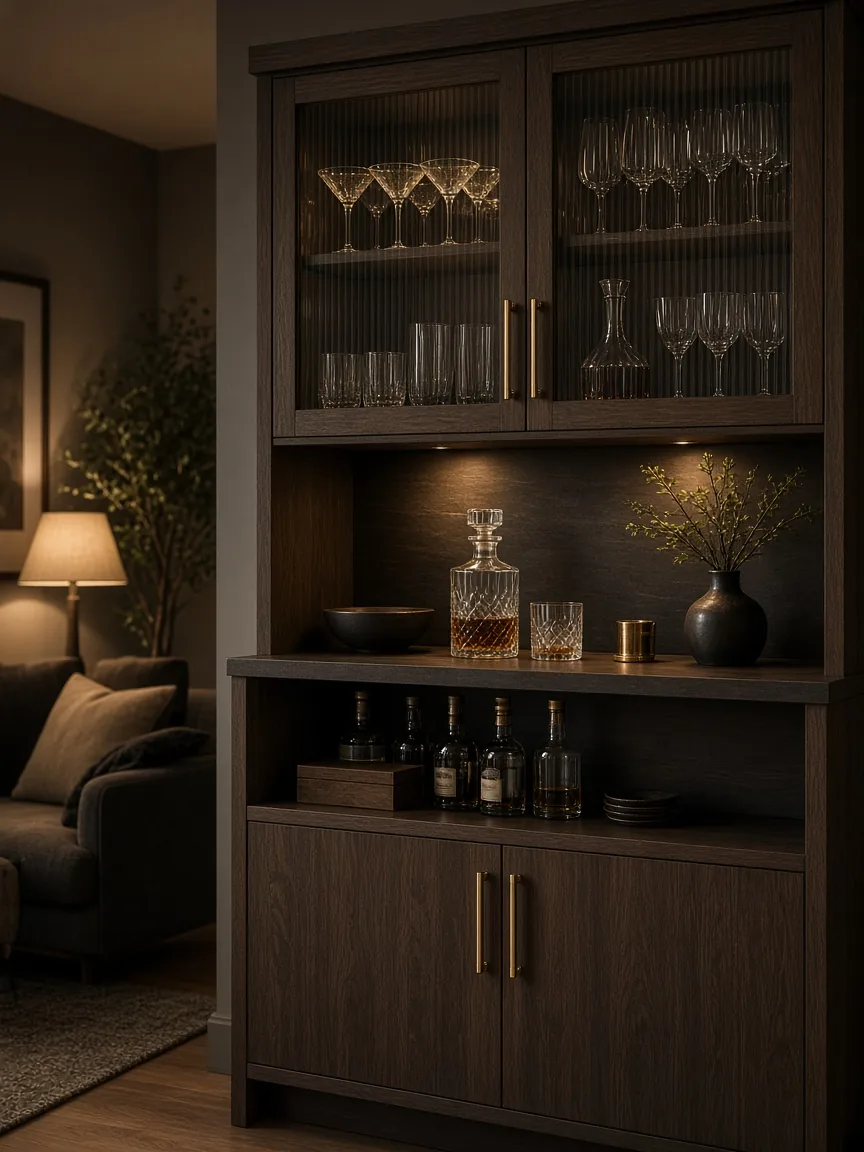
Smoked oak with fluted glass hides visual clutter while still advertising that this is a bar, not a filing cabinet.
Brass pulls are enough jewelry. Extra ornament fights the contemporary read.
I like this against a quiet wall where the texture of the glass can catch evening light.
Walnut Glass Tower
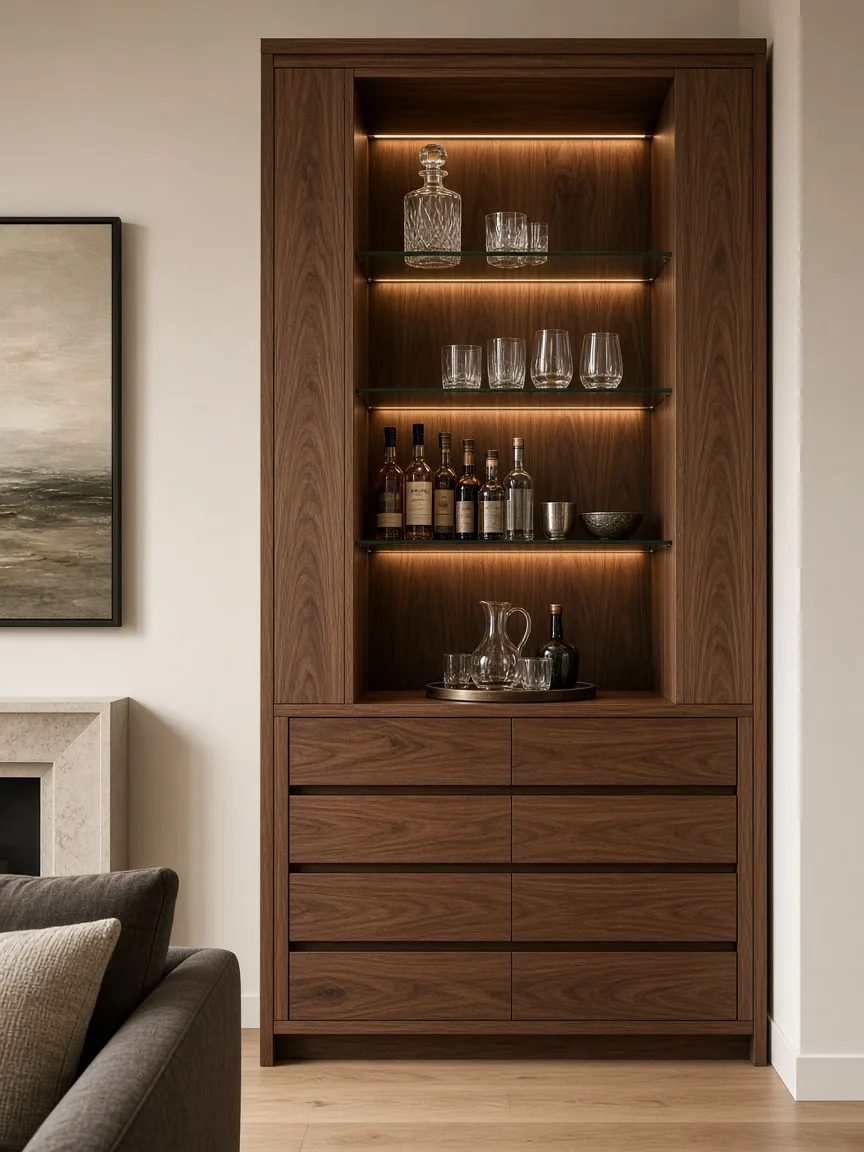
A tall walnut tower with glass shelves is how you get capacity without a wide footprint. Interior LEDs matter more than people expect.
Drawers at the bottom keep tools from turning open shelves into chaos.
Measure bottle heights before you buy. Pretty shelves that cannot take a standard wine bottle are a design fail.
Green Lacquer Side
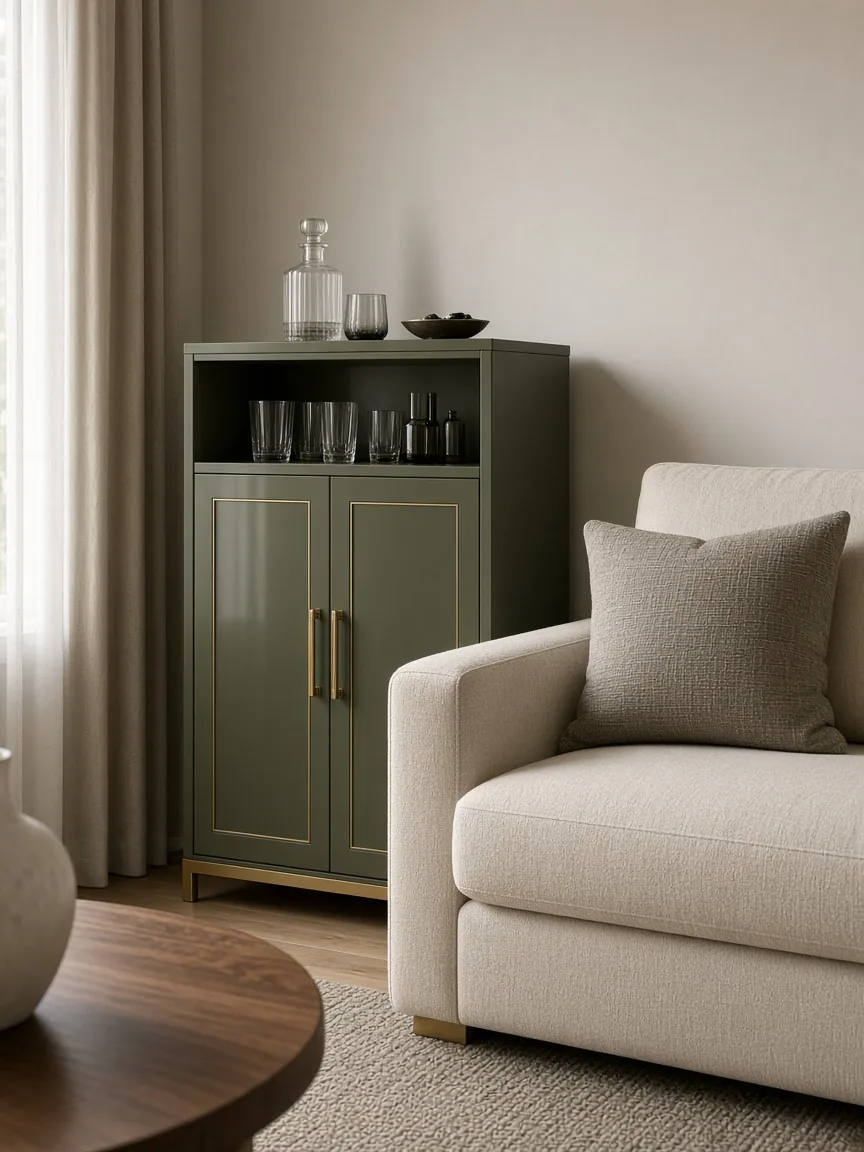
Muted green lacquer beside a sofa is my favorite soft-color move. It feels designed without matching the entire living room.
Keep the top surface almost empty. One tray. Maybe two glasses. Not a still life competition.
Lacquer shows fingerprints. If that will annoy you daily, choose wood grain instead.
Open, Lit, And Built-In Options
Marble Lit Counter
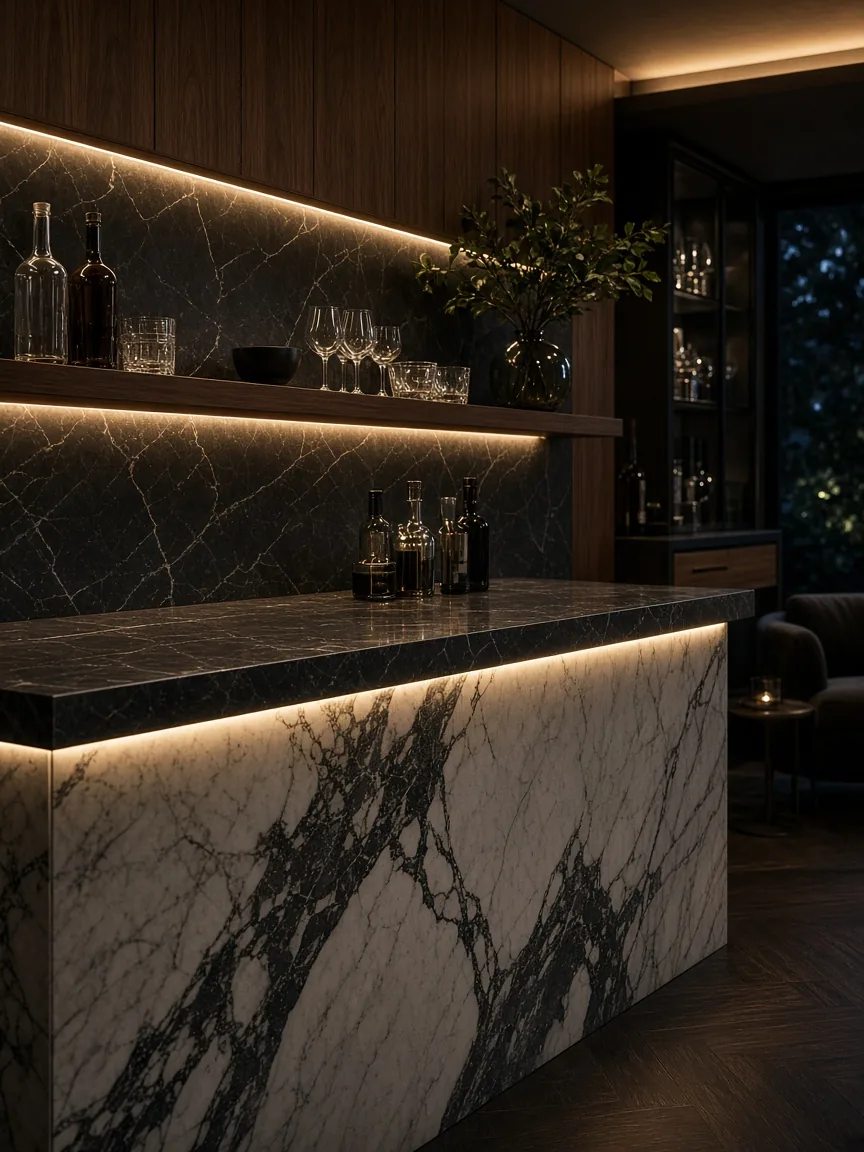
A marble bar counter with soft under-shelf light turns the corner into a destination. Stone needs sealing if you actually spill.
Warm light beats cool blue LEDs. Blue makes liquor look clinical.
This works best when the rest of the room stays darker so the glow reads intentional.
Metal Glass Cart
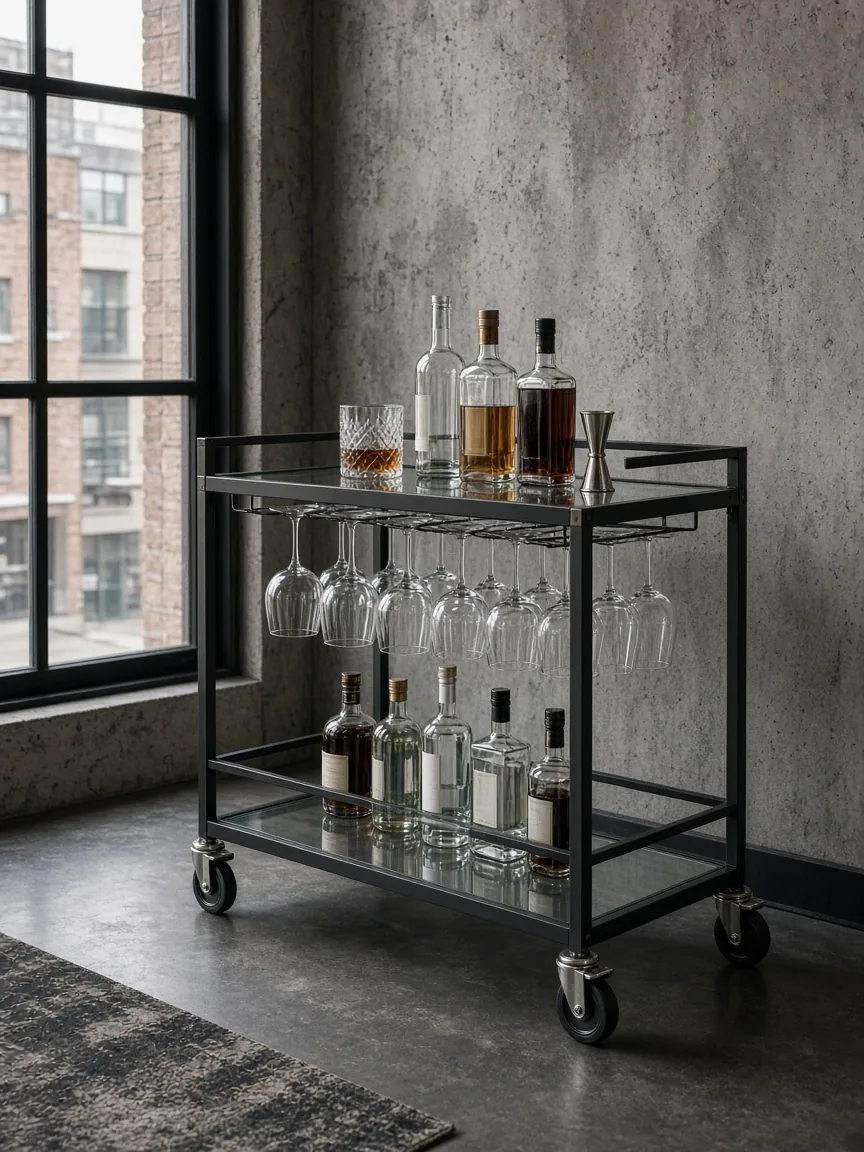
A metal and glass cart is the flexible contemporary bar cabinet for people who move apartments. Stemware racks are useful if they do not rattle.
I roll mine near the dining table when guests come, then park it against a wall again.
Locking wheels matter on wood floors. Fancy carts that drift are not charming.
Mirror Back Shelf
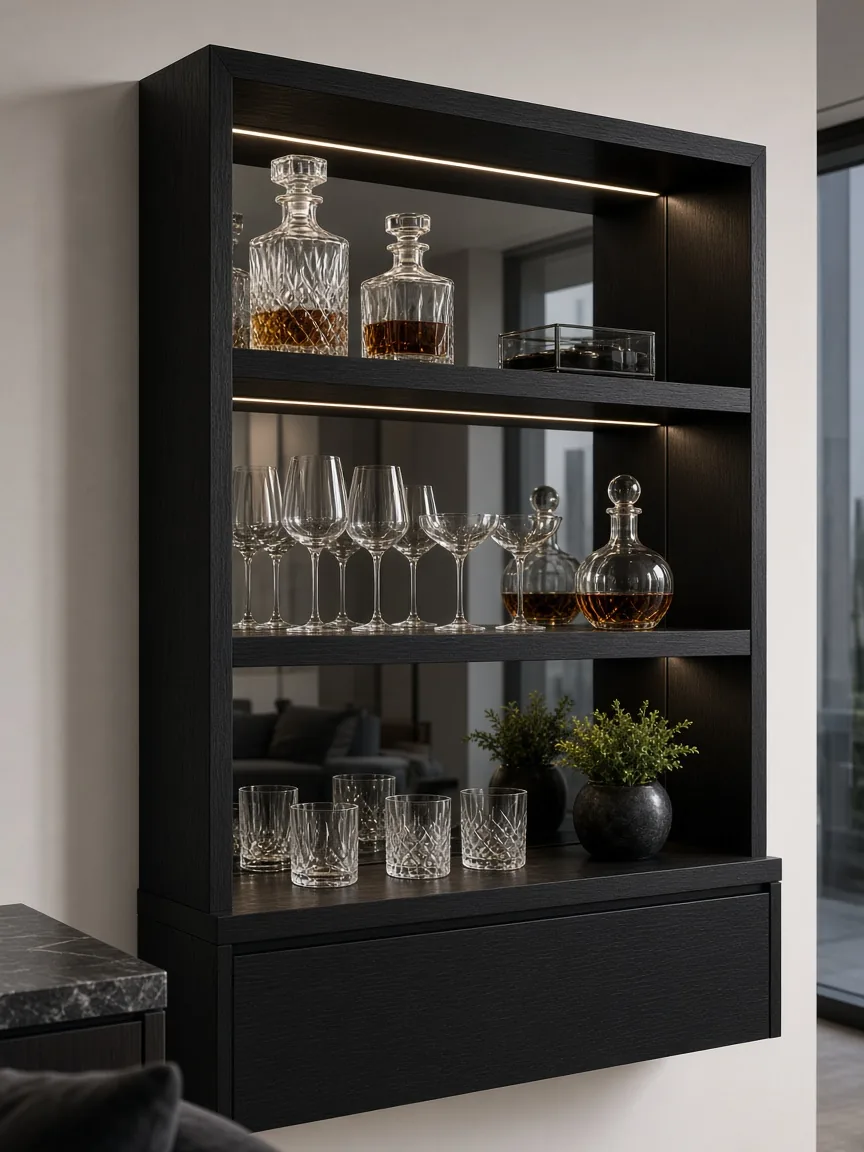
A mirrored back makes a slim shelf unit look deeper and brighter. It also doubles every bottle, so edit hard.
Spotlights help, but one soft wash is better than a runway of harsh spots.
This is the look for small dining rooms that still want a bar moment without a full cabinet box.
Dining Built-In
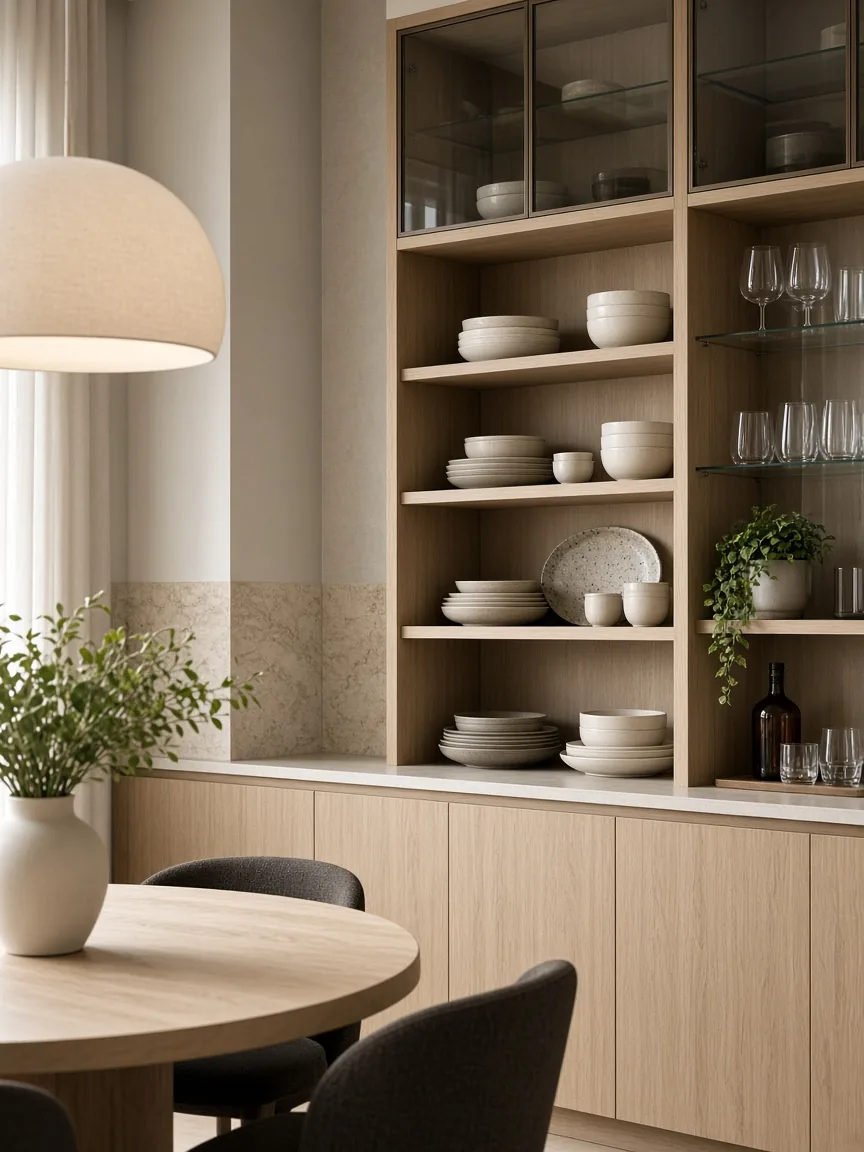
Built-in crockery and bar storage along a dining wall is the grown-up solution when you want the bar to disappear until needed.
Light wood and glass keep it contemporary. Heavy dark built-ins can feel clubby fast.
Plan outlets inside for a small wine fridge if that is part of your reality. Extension cords ruin the elegance.
How I Choose For Real Homes
Start with inventory: bottles, glassware, tools, and whether you need a landing zone for ice. Then choose closed versus open based on how neat you actually are. I am not neat enough for fully open shelves every week.
Next, check clearance for doors and drawers. A beautiful cabinet that blocks a hallway is a bad roommate. If the piece sits near a sofa, soft-close doors save your shins and your evenings.
Lighting is the upgrade that makes cheap glass look better and good glass look serious. Dimmable interior LEDs beat a single exposed bulb. If you already obsess over room light, the kitchen conversation in contemporary kitchen lighting uses the same discipline: layers, warmth, and purpose.
Last rule: one bar statement per room. Cabinet plus cart plus mirrored shelf is three speeches. Pick one hero and let it work.
I also budget for glassware separately from the cabinet. A beautiful unit filled with mismatched plastic cups looks unfinished. Buy a simple set that fits the shelf depth, then stop. Collecting endless novelty glasses is how cabinets become clutter furniture.
If you rarely host, be honest. A small lacquer cabinet or a cart may be plenty. Oversizing the bar for a fantasy lifestyle wastes floor space you could use for seating. Contemporary homes usually look better slightly underdone than over-programmed.
When guests do come, clear a landing zone beside the cabinet for ice and citrus. The cabinet itself should not become the prep counter. That small habit keeps doors from staying open all night and preserves the clean silhouette you paid for.
Maintenance is part of the design. Wipe glass shelves, empty sticky bottles, and check LED strips once in a while. A contemporary bar cabinet only stays contemporary if it does not accumulate the sticky archaeology of last month’s parties.
FAQ
What should I look for in a contemporary bar cabinet?
Quiet hardware, shelves sized for real bottles, durable finish, and a silhouette that still looks good closed. Lighting and soft-close details matter more than decorative flourishes.
Is a bar cart enough instead of a cabinet?
For small apartments, yes. Carts are flexible. Cabinets win when you need dust control, lockable storage, or a more architectural presence.
Where should I place a bar cabinet?
Along a dining wall, beside a sofa, or in a hallway niche with outlet access. Leave door swing clearance and keep it out of high-traffic pinch points.
Do I need interior lighting?
Not required, but it makes the piece feel intentional at night. Warm LEDs help glass and labels read cleanly without harsh glare.
Open shelves or closed doors?
Closed if you dislike dust and visual clutter. Open or glass if you want the display to be part of the room’s design and you will keep it edited.
How many bottles should I display?
Fewer than you think. Edit to what you actually pour. Empty decorative bottles read as staging, not hospitality.