
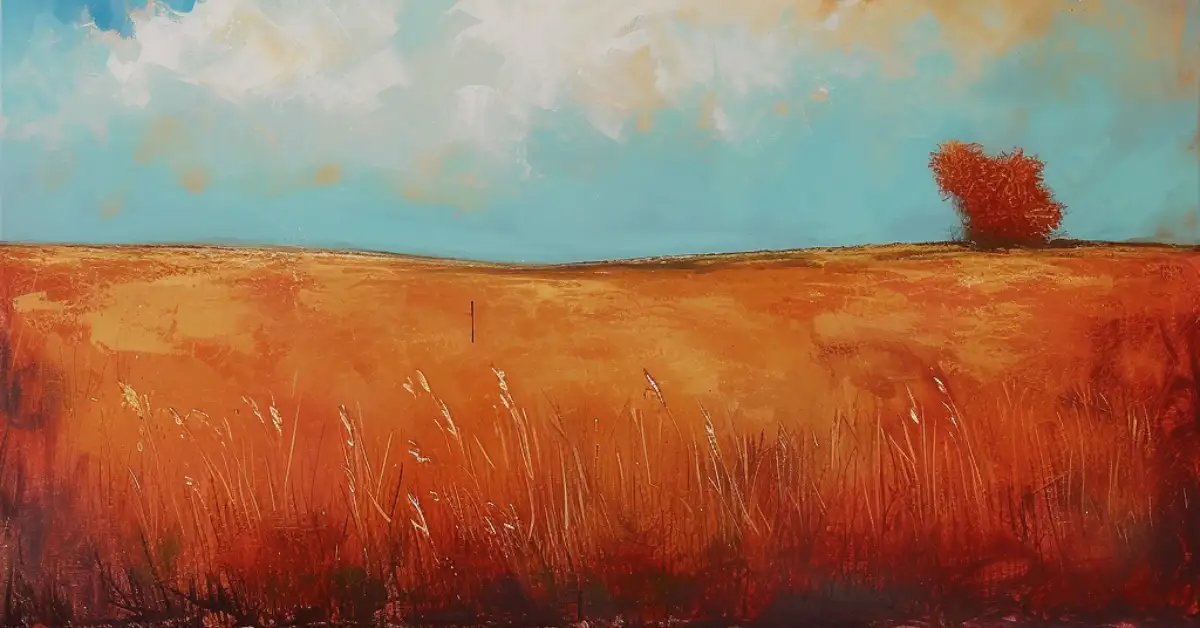
Landscape painting did not retire when photography got cheap. It changed jobs. When people search for the best contemporary landscape artists, they want names that explain why painters still chase horizons in 2026.
I built this list as a looking guide, not a canon sealed in marble. Ten artists, ten images from our original gallery, grouped by what the land is doing in the work: scale, memory, or invented color. For the wider roster first, start with contemporary artists of today and return here for place-specific obsession.
A few names here are historical giants who still teach contemporary painters how to see. I include them honestly because landscape literacy does not reset every decade. Our contemporary art styles guide helps if you need vocabulary for abstraction versus observational work.
Horizons, weather, and the American wide shot
These four artists make distance feel emotional. Skies are not backdrop. They are the argument.
April Gornik and the storm you can hear
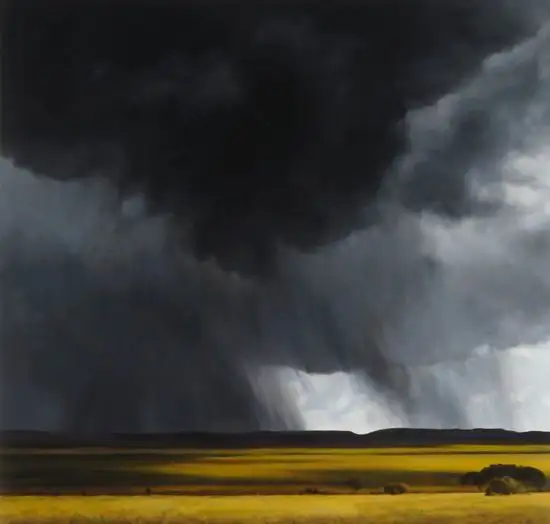
Storm, Rain, Light, 2013 by April Gornik
Gornik paints weather like a character with opinions. Clouds stack, light breaks, and the scene stays calm without becoming decorative.
I keep her at the front of any list of best contemporary landscape artists because she proves observational painting can still feel urgent. No gimmicks. Just scale and patience.
David Hockney and the road as joy
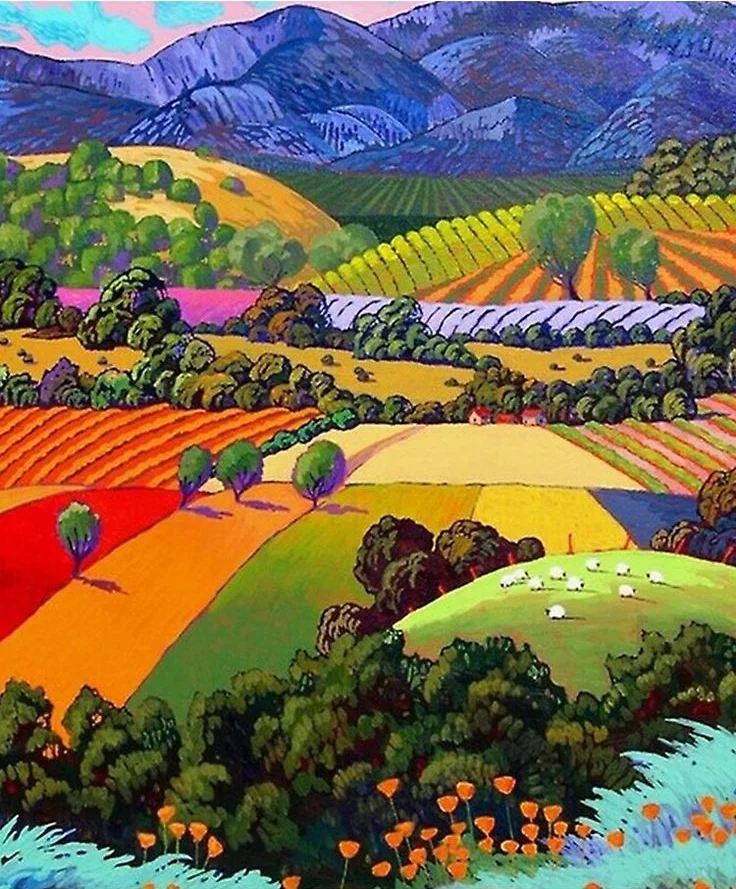
Beautiful View by David Hockney
Hockney makes color look like a decision you can hear. California pools and hillside roads became modern icons because he treated landscape as social space, not wilderness wallpaper.
I do not copy his palette in my head when I travel, but I notice more after looking at his work. That is the best landscape art outcome: you see your own route differently.
Georgia O’Keeffe and the desert as body
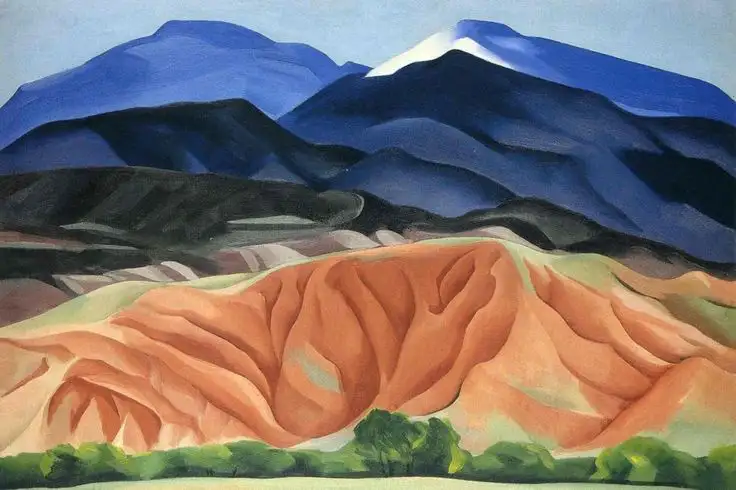
Black Mesa Landscape, New Mexico, circa 1930
O’Keeffe is famous for flowers, but her desert landscapes changed how America pictured the Southwest. The mesa reads as architecture and flesh at once.
Contemporary painters still fight her shadow. I include her because ignoring lineage makes every landscape list feel thin.
Stand in front of a real desert after studying her panels. The silence feels edited, which is strange and useful.
Wayne Thiebaud and the hill that bends physics
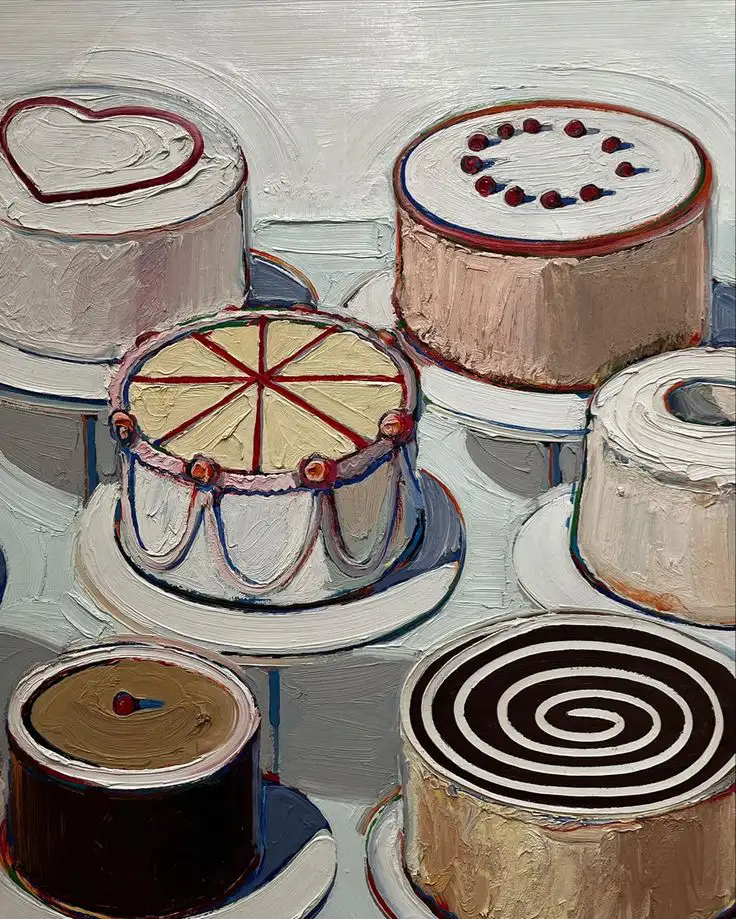
Cakes by Wayne Thiebaud, 1963 (still life; his hills share this color logic)
The file here is Thiebaud’s still life fame, not a hillside canvas. I kept the image because it shows his color intelligence: shadow as dessert, light as structure.
His California landscapes tilt like they might slide off the panel. That distortion is a landscape lesson disguised as joy. When you hunt his hills next, you will recognize the same appetite for saturated edge.
Memory, geometry, and the quiet sea
These artists slow you down. Some abstract the land until it becomes a mental map. For softer atmospheric work in another medium, compare our contemporary watercolor artists list after this section.
Richard Diebenkorn and the Ocean Park grid
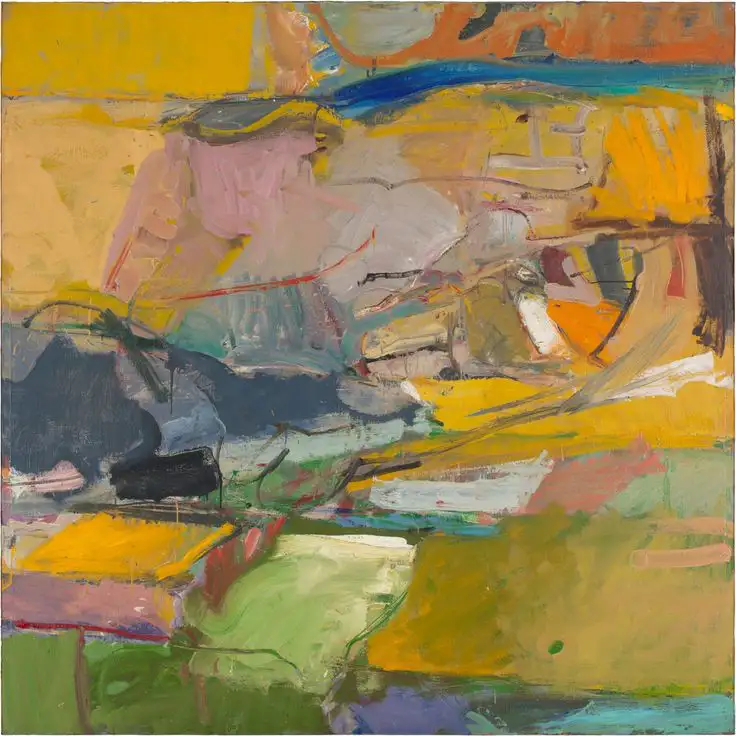
Ocean Park series, San Francisco Museum of Modern Art
Diebenkorn turned coastal light into geometry that still breathes. Ocean Park is the textbook example of how abstraction can stay rooted in place without painting a literal beach.
I study his edges when I feel my own compositions getting loud. The work is hard-won quiet. That seriousness is why younger painters still pilgrimage to these panels.
Peter Doig and the canoe in the wrong dream
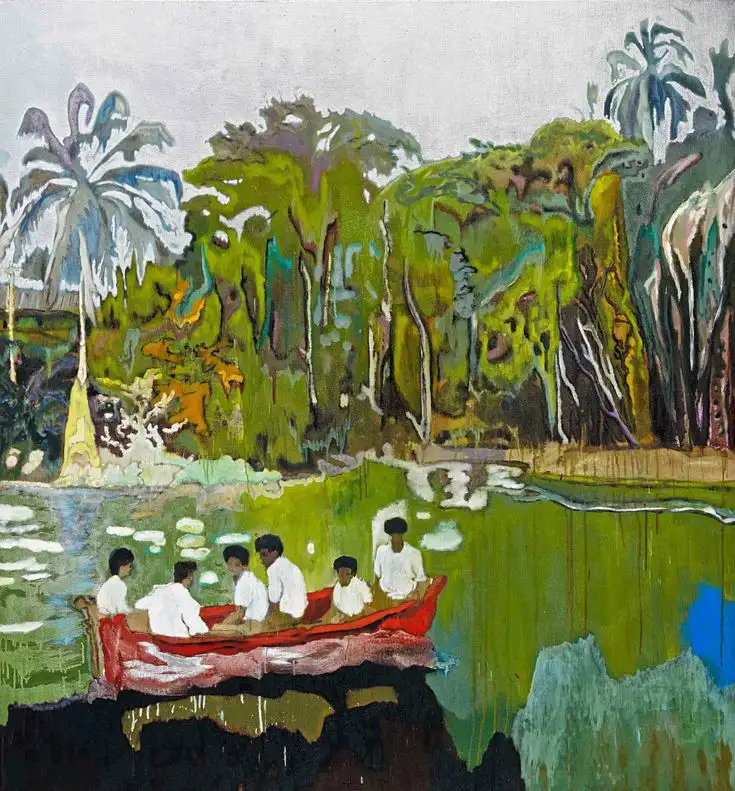
Red Boat by Peter Doig
Doig paints landscapes like memories you cannot fully trust. Figures, boats, and forests feel familiar and off by one degree.
His work sits between landscape and surreal narrative. If that mood appeals, follow with emerging contemporary surrealist artists for a different branch of the same unease.
Doig is why I never trust a landscape list that only shows sunny fields. Mood is place too.
Vija Celmins and the sea that refuses drama
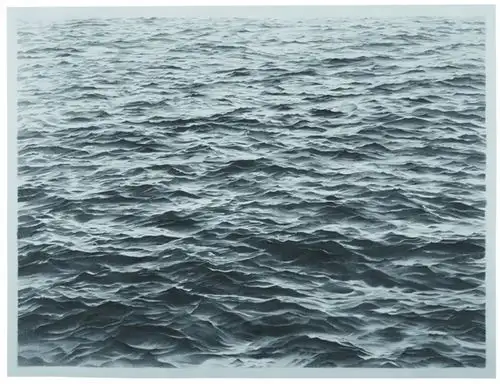
Untitled (Big Sea #1), 1969
Celmins paints oceans and skies with a patience that feels almost forensic. Up close you see the hand. Step back and the immensity returns.
Yes, it is painting, not a photograph. That sentence still needs saying because her control tricks the eye. Landscape art at this level is about duration, not scenery.
Ilse d’Hollander and the Belgian field in few strokes
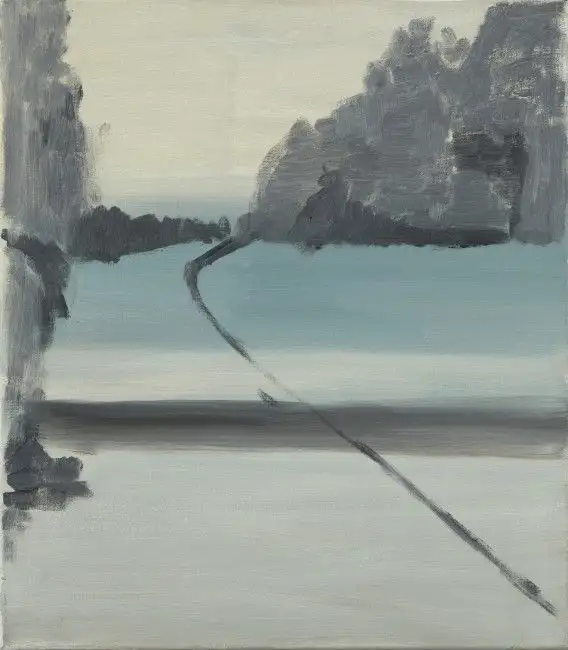
Untitled, 1996
d’Hollander compresses rolling country into gentle abstract blocks. The palette stays restrained, the emotion does not.
Her career was short, which makes the work feel concentrated. I include her as proof that contemporary landscape can whisper and still hold a wall.
Invented color and landscapes that refuse realism
John McAllister and the garden on neon time
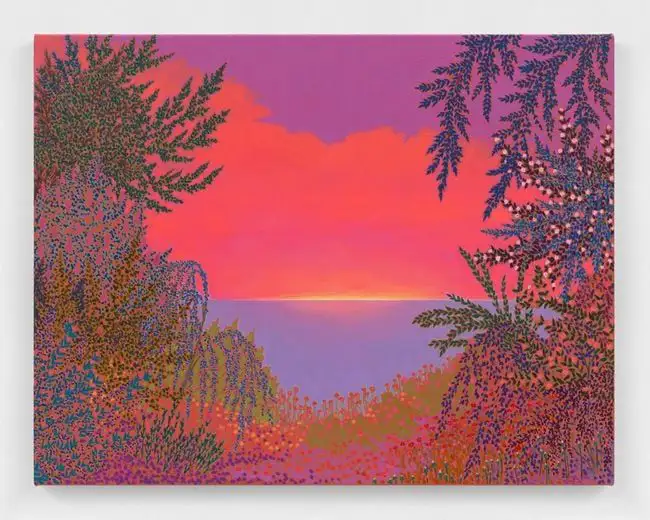
incandesce hurrahs heard, 2022
McAllister paints gardens and interiors like fever dreams with good manners. Color stacks until the scene feels both peaceful and overstimulated.
He is the youngest energy on this list. I like that contrast after Celmins and d’Hollander. Contemporary landscape is not one tempo.
Camilla Engström and the figure inside the vista
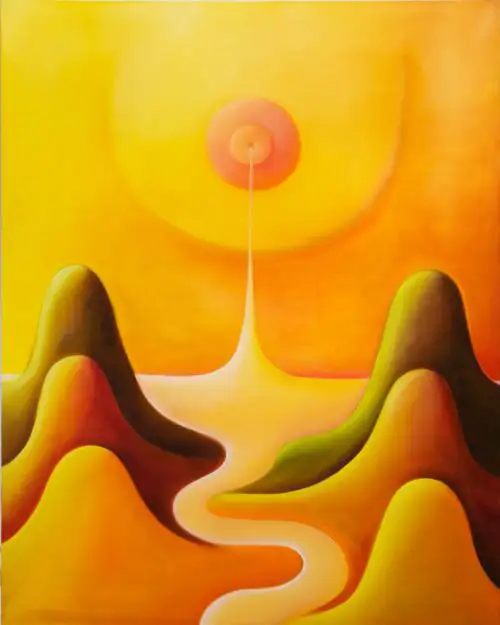
Guldflod by Camilla Engström, 2022
Engström adds characters and humor to vistas that could have stayed empty. The land becomes a stage for introspection, not a postcard.
I close with her because landscape today often includes the body again. Climate anxiety, belonging, and play all need figures sometimes. She makes room for that without turning the work into illustration only.
Pick two artists from different sections and compare how each uses horizon line. High, low, or gone entirely. That one choice tells you more about contemporary landscape artists than a century label ever will.
My weekly exercise: stand at a window, sketch the sky in thirty seconds, then open Gornik and Celmins side by side. You will feel how many different truths one cloud can carry.
FAQ
Who are the best contemporary landscape artists?
Strong names include April Gornik, David Hockney, Peter Doig, Richard Diebenkorn, and Vija Celmins, alongside emerging painters such as John McAllister and Camilla Engström. Best depends on whether you want observational scale, abstract geometry, or invented color.
What defines contemporary landscape painting?
Contemporary landscape painting depicts or responds to place using current ideas about color, ecology, memory, and abstraction. It may be observational, symbolic, or entirely invented while still treating land, sky, or horizon as the subject.
Is landscape painting still relevant today?
Yes. Photography handles documentation; painting handles interpretation. Contemporary landscape artists address climate, identity, and perception in ways cameras often flatten.
How do I start collecting or studying landscape art?
Pick one observational painter and one abstract painter from this list. Visit their museum pages, compare how each handles light, then follow one artist for a month before expanding.