
When people say contemporary African art, they often mean a mood board: bold color, a famous name, maybe a sculpture that photographs well. That is not wrong, but it is thin. The work I keep returning to is arguing with history, place, and the market at the same time.
I write from Brooklyn, where gallery weekends and apartment walls compete for the same attention. This piece is about what the category actually holds, and how I hang the work without turning a home into a themed set.
What the Phrase Actually Covers
Contemporary here means living makers, not a museum period sealed in the twentieth century. It includes painters, sculptors, photographers, and collectives working across the continent and the diaspora. The important distinction is not “African aesthetic” as a style kit. It is authorship tied to African contexts and conversations happening now.
If you want a parallel conversation about how “contemporary” behaves as a cultural label more broadly, I have been chewing on that in what contemporary life means and in how we talk about famous contemporary artists without flattening them into trends.
Themes That Keep Showing Up
Identity and diaspora come first for a reason. A lot of the work asks who gets to define “Africa” in the first place, and what happens when that definition travels. Political commentary sits nearby, sometimes blunt, sometimes coded in pattern and humor.
Surrealism and popular culture show up too, especially with younger painters who refuse the expectation that African art must look ancestral on cue. I like that refusal. It keeps the category from becoming a costume.
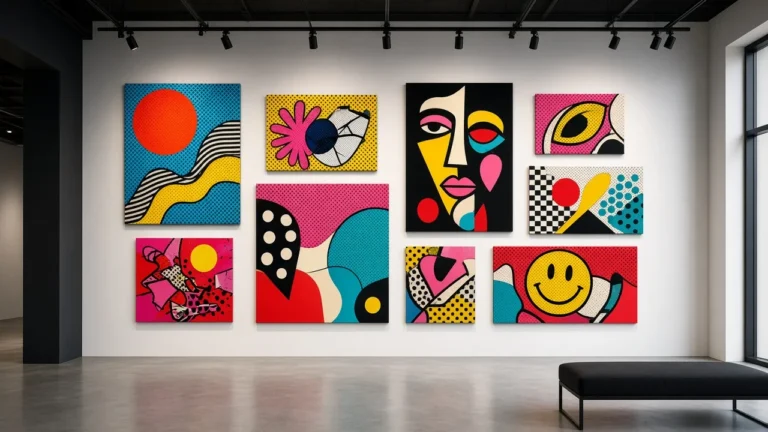
Triptych That Holds a Wall
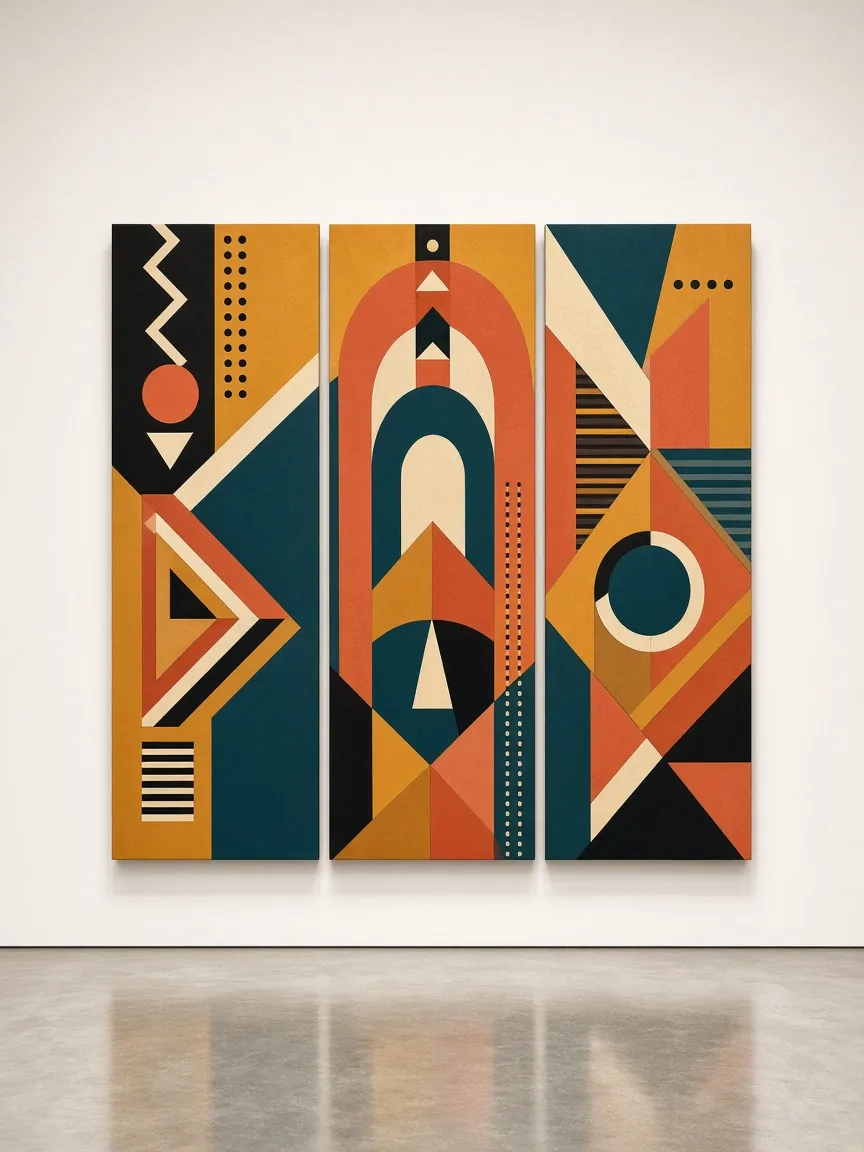
A geometric triptych is my favorite gallery-scale argument for color as structure, not decoration. The panels force you to read across, not just glance.
When I first stood in front of work like this, I stopped treating “vibrant” as a compliment and started treating it as composition. That shift matters.
At home, three panels need breathing room. Crowding them with shelves is how you kill the rhythm.
Textile Meets Sculpture
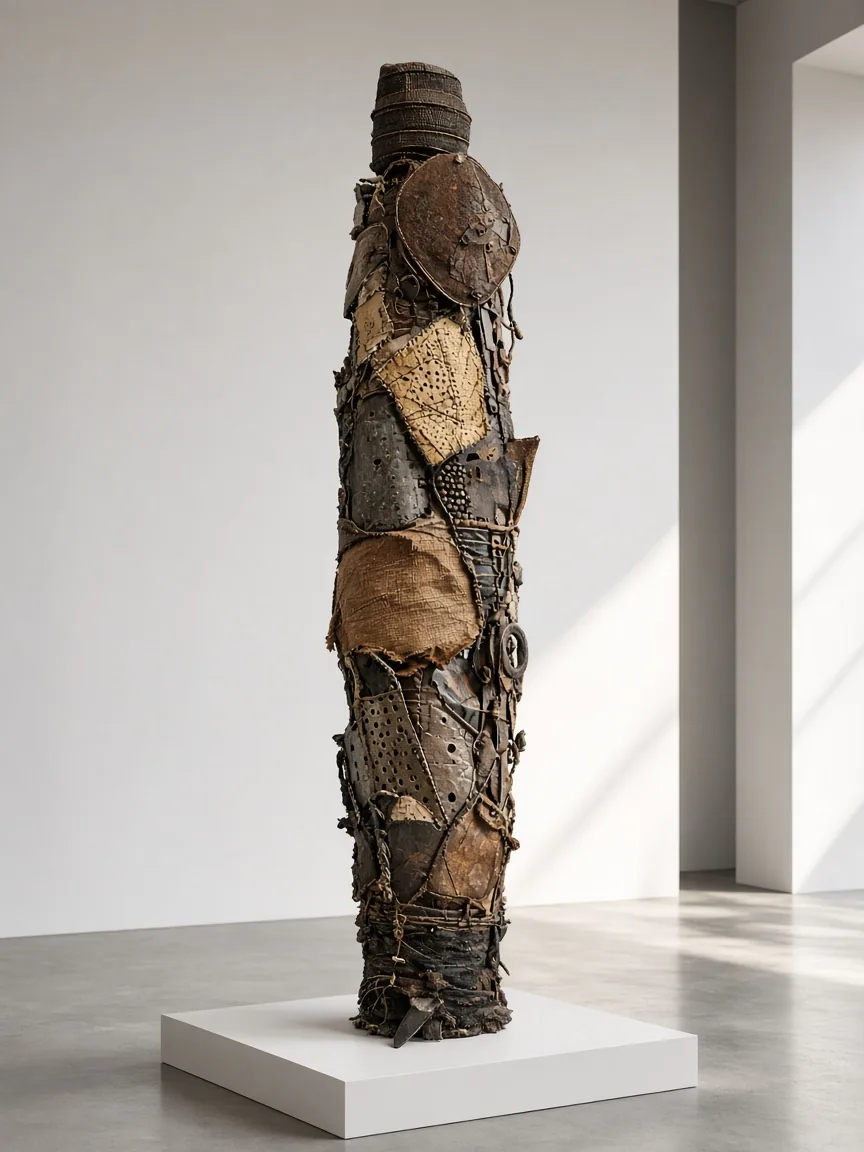
Mixed-media forms that borrow from textile and metal feel closer to how a lot of contemporary African practice actually works: materials with history, not just paint on privilege.
I would rather live with one honest object than five prints that only signal taste. Installation pieces teach that quickly.
If your space is small, look for wall-mounted versions of that logic. Scale down the ambition, not the seriousness.
Figurative Play With Edge
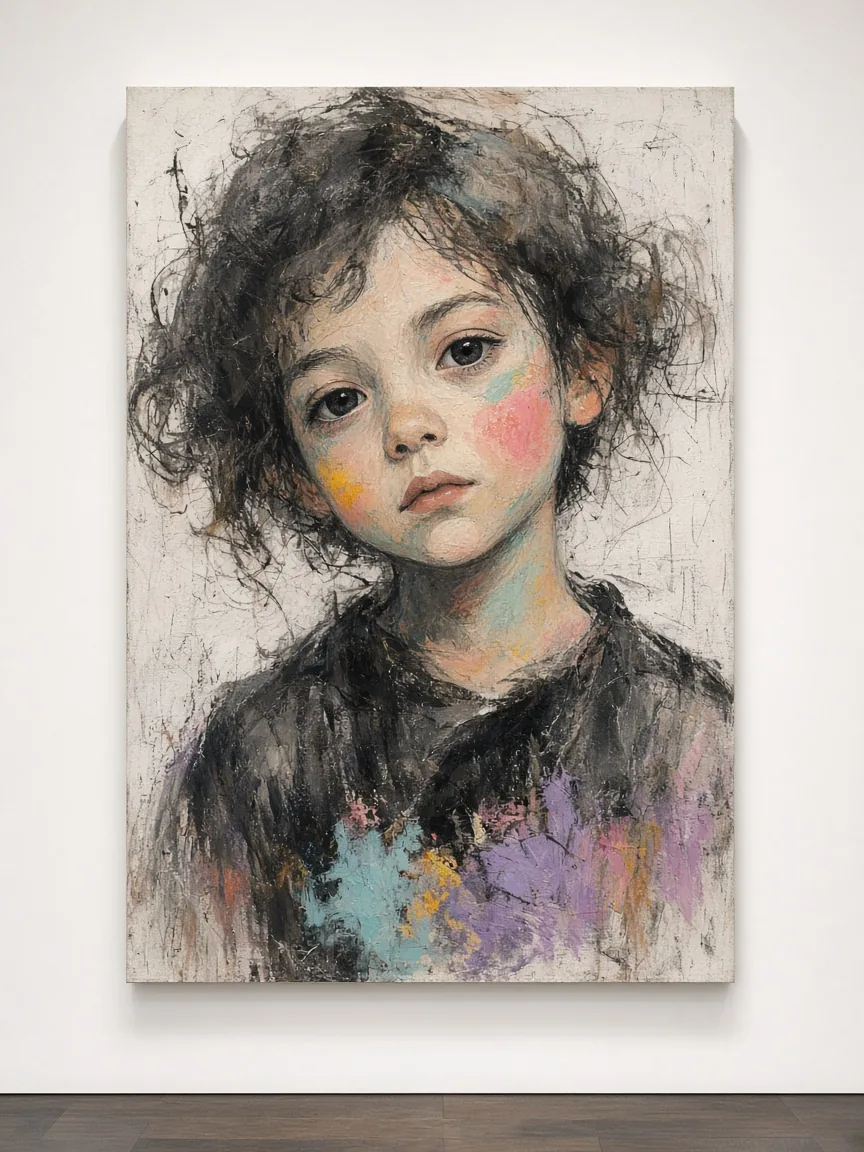
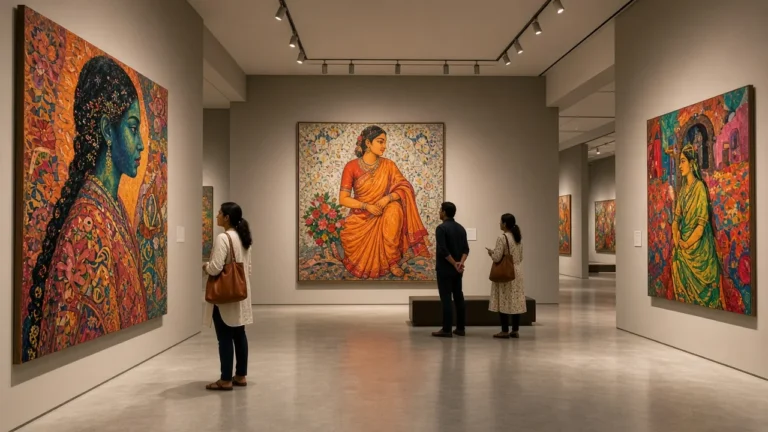
Expressive figurative painting is where a lot of viewers finally slow down. Faces invite projection, which is useful and dangerous.
I care less about whether a portrait is “pretty” and more about whether the line feels decided. Soft pastel against charcoal is a tension I trust.
Hang figurative work where people actually sit. Dining rooms that never get used make serious paintings look like props.
Indigo And Gold Layers
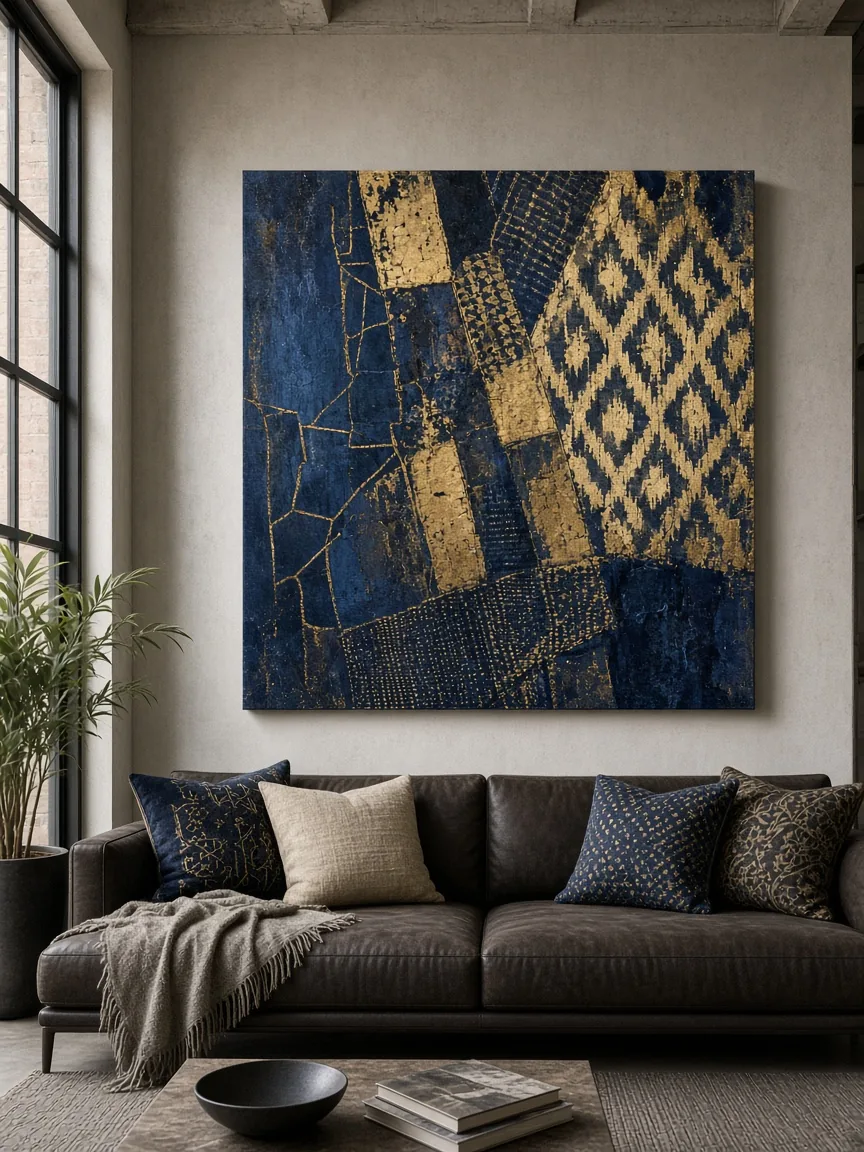
Indigo and gold read luxurious fast. The interesting versions still feel handmade, with layers you notice on a second look.
Pattern here is not filler. It is argument. That is the difference between a souvenir print and a contemporary canvas.
Pair with quiet furniture. Loud sofa plus loud canvas is two speeches at once.
Living With the Work at Home
I do not believe every room needs an “African statement.” I believe one strong piece can change how a room thinks. The rest is editing.
Sofa Needs One Anchor
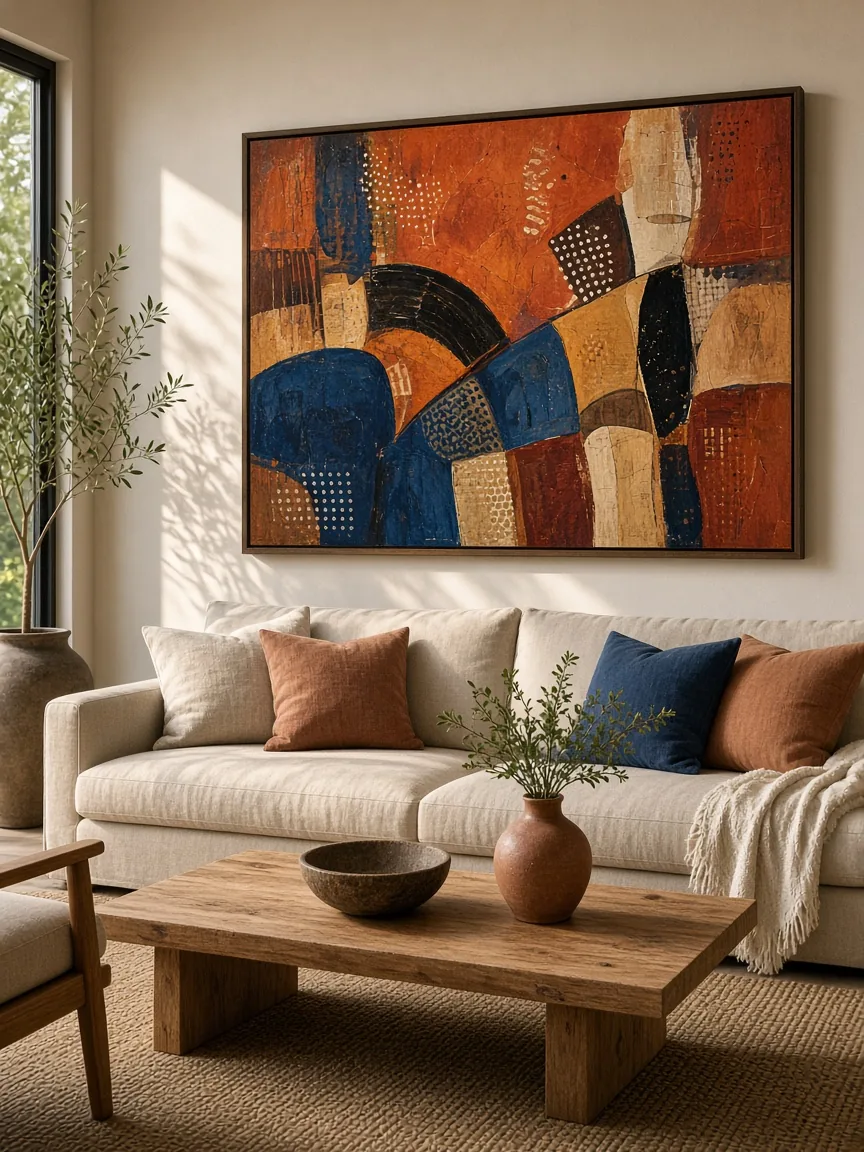
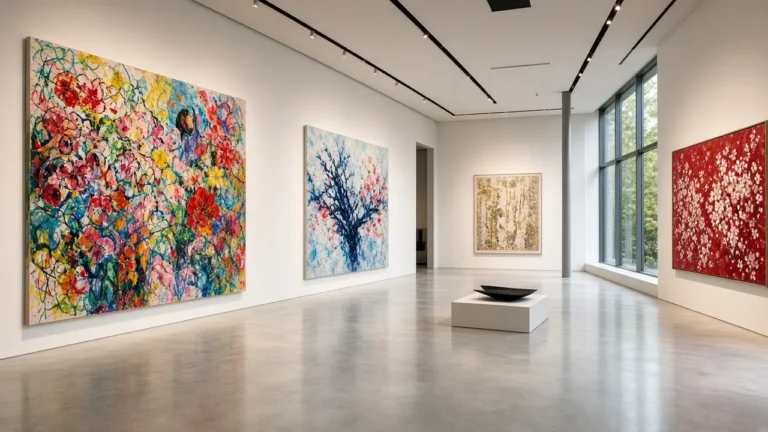
Above a linen sofa, a large abstract with terracotta and indigo does the heavy lifting. You do not need a gallery wall of twelve frames.
I learned this the hard way after overcrowding a Brooklyn living room and making every evening feel like an art fair afterparty.
Leave the coffee table calmer than the wall. Let the painting win.
Stacked Prints Done Quietly
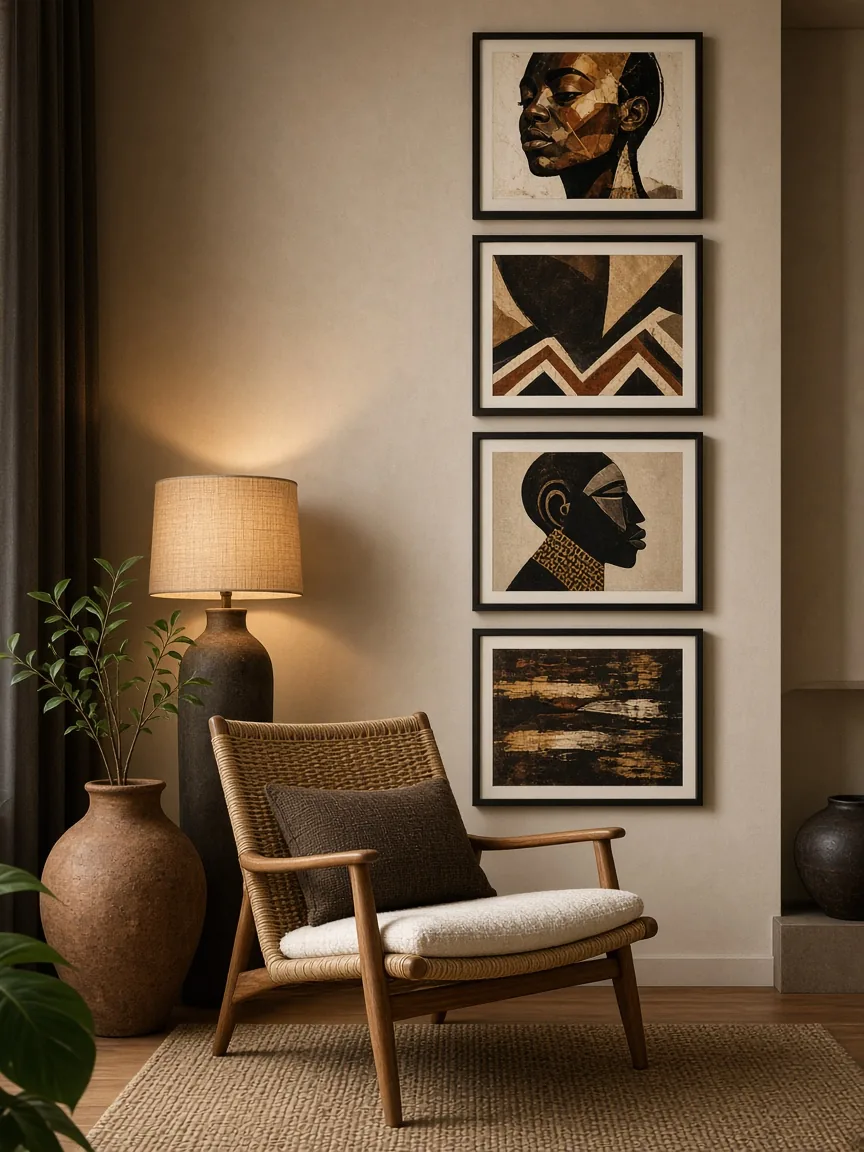
A small gallery wall of contemporary prints can work if the frames match and the spacing is ruthless. Mismatch frames turn it into craft night.
I use this approach when I cannot commit to one large purchase yet. It is a temporary honesty, not a forever plan.
Rotate seasonally if you must. Do not add forever.
Kitchen Can Handle Bold
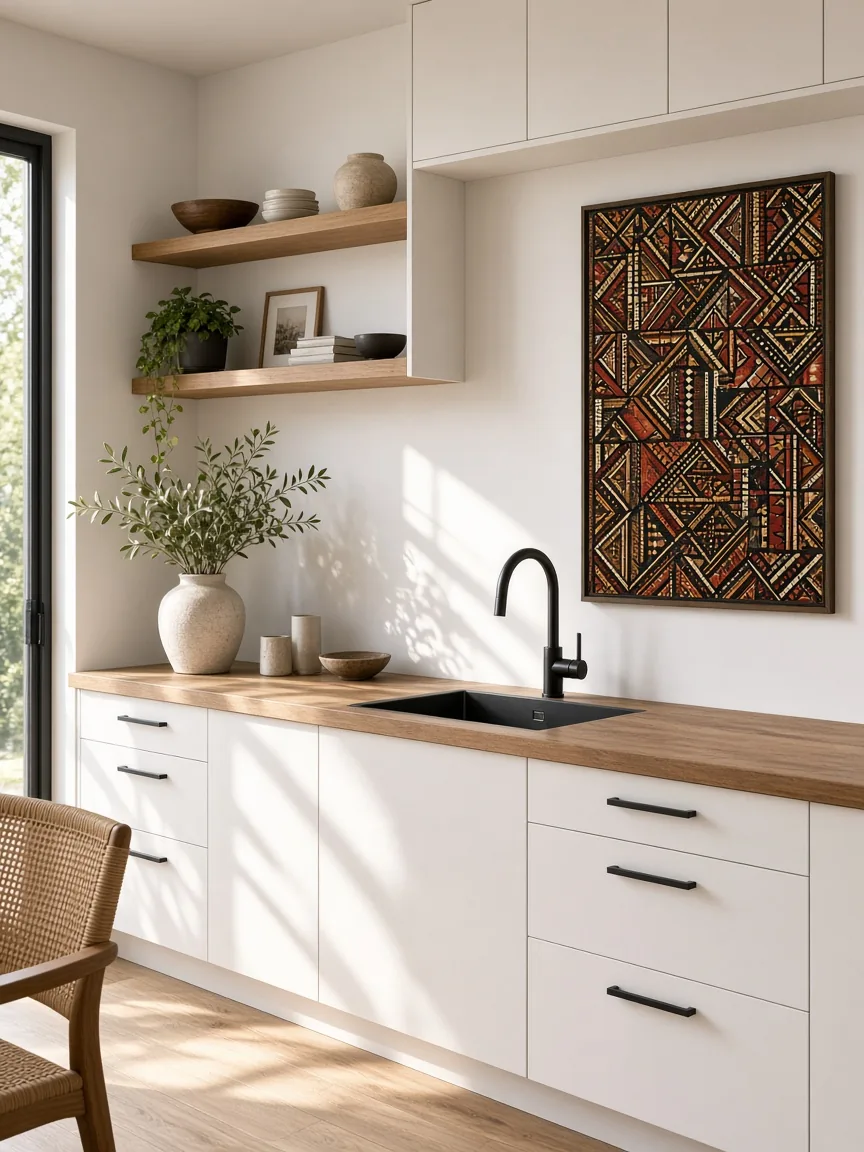
Kitchens forgive pattern better than people expect, especially near open shelves where the art can talk to ceramics.
Keep the print away from steam if the paper is precious. Contemporary does not mean disposable.
White cabinets make color louder. That can be a gift if you want the room to feel awake at 7 a.m.
Dining Room As Gallery
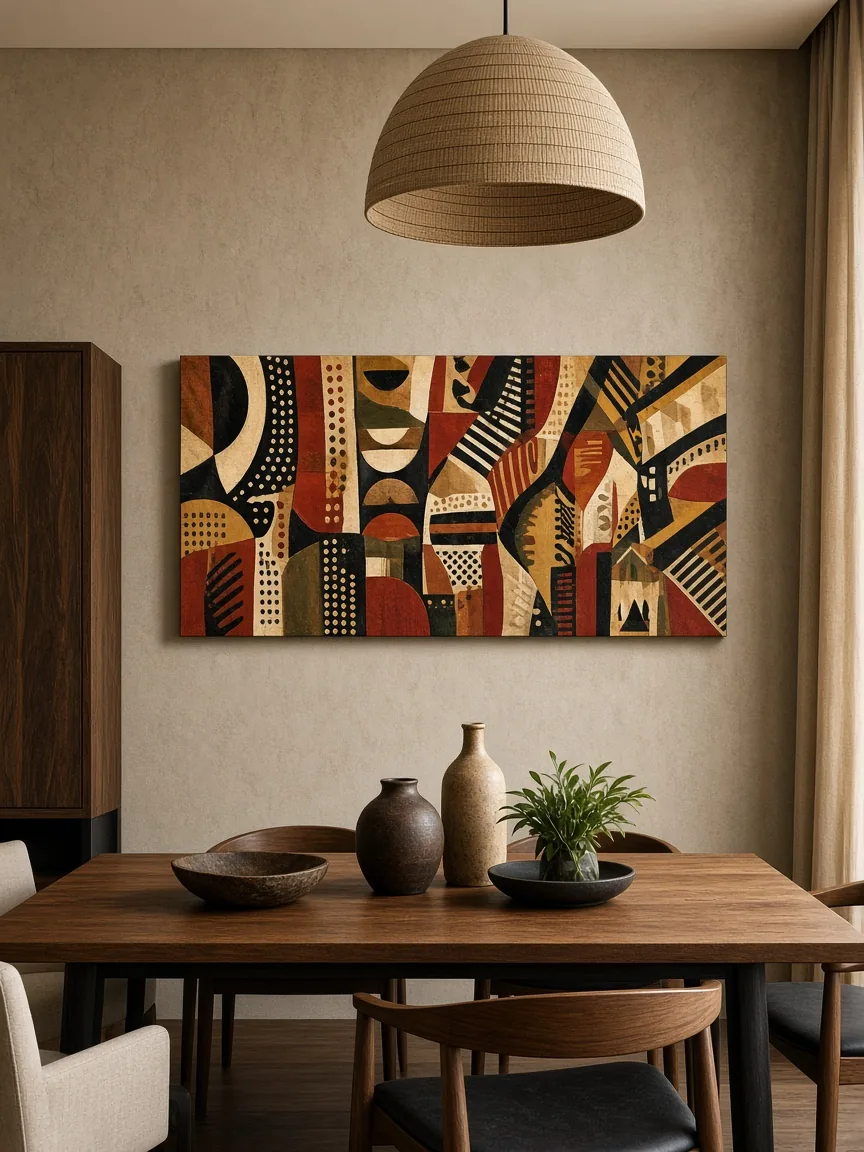
A long abstract above a wood table turns dinner into a slower conversation. Guests look up. That is the point.
Pendant light should not compete. Soft wash beats a chandelier that steals the painting’s midtones.
If you collect ceramics, echo one color from the canvas and stop. Echoing three colors looks like a kit.
Bathroom Small And Serious
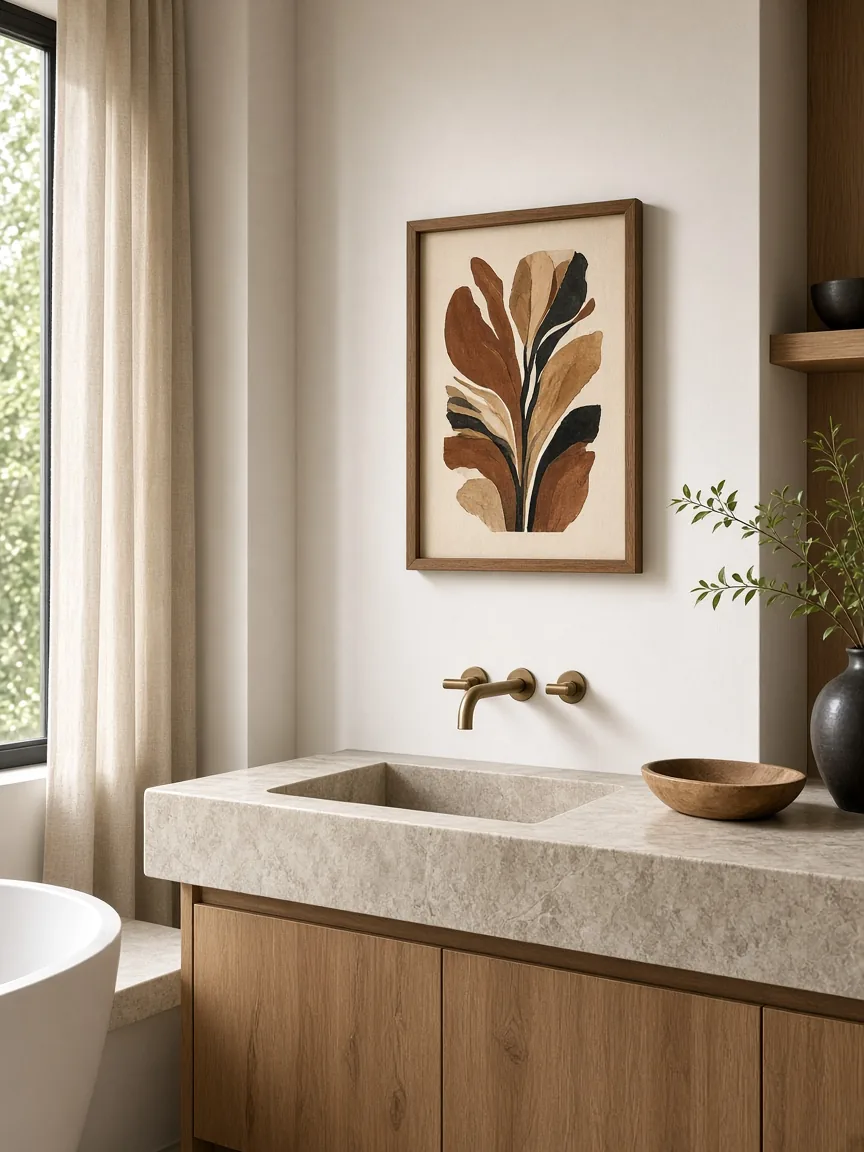
A small framed botanical abstract above a stone vanity is enough. Bathrooms do not need murals.
Humidity is real. Use proper framing. Pretty paper that curls is not a vibe, it is neglect.
Warm wood nearby keeps the room from going spa-generic.
Bedroom Earth Tones
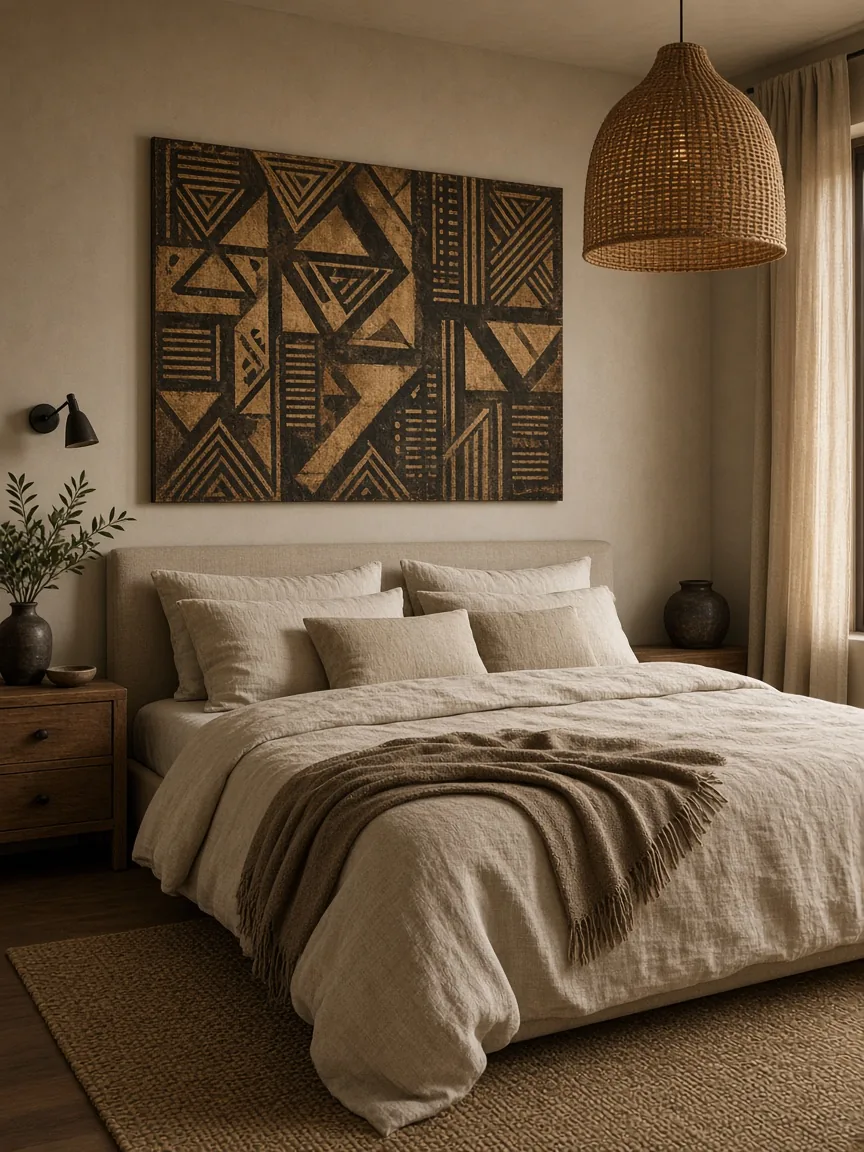
Earth-toned work above the bed keeps evenings quieter than high-contrast black-and-white drama.
I want the bedroom to hold rest, not a thesis. Contemporary African art can do that when the palette stays grounded.
Rattan and linen help. Chrome everything fights the warmth.
How I Look Without Collecting Blindly
Read the wall text. Learn one artist beyond the algorithm. Ask what the market is packaging versus what the work is actually saying. If a piece only works as a hashtag, I pass.
I also pay attention to who is writing about the work. A press release that only says “vibrant” and “heritage” is doing marketing, not criticism. When a writer names the medium, the city, and the argument, I trust the room more.
Budget honesty helps too. Contemporary African art is not only blue-chip auction drama. Emerging prints and smaller works can be serious without requiring a trust fund. What I avoid is buying a mass poster and calling it a collection. Labels matter less than whether you can defend the choice out loud.
And if your curiosity is drifting from art into design objects, that is fair. Just keep the same standard: authorship over aesthetic tourism. Furniture that borrows pattern without credit is a different problem than living with real work.
FAQ
What is contemporary African art?
It refers to art made by living artists connected to African contexts and conversations, across painting, sculpture, photography, and more. It is not a single look or a closed historical period.
What are common themes in contemporary art from Africa?
Identity, diaspora, political and social critique, memory, and experiments with popular culture show up often. Themes vary widely by artist and region.
How is it different from traditional African art?
Traditional forms are tied to older ritual, community, and historical practices. Contemporary work is made now, often for galleries and global audiences, while sometimes still talking back to those traditions.
Can contemporary African art work in a home?
Yes, if you treat it as art first. One strong piece usually beats a themed room. Mind scale, framing, and whether the rest of the furniture stays quiet enough.