
Most lists of contemporary Chinese artists still open with a table about post-1970s influences and a button that says “read more.” That is not how anyone actually learns names. You learn them by watching one work refuse to behave.
I picked twelve figures I return to when someone asks what Chinese contemporary art looks like after the market boom, after censorship fights, and after the global fair circuit learned to say “Beijing” without irony. For the wider roster, start with contemporary artists of today and use this page when the question is specifically China, language, and state pressure on the studio.
I cut the milestone spreadsheets and the “let’s get started” filler. If you need movement labels, our contemporary art styles guide explains how Cynical Realism and post-Mao experiments differ from what Western textbooks still call “Chinese Pop.”
Gunpowder, archives, and the sentence as material
These four artists treat scale and text as weapons. They are the reason foreign curators stopped assuming Chinese art meant ink scrolls only.
Cai Guo-Qiang and the sky as a studio wall
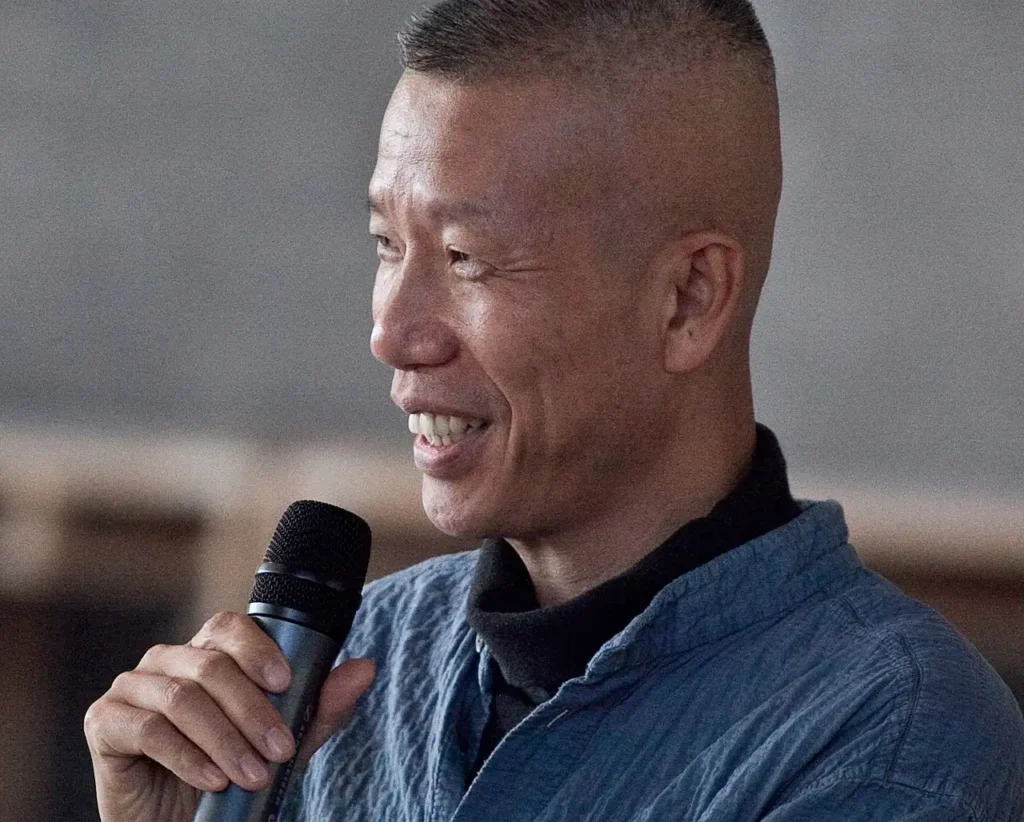
Cai Guo-Qiang, photo via Wikimedia Commons
Cai turned gunpowder into drawing. The Olympic fireworks were spectacle, but the smaller works on paper are where I see the hand: charred edges, controlled accident, history written in smoke.
He belongs on any honest list of contemporary Chinese artists because he proved a national ceremony could be art criticism in real time.
Ai Weiwei and the object that accuses
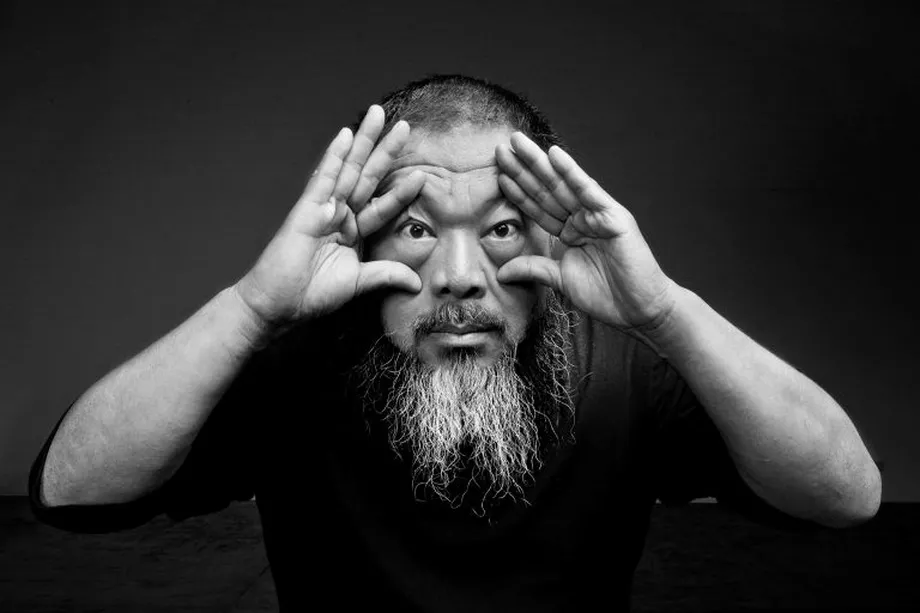
Ai Weiwei, courtesy Ai Weiwei Studio
Sunflower Seeds at Tate Modern is still the lesson I use when students confuse scale with depth. Millions of porcelain seeds sound like a stunt until you stand in the room and feel labor become politics.
Ai is the name foreigners know. That fame is a burden and a shield. His work matters because it refuses to separate craft from surveillance.
Xu Bing and the book you cannot read
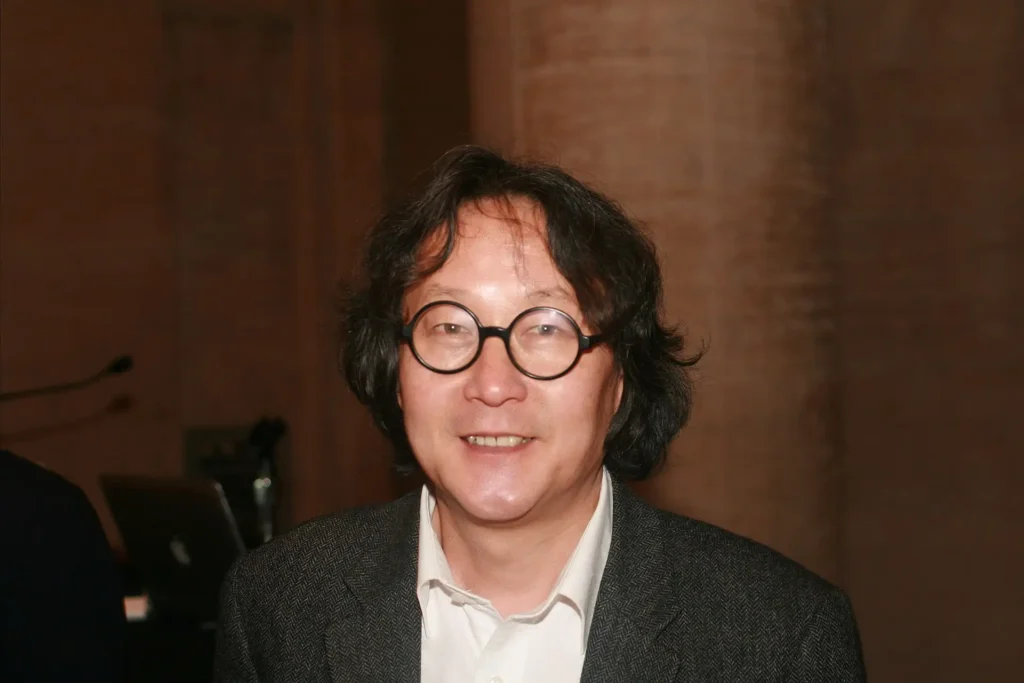
Xu Bing, 2011, Wikimedia Commons
Book from the Sky is the cruel joke that keeps working: pages of characters that mean nothing because the script is invented. I saw it first as a student and felt stupid in the right way.
Xu Bing asks what literacy is when power owns the dictionary. That question travels better than any biennial slogan about East meets West.
Qiu Zhijie and the map that argues back
Qiu Zhijie, Chambers Fine Art
Qiu draws timelines like battle plans. His ink maps of Chinese art after 1989 are pedagogy you can hang. I keep him near Xu Bing because both treat knowledge as something you build, not inherit.
He is also a teacher in the literal sense, which matters: much of what we call a “scene” in China was assembled in classrooms before it reached auction catalogs.
Masks, crosses, and painting that watches the street
This block is for painters who stayed with the body and the city when installation took the grants. Their work is slower, which is why it ages well.
Zeng Fanzhi and the mask that will not come off
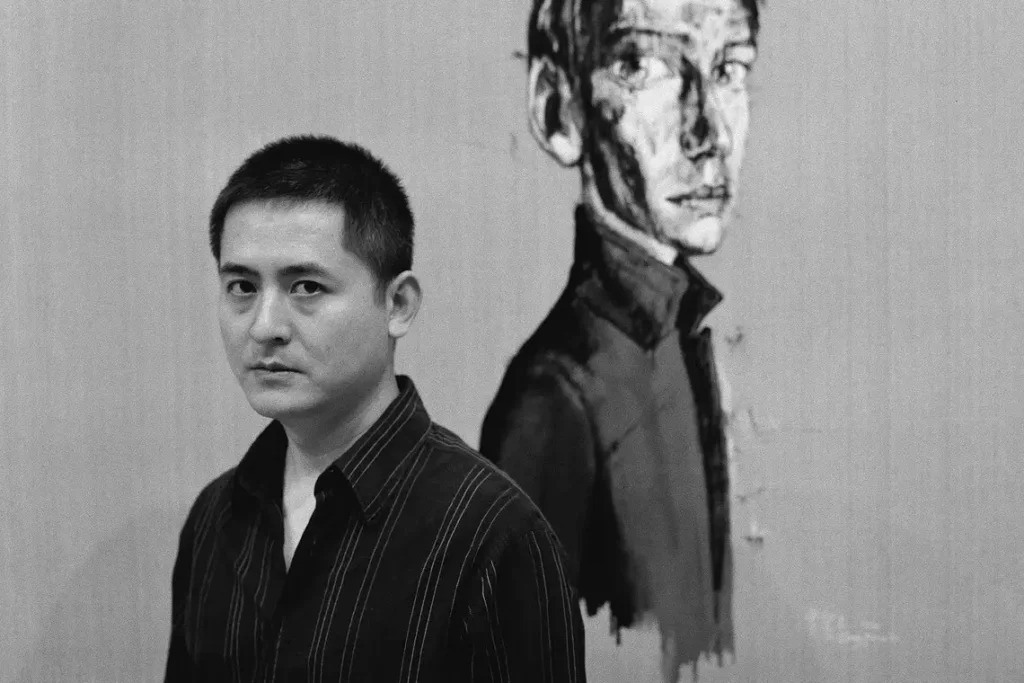
Zeng Fanzhi, courtesy Gagosian
The Mask Series is easy to parody until you stand close. The stretched faces are funny and cruel at once, like a dinner party where everyone already knows the lie.
Zeng’s later abstract landscapes proved he was not trapped in one gimmick. I include him because auction records are not the same as influence, but his prices did force Western buyers to look up Wuhan.
Yue Minjun and the laugh that hurts
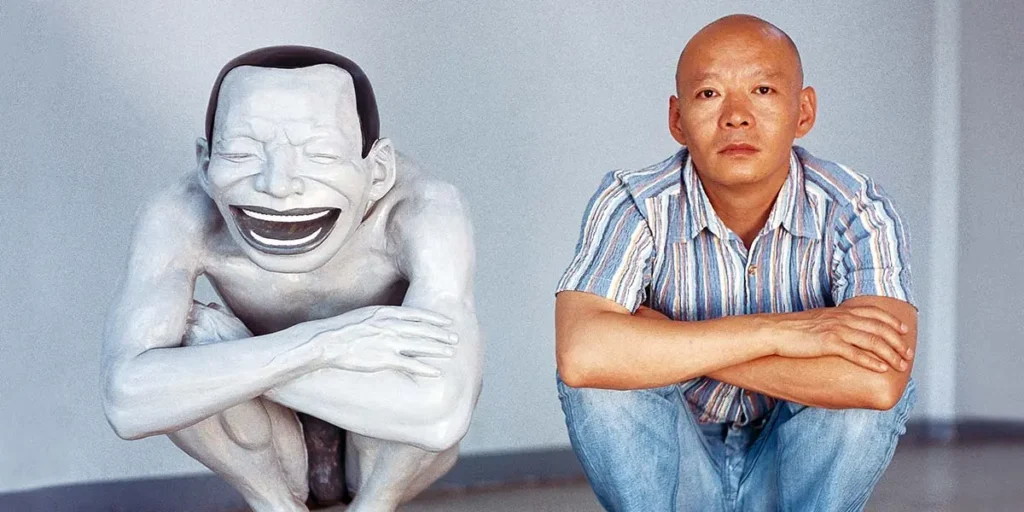
Yue Minjun, grinning figures
Those pink laughing men are a brand and a diagnosis. Cynical Realism is an ugly label, but Yue earned it by painting joy as armor.
I saw a room of them in Hong Kong years ago and left with a headache, which I think was the point. Comedy as survival is not the same as comedy as escape.
Liu Xiaodong and the friend who sat still
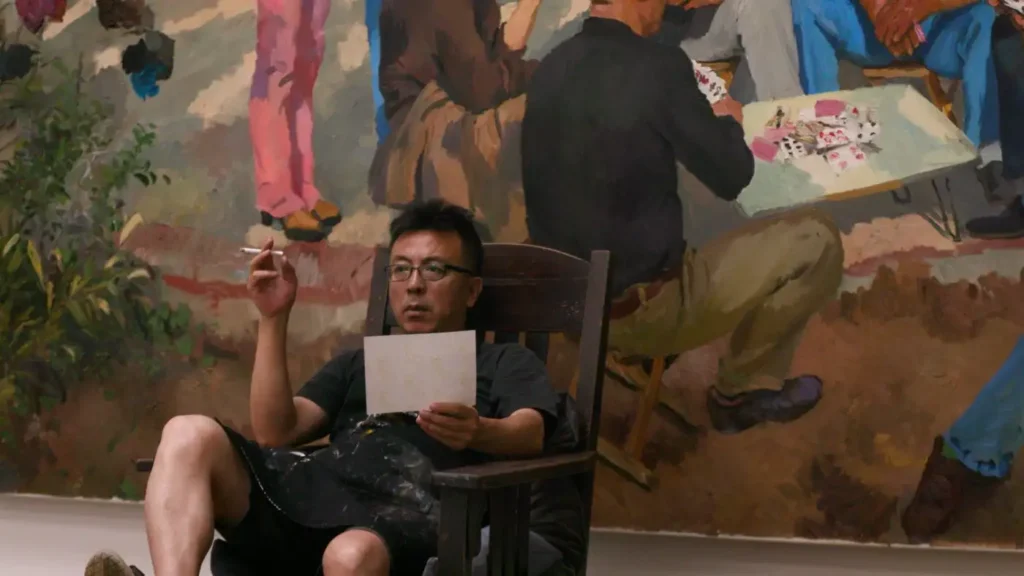
Liu Xiaodong in Beijing, Art21
Liu paints people he knows in places that are changing while he works. The canvases feel like weather reports with faces attached.
Hotan Project and the earthquake series are hard to discuss without politics, which is why they matter. He is the painter I trust when someone says Chinese art avoids reality.
Ding Yi and the cross that became a city
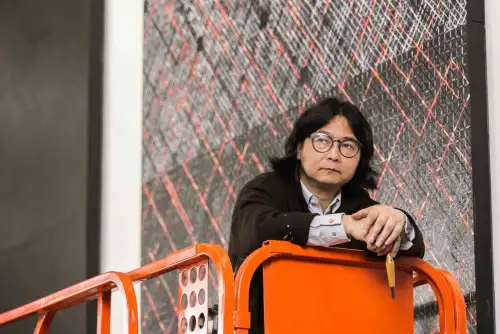
Ding Yi, crosses on canvas
Ding Yi paints plus signs until Shanghai appears. It sounds minimal. In person the color hum is physical, like neon reflected on wet pavement.
Abstraction in China has its own timeline, separate from New York hero stories. Ding is the name I cite when people claim the scene is only figurative protest painting.
Film, factories, and the object that migrates
The last four work like directors or engineers. They export Chinese contemporary art as experience, not only image. Pair this section with our contemporary female artists list when you want gender and power named explicitly in the roster.
Yang Fudong and the black-and-white delay
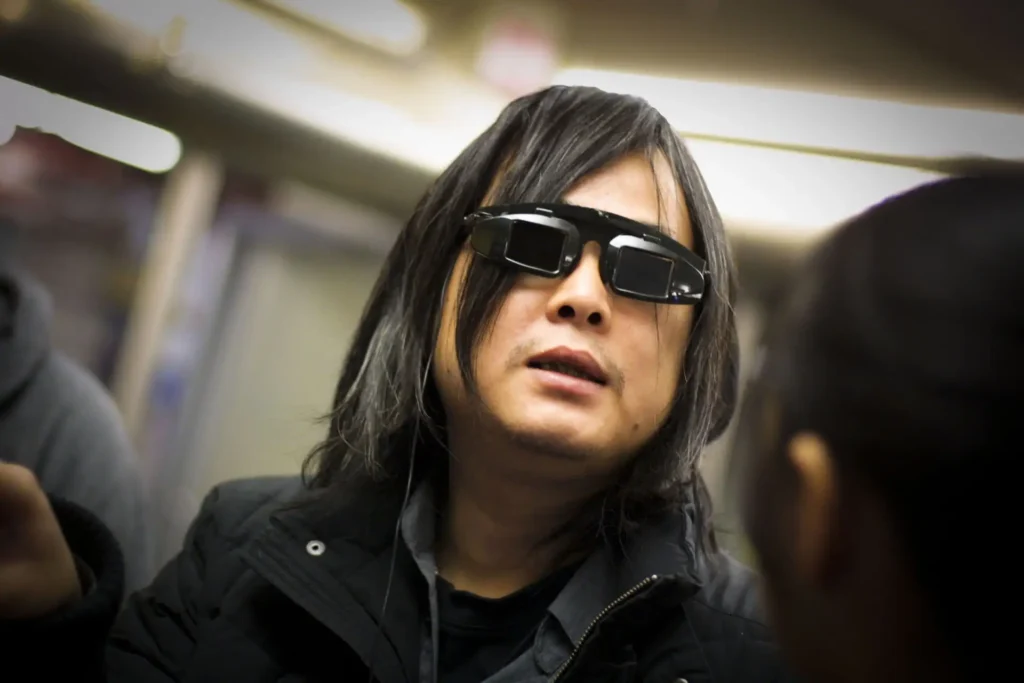
Yang Fudong, Wikimedia Commons
Seven Intellectuals in a Bamboo Forest is slow cinema that rewards patience. Yang shoots like a novelist who forgot plot on purpose.
His work taught me that Chinese contemporary art is not only objects in a white cube. Sometimes it is 35mm film and cigarette smoke.
Xu Zhen and the brand that makes art
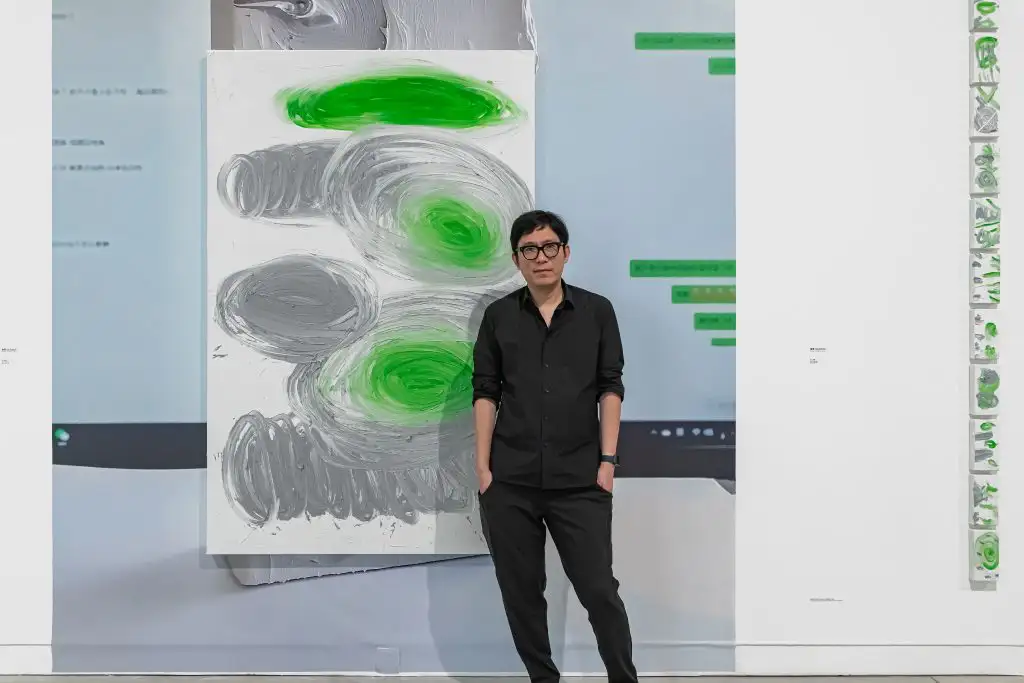
Xu Zhen, Passion series, G Museum Nanjing
MadeIn Company blurred the line between studio and factory before that became a Silicon Valley cliché. Xu Zhen’s jokes are sharp because they sound like marketing decks.
8848 – 1.86 is still the work I mention when someone asks if Chinese artists play with truth. Yes, and they charge admission.
Huang Yong Ping and the serpent in the rotunda
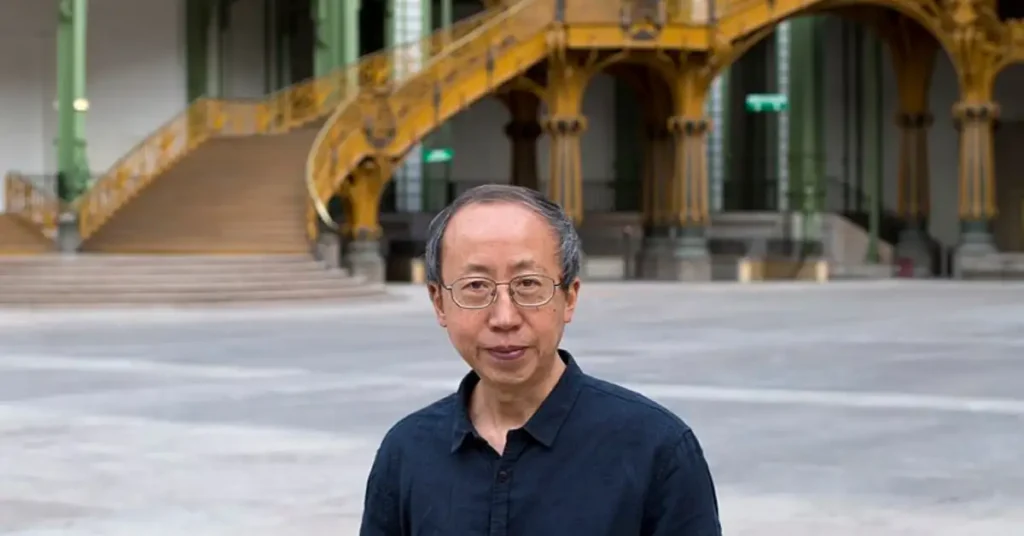
Huang Yong Ping, Theatre of the World, Wikimedia Commons
Huang died in 2019, but his installations still start arguments. Theatre of the World put live animals under a dome and forced museums to admit ethics are part of curation.
I include him as history you cannot skip: the Xiamen avant-garde did not begin in New York, and France was a late chapter, not the origin story.
Su Xiaobai and the lacquer that remembers
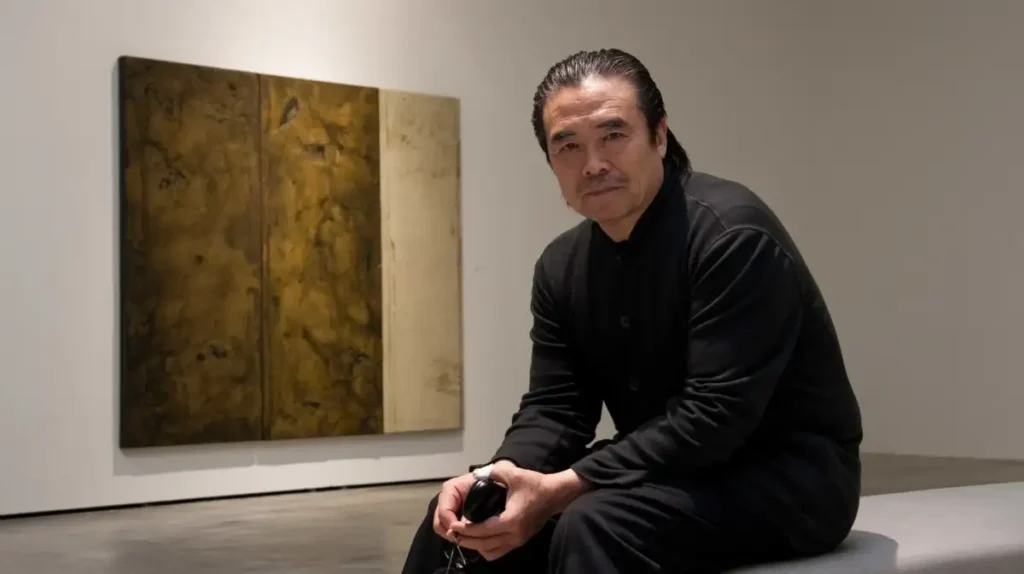
Su Xiaobai, layered lacquer surfaces
Su builds surfaces like geology. Oil and lacquer layers hold light the way old furniture does, which links abstraction back to craft without nostalgia.
He closes this list because his work is quiet after the fireworks. If you want material obsession in three dimensions, follow our contemporary ceramic artists guide next.
Choose one artist from each section and write down which medium they distrust most: language, the body, or the market. That single sentence will stick longer than any biennial press release.
FAQ
Who is the most famous contemporary Chinese artist?
Ai Weiwei is the best-known name internationally, but fame shifts by medium. Cai Guo-Qiang dominates spectacle, Zeng Fanzhi dominates painting markets, and Xu Bing dominates language-based installation.
What defines contemporary Chinese artists as a group?
They are artists based in or shaped by China after the reform era, working in dialogue with global contemporary art while responding to local politics, urbanization, and tradition. The label is useful for discovery, not for limiting how work is read.
Is there a strong contemporary art scene in China?
Yes. Major cities support museums, fairs, and studio districts. The scene is uneven: commercial success, state pressure, and independent spaces coexist in tension.
How should I start studying contemporary Chinese art?
Pick one painter, one filmmaker, and one installation artist from this list. Watch one full video work, then read one museum catalog essay each before expanding outward.