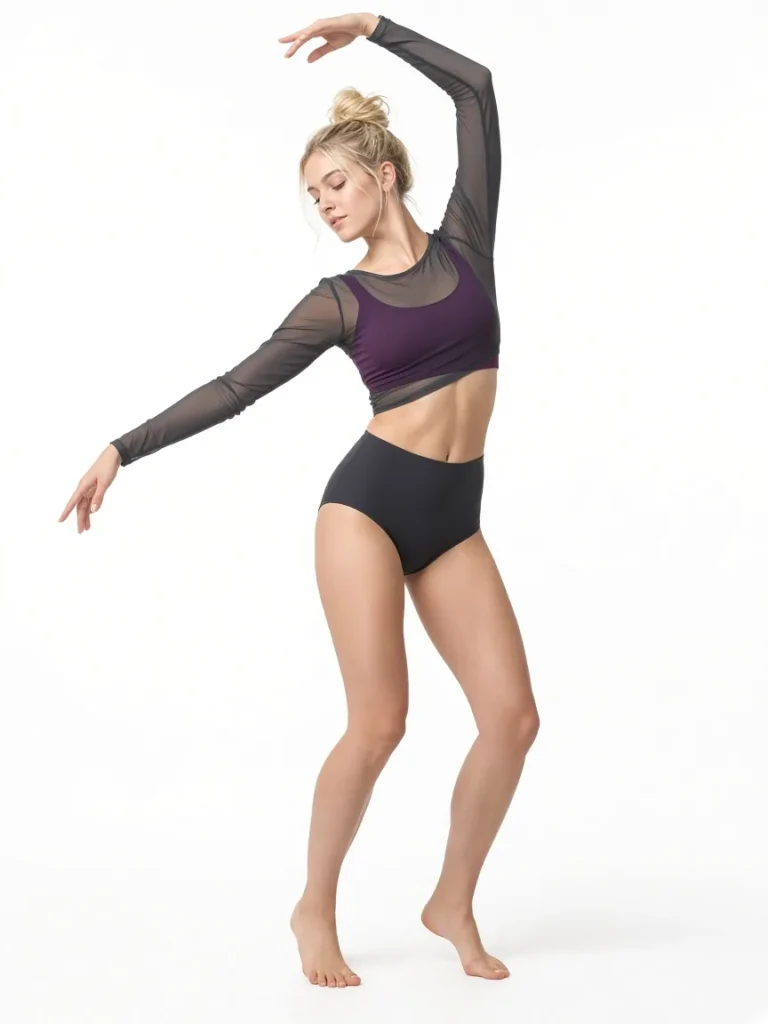

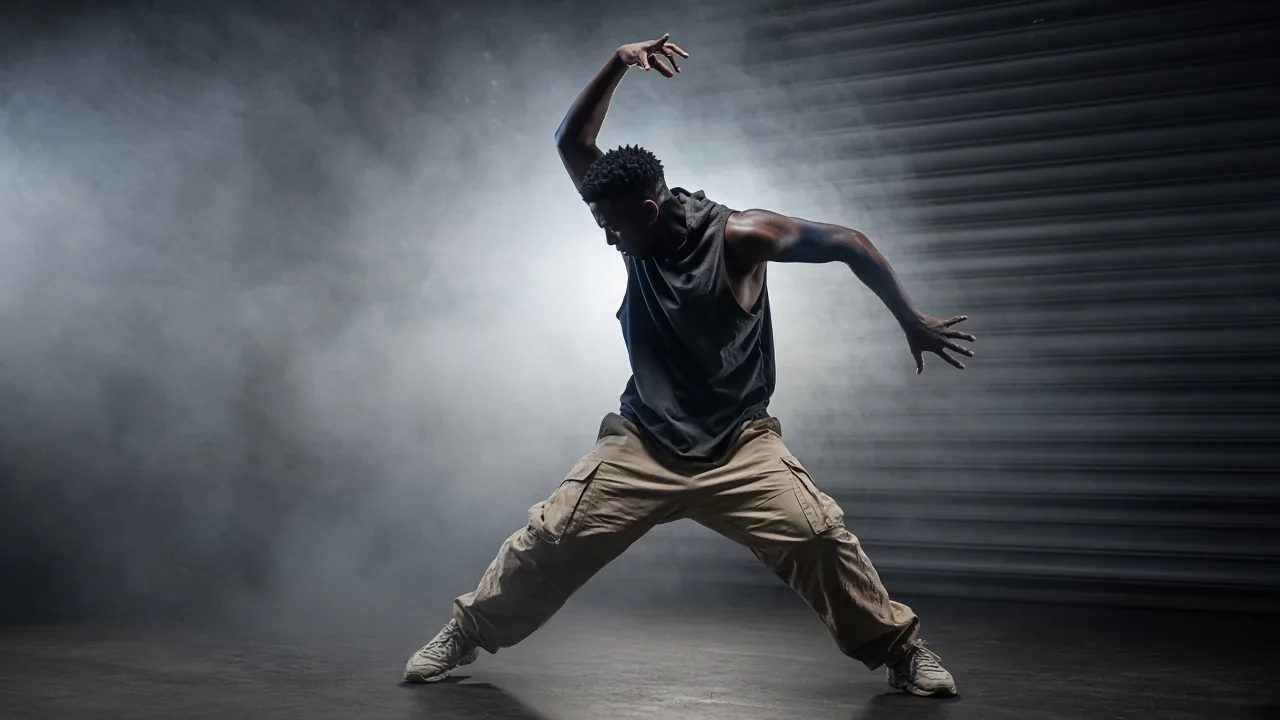
I keep hearing people call every sharp studio combo contemporary hip hop dance, as if the label were a genre checkbox. From Chicago, watching both club freestyles and polished show reels, I’d argue the interesting part is how street timing and theater polish keep colliding without canceling each other out.
This piece walks through the moves, history, and style signals I actually watch for, plus a few images that show the attitude more clearly than a glossary ever could.
What the Label Really Covers
When friends ask me what separates contemporary hip hop dance from older street forms, I start with intent. Breaking, popping, and locking still sit in the DNA. Studio versions add cleaner lines, more story beats, and music that might sit closer to R&B or electronic than pure boom-bap.
If you want a broader music lane after this, I keep a separate list of contemporary dance songs that work for practice without forcing a trend playlist.
Technique That Still Feels Alive
Technique talk gets boring fast when it stays abstract. I care about posture you can hold under fatigue, isolations that read on a phone screen, and freestyle choices that sound like a sentence instead of a random clip dump.
Lean That Holds Tension
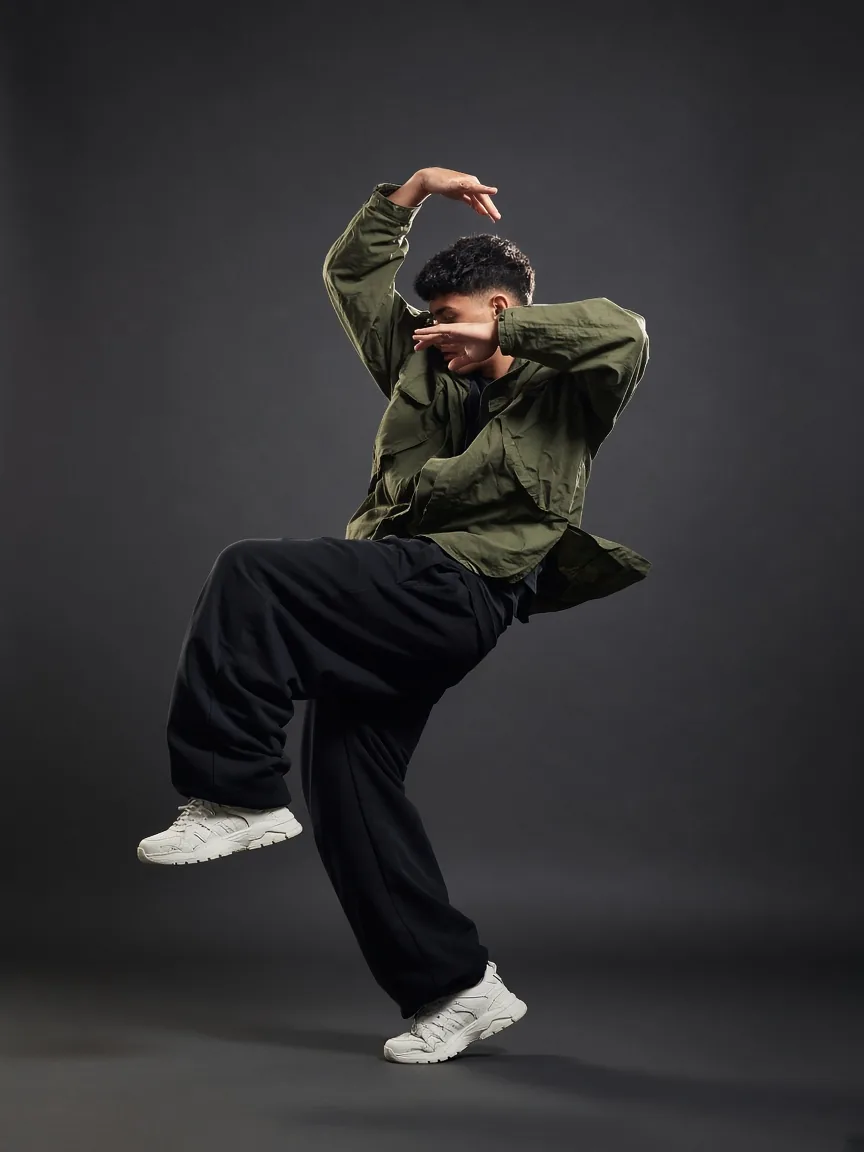
Most practice clips flatten into a bounce the second the beat drops. I keep coming back to leans like this because the torso stays loaded while the feet barely travel. In a small studio mirror, that kind of control looks quieter than a jump, and somehow more expensive. I’d rather watch one held angle than ten half-finished hits.
Power Stacked Vertically
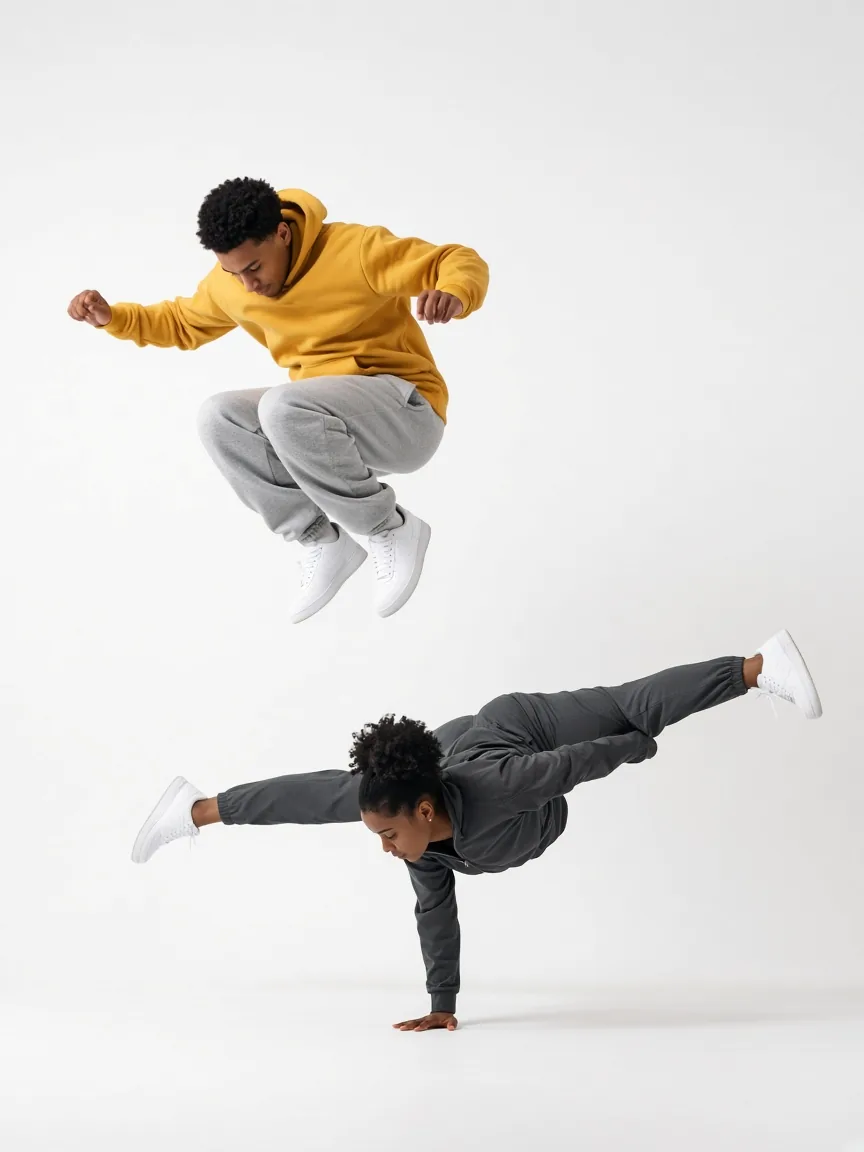
Partner work in hip hop still gets treated like a stunt reel. What sold me on stacks like this is the timing debt: the jumper only works if the floor dancer owns the freeze underneath. Most people default to bigger jumps. I’d rather see a shorter hop that lands on the same syllable as the kick below. That sync is the whole argument.
Choreography, for me, is sequencing with a reason. Theme first, then repetition that earns its keep. If a phrase only looks clever once, it is not ready for a crew set.
How We Got From Blocks to Broadcast
The Bronx origin story still matters, and I refuse to sand it down into vibe marketing. DJ Kool Herc stretching breakbeats gave b-boys and b-girls a longer runway. That social pressure cooker is why contemporary hip hop dance still feels communal even when it shows up on a soundstage.
Mainstream media did not invent the form. It amplified certain silhouettes. Music videos in the 1980s and 1990s taught a global audience what a hit looked like from fifteen feet away. TV competitions later taught another audience what judges reward. Neither replaced the cypher. They just changed who gets booked.
For a cleaner breakdown of concert-floor vocabulary next to street roots, I also filed notes under contemporary dance moves that sit closer to studio modern.
Clips like this are why I still watch show-reel footage even when I prefer live battles. Camera craft exaggerates lines. Live rooms exaggerate nerve. You need both if you want an honest read of the style.
Stage Energy Versus Street Heat
Street performances keep the social contract visible: you enter the circle, you take your eight counts, you leave room for the next body. Stage work adds lights, marks, and a story arc. I like both. I just hate when stage polish pretends the street never existed.
Freeze With Attitude

A kick freeze like this is the kind of picture editors love, and dancers treat as homework. What I notice first is the supporting arm, not the airborne leg. If that base wobbles, the whole shot collapses into gymnastic trivia. On a warehouse floor with hard light behind you, the balance has to look calm or the drama reads fake.
Cypher That Still Feels Local
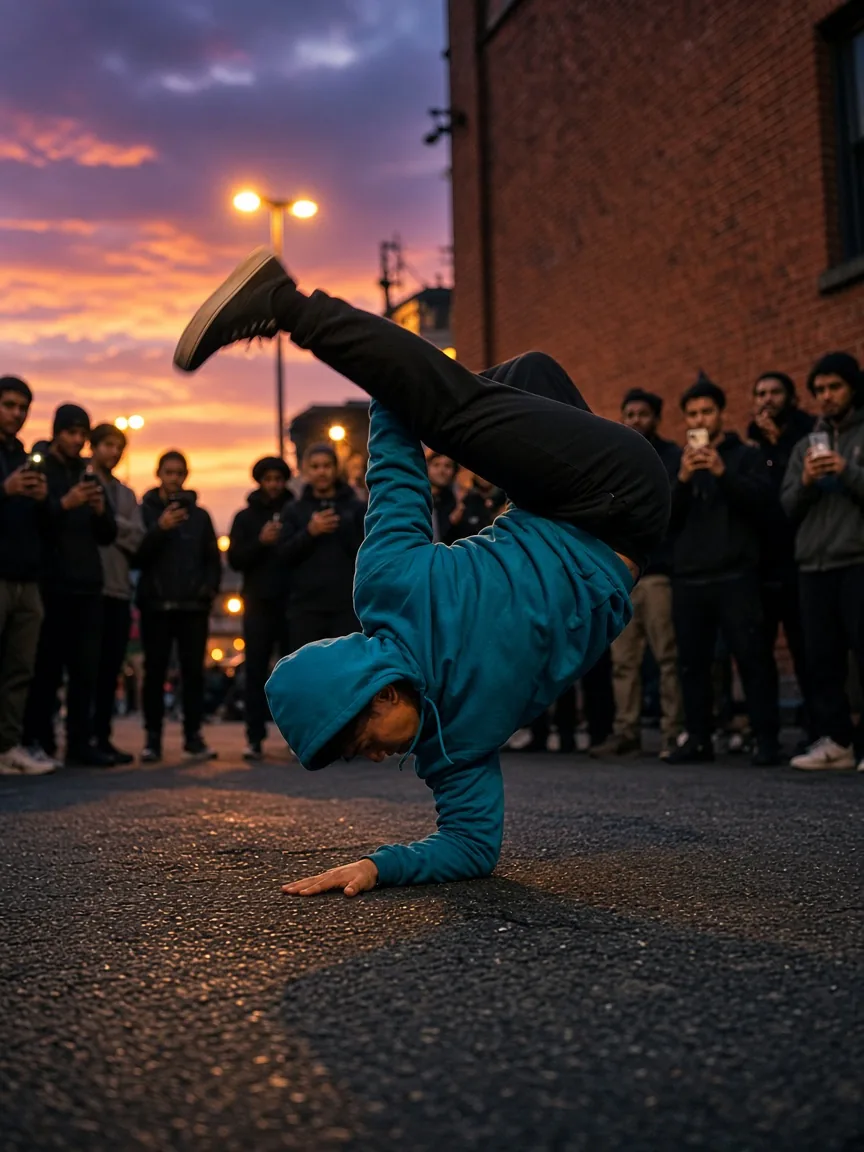
Phone cameras circling a mat will never replace being in the ring, but they do preserve the social geometry. I watch for who leans in when the freeze hits. That reaction tells you more about the room than any caption claiming a world title. If you only train for the camera, you miss that feedback loop.
Fusion is where people get sloppy with language. Jazz footwork, ballet posture, and contemporary floorwork all show up inside commercial hip hop now. Contemporary jazz dance is a useful neighbor when you want the theater side of that blend without pretending it replaced street grammar.
Clothes, Sound, and the Off-Floor Signal
I write about menswear and interiors for a living, so of course I watch what dancers wear before the first count. Oversized volumes change how a hit reads. Sneakers with a heavy sole change how a freeze lands. None of that is costume trivia. It is visual punctuation.
Quiet Duo Geometry
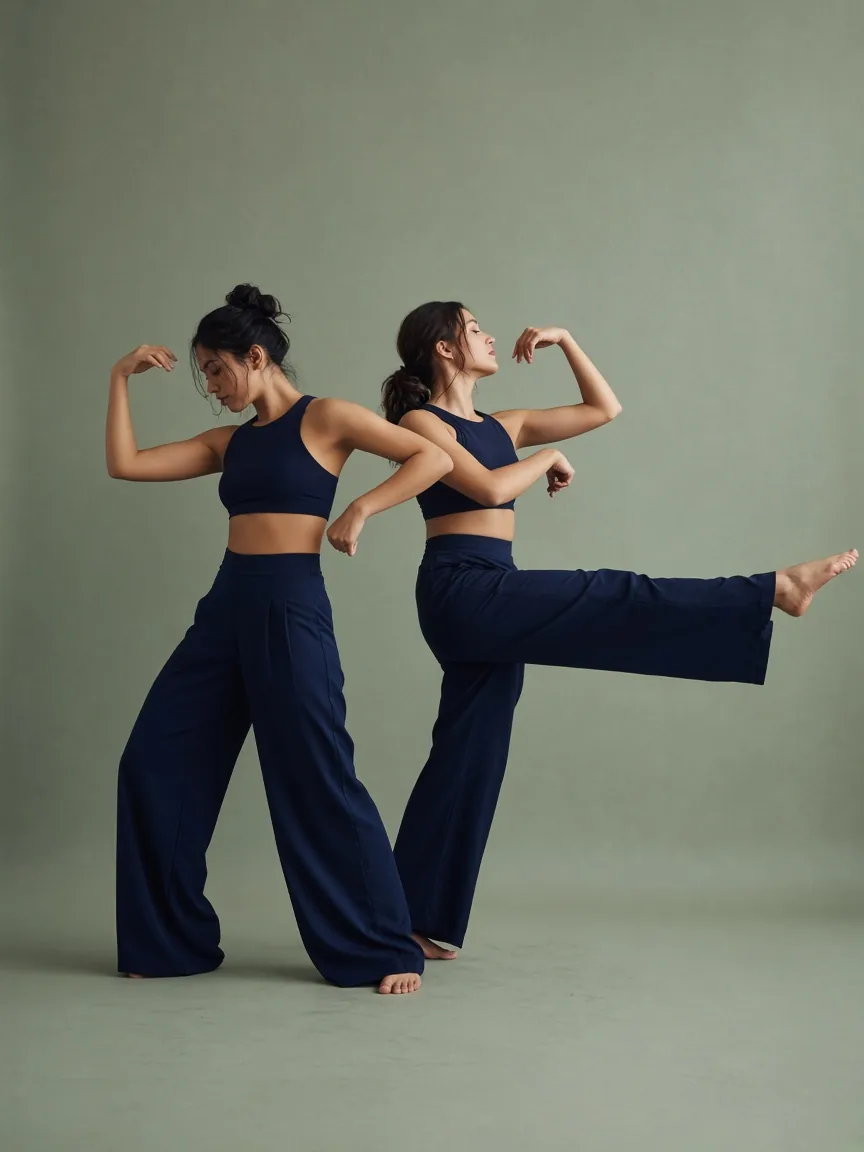
Not every strong frame needs a battle face. This kind of mirrored, almost editorial pairing reminds me that contemporary hip hop dance can sit next to gallery lighting without losing edge. Most people default to louder clothes for photos. I’d rather see a navy palette and let the kick do the talking. The restraint makes the flexibility look intentional instead of showy.
Music still runs the clock. If you want the audio side of this culture beyond battle tracks, contemporary dance music is where I park the broader listening notes. Graffiti, MCing, and DJing remain siblings, not backdrop.
If a look only works in a still, I do not trust it for a set. And if a set only works when the crowd already agrees with you, I do not trust it for a battle. That double test is my whole filter for this style.
One more Chicago aside: I have watched dancers treat a subway platform like a warm-up room and a theater lobby like a battle floor. The rooms change. The count does not. When contemporary hip hop dance stays honest about that transfer, it keeps its edge. When it only chases the softest light for a still, it starts looking like costume play.
FAQ
What is modern hip-hop dance?
Modern hip-hop dance covers breaking, popping, locking, and newer studio hybrids. I treat contemporary hip hop dance as the branch that keeps the street vocabulary but lets choreography and theater-scale staging sit next to freestyle.
Is contemporary dance the same as hip hop?
No. Contemporary concert dance leans on modern and ballet lineage. Hip hop grew from street cyphers and battles. They borrow from each other constantly, which is why fusion classes feel familiar, but the roots and training priorities still differ.
Which hip hop dancers should beginners study?
I point people to Crazy Legs for breaking history, Les Twins for musical timing, Parris Goebel for commercial precision, and whoever is winning local battles near them. Studying living cyphers beats memorizing a celebrity shortlist.
How do fashion and music shape the dance?
Clothes change how big a move reads on camera, and the beat decides whether you hit hard or float. When both shift at once, the whole look of contemporary hip hop dance updates without anyone announcing a new era.