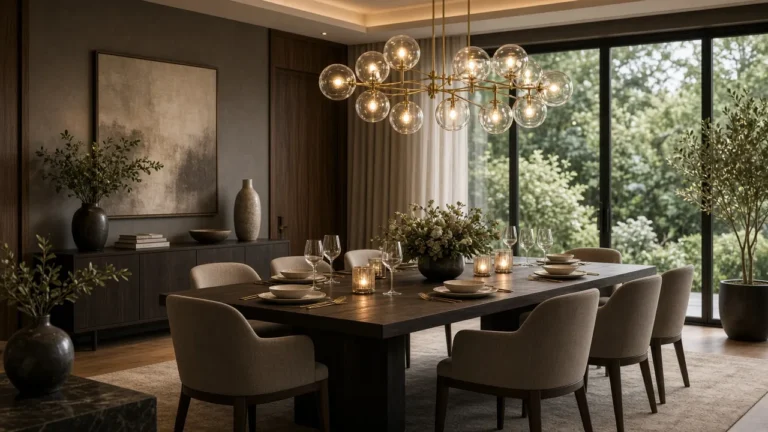

Contemporary kitchen lighting fails when it is only one pretty pendant. Kitchens need task light, ambient light, and maybe one accent. Skip any of those and you get either a cave or a surgery theater.
I plan kitchens the way I plan living rooms: decide what people do where, then light that behavior. Prep zones want clarity. Dining edges want warmth. Everything else can stay quieter.
Most regrets I hear are the same. Someone fell for a chandelier photo, installed it over the island, and then cooked in their own shadow for a year. Fix the layers first. Let the statement fixture be dessert.
Build A Layered Plan First
Recessed or track for general coverage. Under-cabinet for counters. Pendants or a chandelier for the social moment. Dim each layer separately if you can. One switch for everything is how dinners feel harsh.
Color temperature matters. I stay around warm white for homes. Cool daylight LEDs make food look less appetizing and skin look tired. If your kitchen opens to a dining room, match the warmth so the rooms feel continuous.
Also decide early whether the island is for cooking, homework, or both. Homework islands need fewer glare bombs. Cooking islands need honest foot-candles on the surface. Those jobs are not identical, even if the furniture is.
Pendants And Statement Fixtures
Linear Black Island
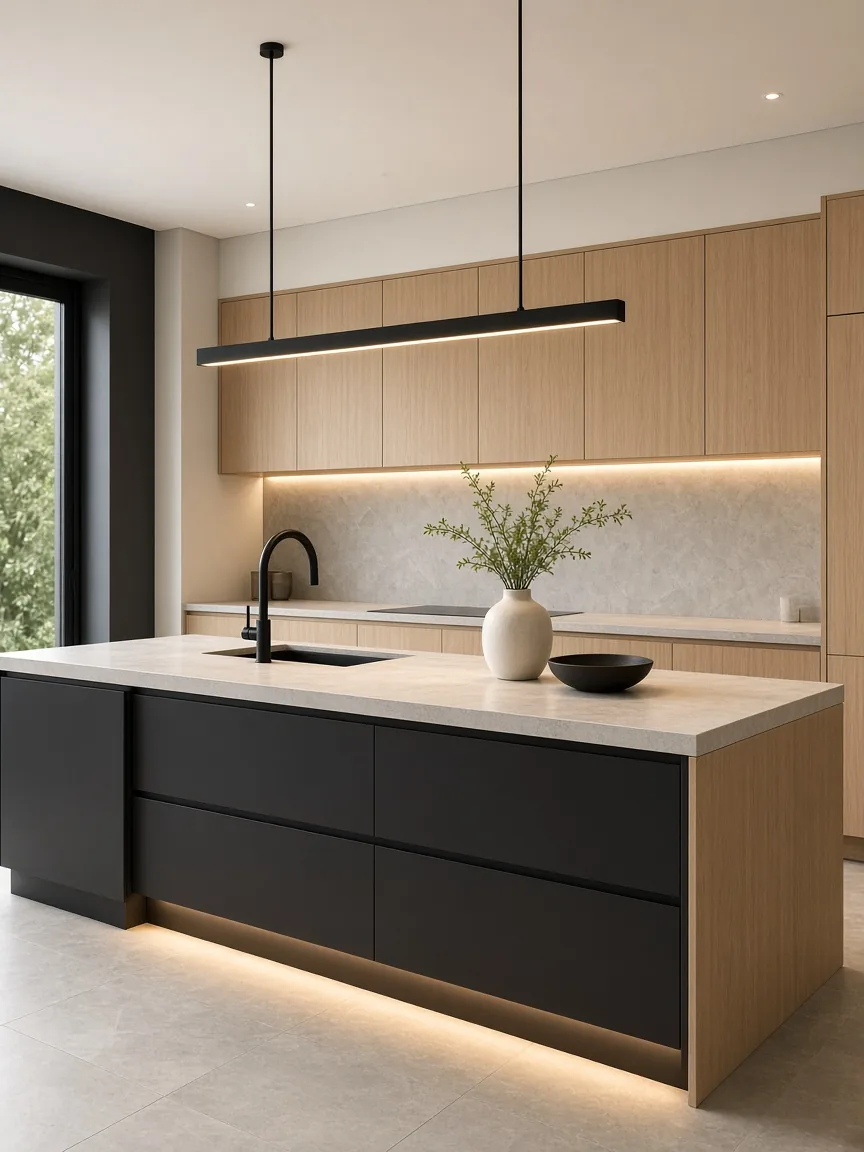
A long matte black linear pendant over the island is the contemporary default that still works. It lights the full run instead of one lonely spot.
Hang it high enough for sightlines across the room. Too low and every conversation feels blocked.
Pair with under-cabinet strips so you are not chopping in your own shadow.
Dual Geometric Pendants
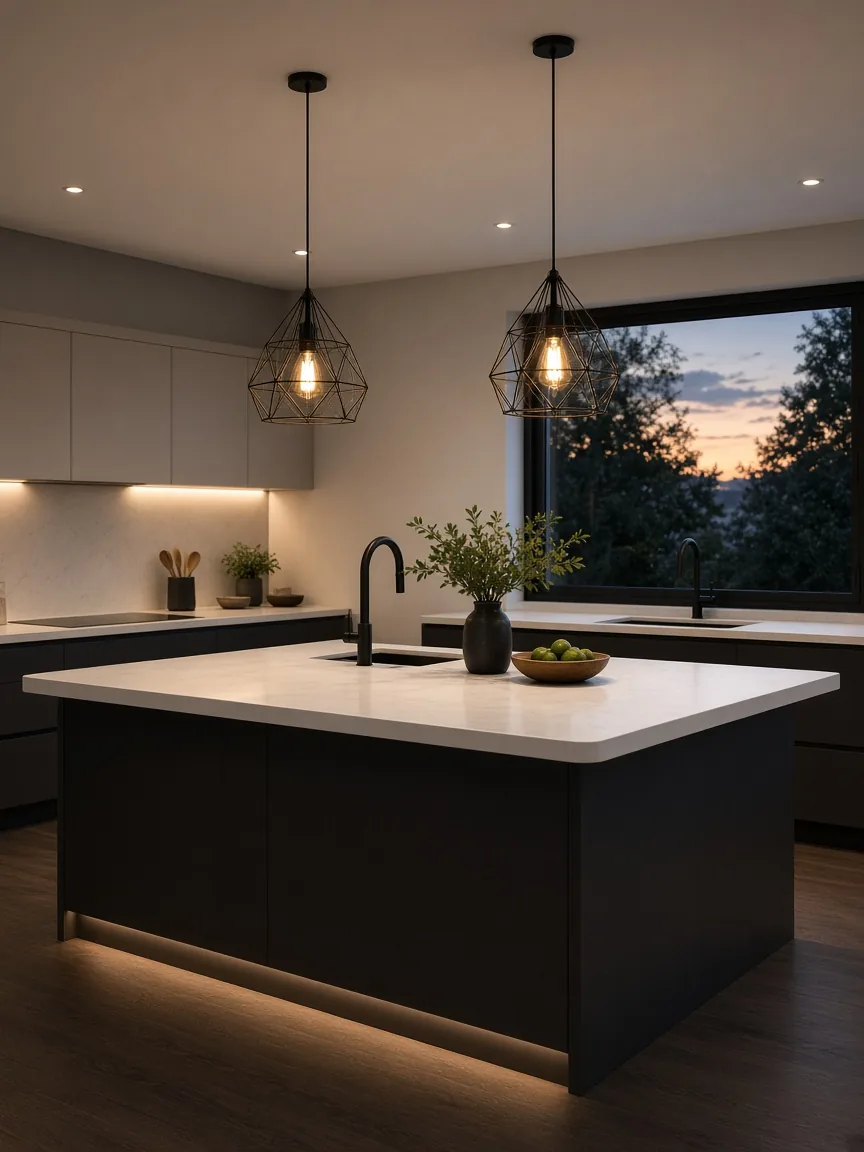
Two geometric pendants give rhythm without needing a giant fixture. Black finishes keep the look contemporary against pale cabinets.
Space them evenly and keep the island edges clear. Crowding three fixtures on a short island looks nervous.
I use this when the island is also a homework and snack zone. Light should land on the surface, not just look stylish in photos.
Brass Sputnik Moment
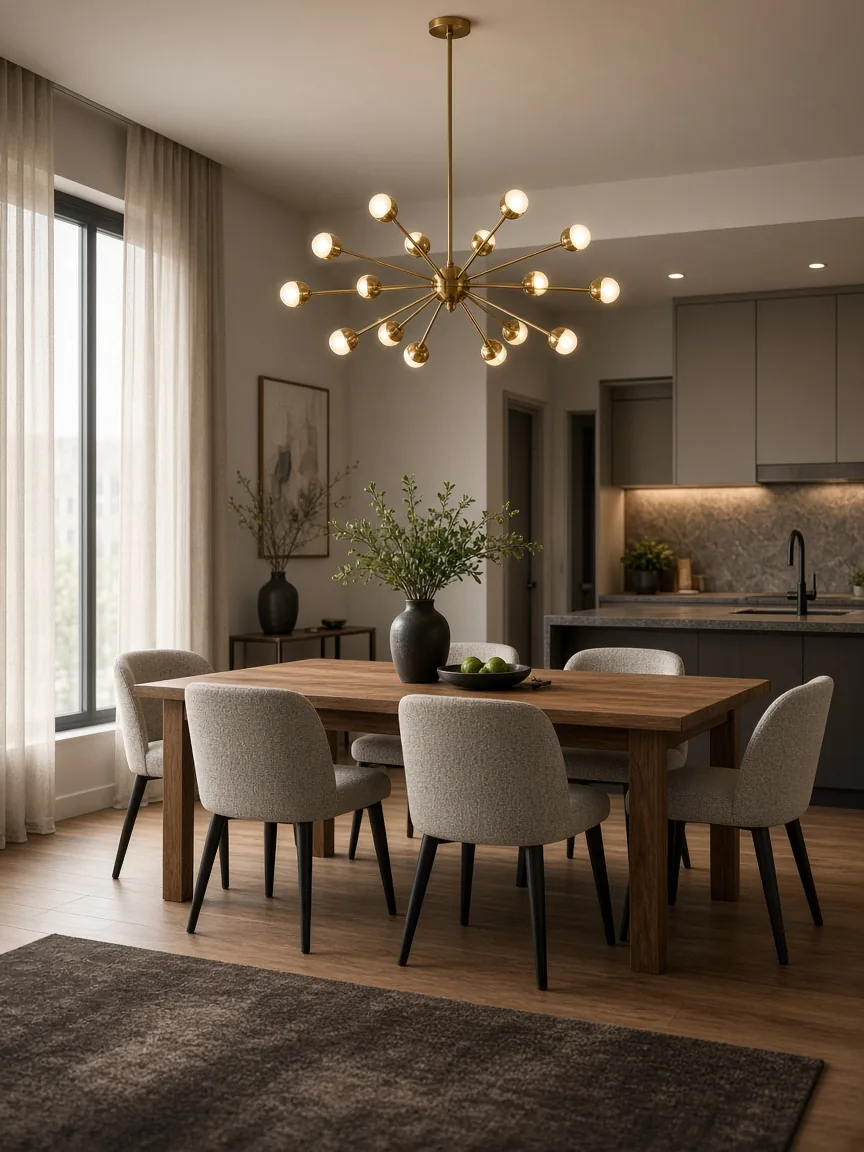
A brass sputnik chandelier can work in open kitchen-dining plans if the rest of the metal stays quiet. One brass statement is enough.
This is atmosphere more than task light. Keep recessed spots for actual cooking.
If your ceiling is low, choose a flatter contemporary form. Full sputnik drama needs height.
Sage Globe Soft
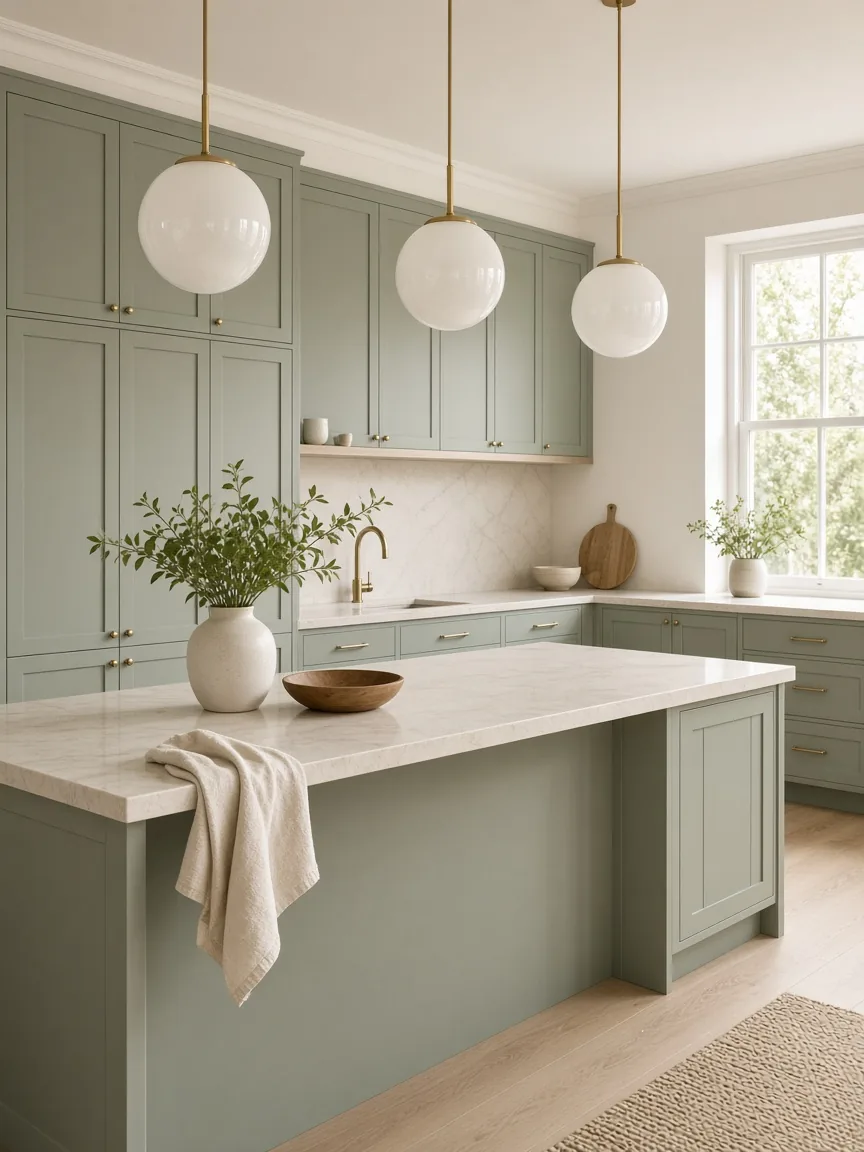
Globe pendants in a sage kitchen soften the room. Cream and green already calm the palette; milky glass continues that mood.
Daylight plus globes is gentle. At night, dim before the room goes muddy.
I like this for households that cook and linger. It is less gallery, more home.
Alabaster Cluster Glow
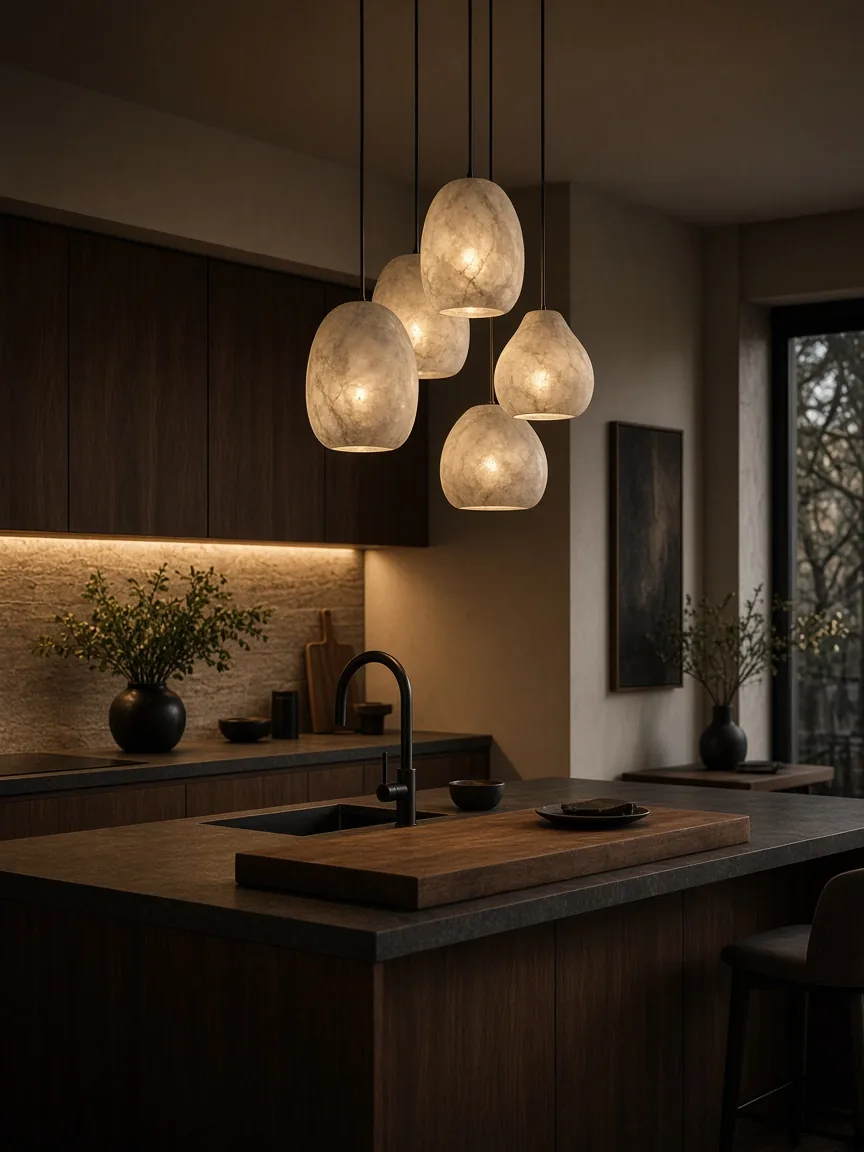
An alabaster cluster over a breakfast bar gives warm diffusion that flatters evening kitchens. Dark walnut cabinets love that glow.
Clusters need a clear centerline. Random heights can look intentional or messy. Commit to a pattern.
Clean the shades. Dusty alabaster looks tired fast.
Task Light You Actually Notice
Under Cabinet LED
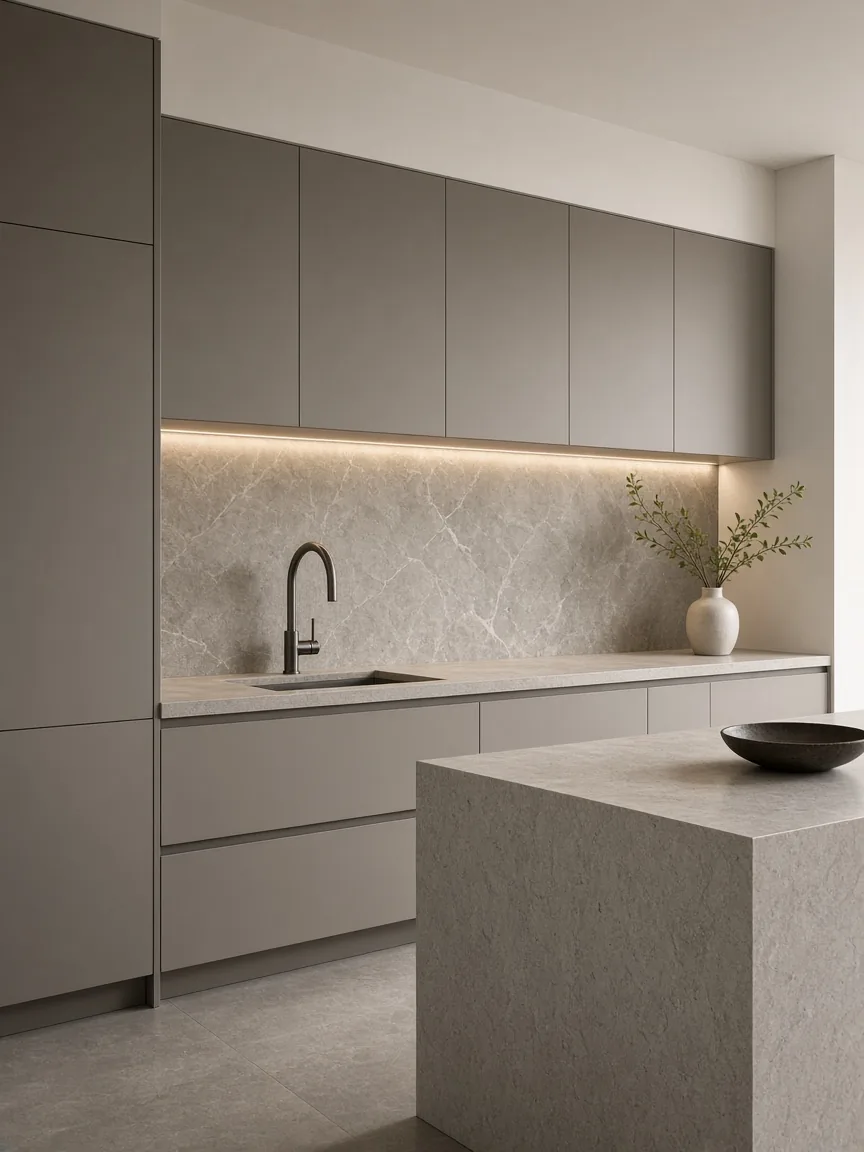
Under-cabinet LED strips are the least glamorous and most useful contemporary kitchen lighting upgrade. They make prep safer and the backsplash look finished.
Choose a high-CRI warm strip if food color matters to you. Cheap blue-leaning LEDs are why leftovers look sad.
Hide the driver. Exposed plastic bricks under a cabinet kill the contemporary clean.
Recessed Plus Track
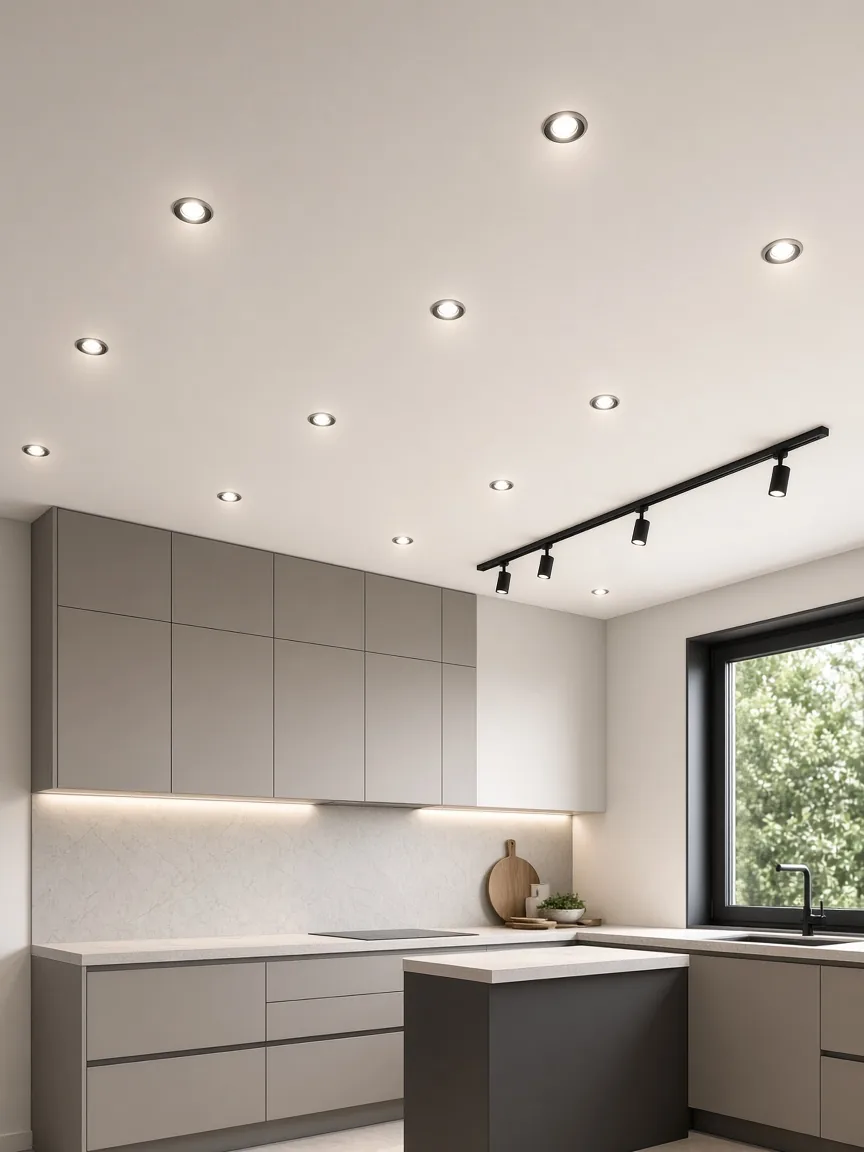
Recessed gimbals with a slim track over the prep zone cover the room without relying on one chandelier to do everything.
Aim spots at counters, not into eyes. Glare is not energy.
This mix is my recommendation for galley kitchens where pendants would feel cramped.
How I Spec Without Overbuying
Draw the work triangle and mark where hands actually go. Light those zones first. Then add the pretty fixture. Reversed order is how people end up with a gorgeous pendant and a dark cutting board.
Also check reflections on glossy tile and stone. Bright spots bouncing into your eyes at 7 a.m. will make you hate a fixture you loved online. Matte finishes and careful aiming fix more than another decorative lamp.
If your kitchen connects to living furniture zones, keep the metal story consistent with nearby pieces. A black linear pendant next to a chrome bar cart can feel accidental unless you repeat one finish elsewhere. Related material discipline shows up again in contemporary bar cabinet choices and broader contemporary furniture design.
Dimmer everything you can. Contemporary kitchens look best when they can go from prep-bright to dinner-soft without changing fixtures.
Budget for installation, not only fixtures. A good electrician who understands switching scenes is worth more than another decorative pendant. I have seen expensive glass look mediocre because every light slammed on at full blast from one switch.
Finally, live with temporary clamp lights for a week before you cut ceilings. Mock the pendant height. Test under-cabinet brightness at night. Contemporary kitchen lighting should feel inevitable once installed, not like a surprise you have to apologize for.
FAQ
What is the best contemporary kitchen lighting setup?
A layered plan: ambient coverage, under-cabinet task light, and one pendant or chandelier moment. Separate dimming makes the room usable from morning prep to late dinner.
Should kitchen pendants provide all the light?
No. Pendants are usually the social layer. Rely on recessed, track, or under-cabinet lighting for safe prep.
What color temperature works best?
Warm white around the 2700K to 3000K range suits most homes. Cooler light can feel clinical on food and skin.
Are under-cabinet lights worth it?
Yes. They remove shadows on counters and make the kitchen feel finished. Hide drivers and choose warm, high-quality LEDs.
How high should island pendants hang?
High enough to keep sightlines open across the room, typically so the bottom sits above head height for most users while still lighting the island surface.
Can I mix black and brass fixtures?
Yes if one finish leads and the other accents. Random fifty-fifty mixes usually look accidental rather than contemporary.